

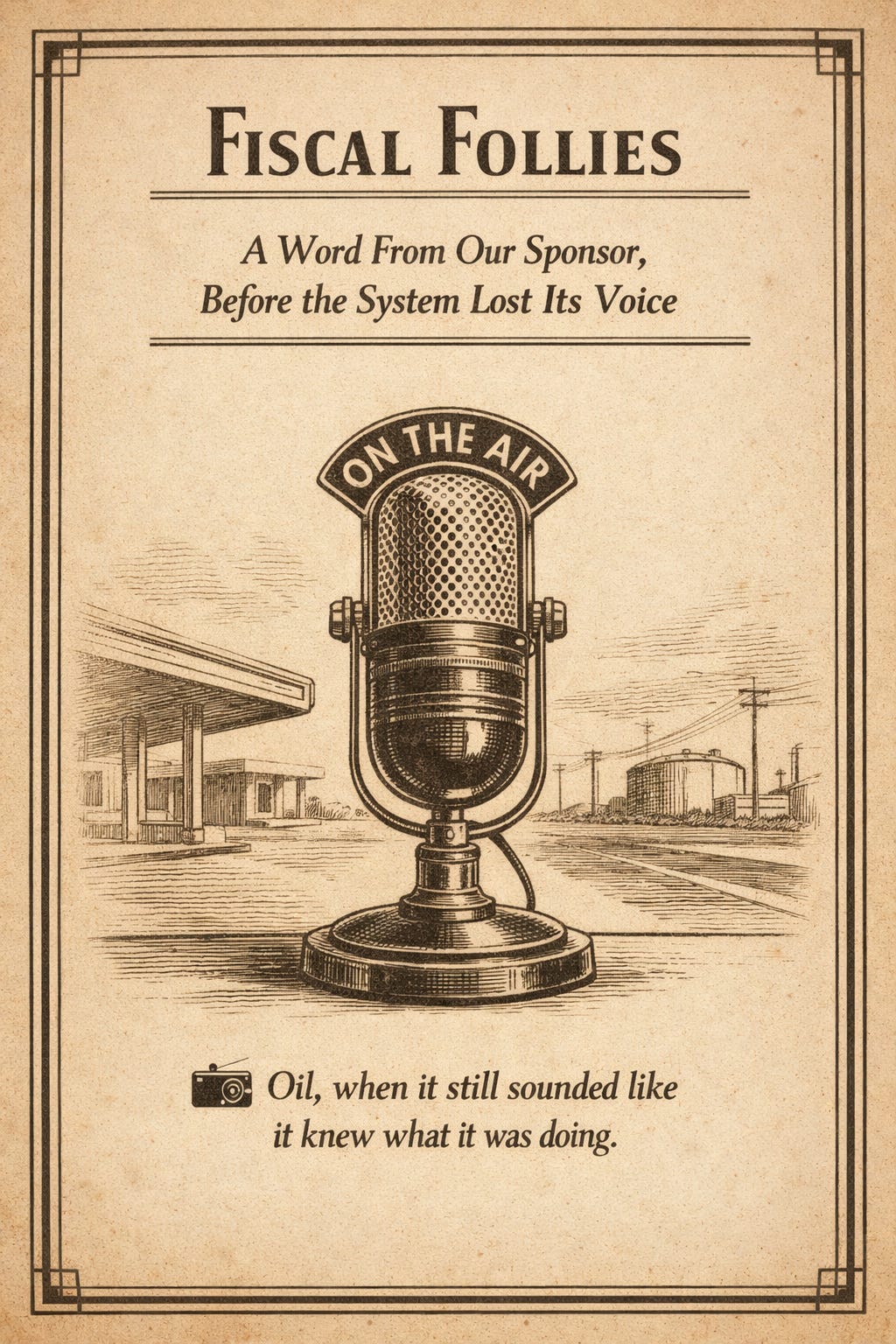
📻 A Word From Our Sponsor
When I listen to old-time radio now, the oil ads stop me cold.
Not because they’re loud. Not because they’re clever. But because they are calm.
Between the gunshots and wisecracks, a measured voice enters the room and speaks as if nothing is wrong. As if nothing will be wrong. As if the country is being competently managed by adults who have read the instructions and put the tools back where they belong.
On Johnny Dollar. On Philip Marlowe. On Broadway Is My Beat. On The Whistler.
And often, the voice belongs to Signal Oil Company.
Signal doesn’t shout. It doesn’t threaten shortages. It doesn’t promise salvation. It explains. Clean stations. Courteous attendants. Reliable service. A place you can count on, illuminated at night like a civic amenity rather than a trap.
The tone is not salesmanship. It is reassurance.
Oil, in these moments, is not leverage. It is infrastructure. It is continuity. It is the quiet assumption that tomorrow will arrive on schedule and someone competent will be there to greet it.
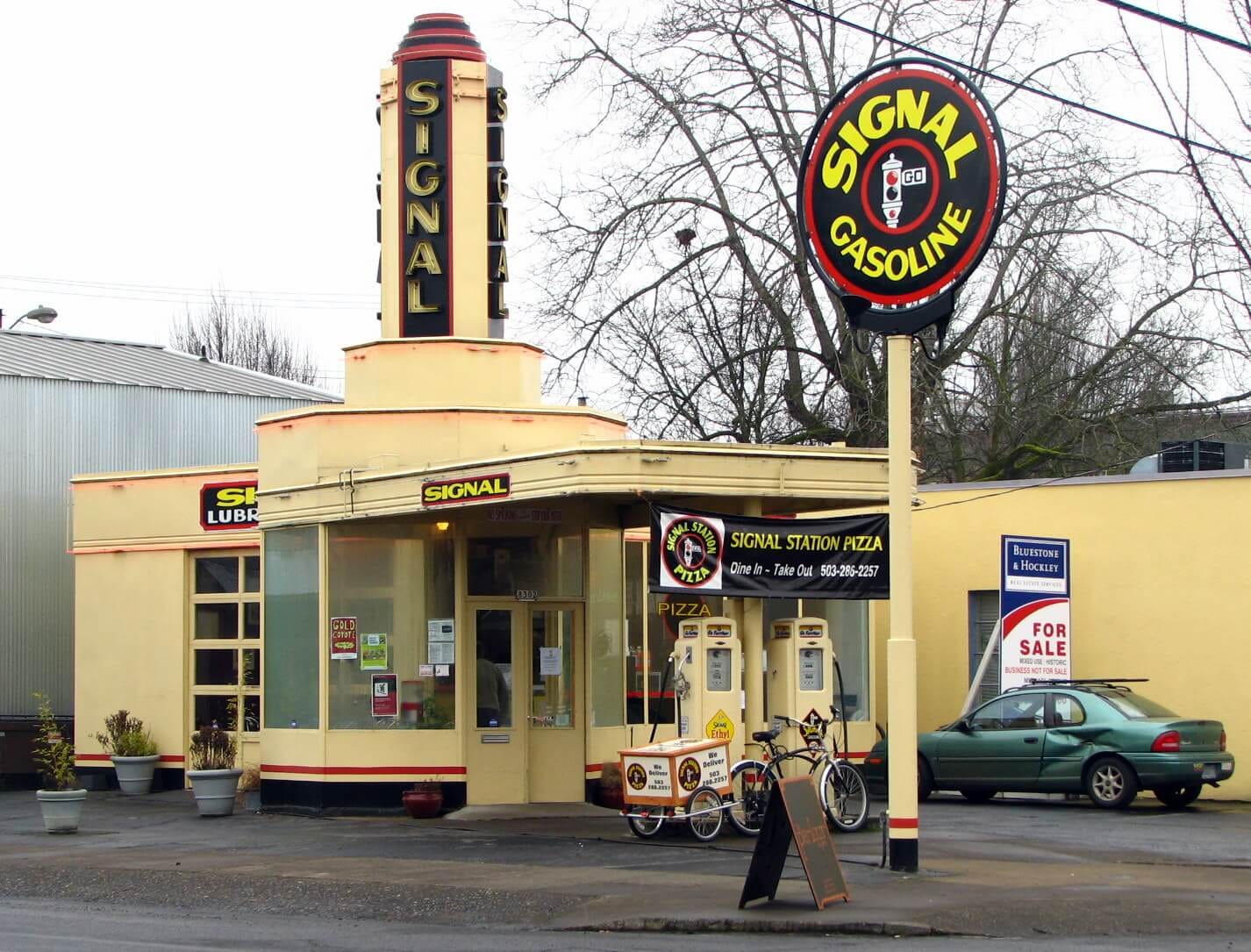
🏗️ Confidence, Poured in Concrete and Glass
Signal didn’t just say this. It built it.
Across the Pacific Northwest, Signal stations appeared as small declarations of order along the roadside. One in Portland, built in 1939, wore the clean curves of Streamline Moderne like a promise. Horizontal lines. Smooth corners. Motion without panic.
It looked less like a gas station than a municipal building from a future that expected to function.
This was oil presenting itself as a public good. Not nationalized. Not sentimental. Just competent.
The architecture mattered. It said: this system is modern, rational, and here to stay.
🧾 The Assumption Nobody Noticed
What those ads sold was not gasoline. It was an assumption.
That systems were managed.
That supply chains were boring.
That expertise existed somewhere out of sight and was doing its job.
Oil did not need to explain itself because it was not yet political. It had not become a mood. It had not learned to misbehave.
Government, too, was allowed to be dull. Regulation was clerical. Planning was invisible. The nation hummed.
This was not innocence. It was habit.
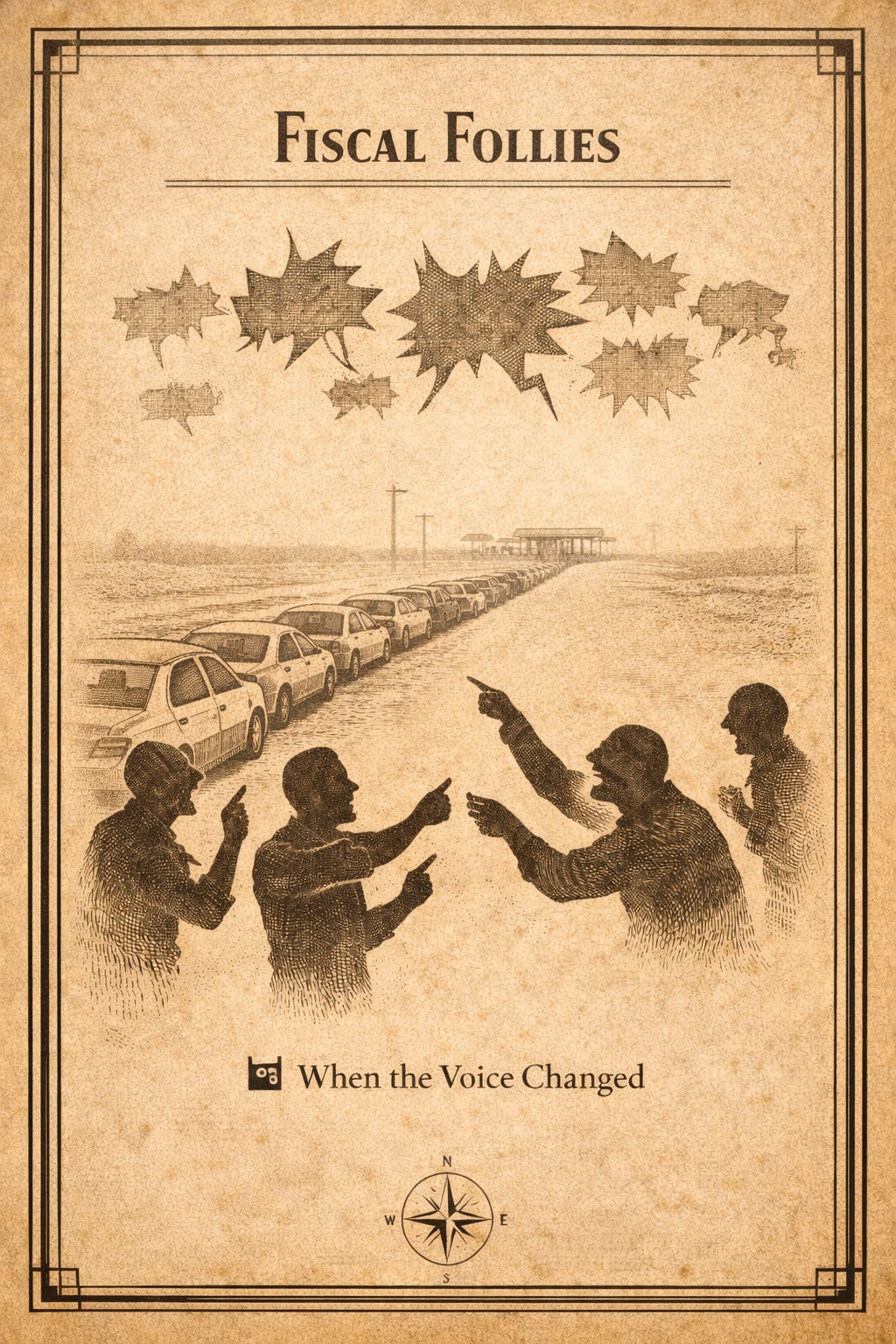
📉 When the Voice Changed
Then, in the 1970s, the tone broke.
Oil stopped speaking like a neighbor and started behaving like a rumor. Gas stations ran dry. Lines formed. Prices spiked. The calm voice vanished, replaced by press conferences, rationing schemes, and explanations delivered with visible strain.
What Americans experienced was not merely higher prices. It was the sudden realization that the system had been borrowing confidence it did not actually possess.
The loss was not just fuel.
It was reassurance.
Oil had been the background music of modern life. Suddenly, it demanded attention and refused to stay on key.
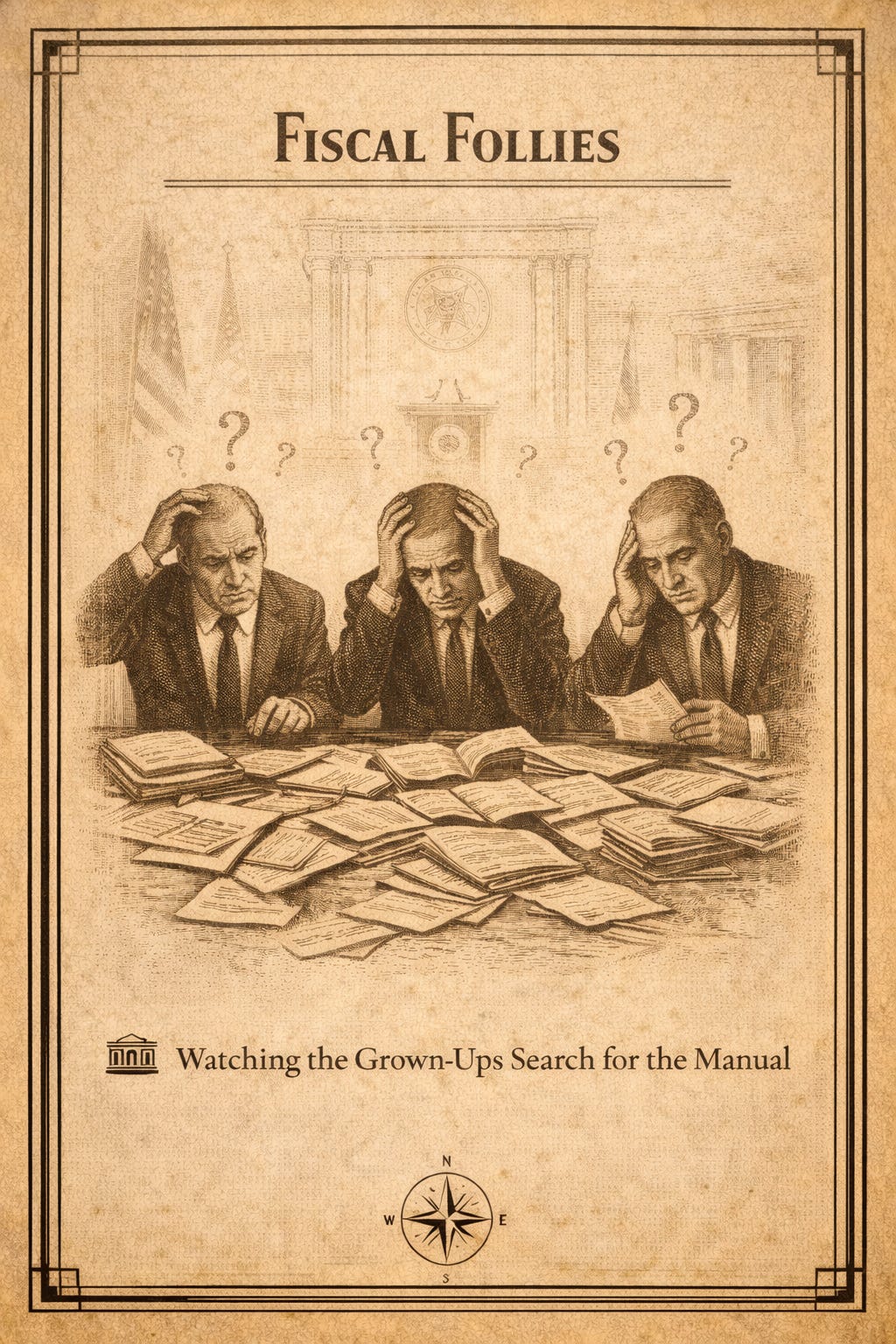
🏛️ Watching the Grown-Ups Search for the Manual
The timing could not have been worse.
Vietnam had already shaken faith in official narratives. Watergate confirmed that authority could lie outright. Oil added a new injury: even honest governance might be overwhelmed.
There was no villain. No single betrayal. Just a public demonstration of institutional confusion.
You could forgive a lie.
You could not forgive being stranded.
Trust did not collapse. It thinned.
📈 From Substance to Psychology
From that moment forward, oil stopped behaving like a thing and started behaving like a feeling.
Prices moved not only on supply, but on expectation. Futures markets, speculation, and fear transformed fuel into an anxiety index. Americans paid not just for gasoline, but for everyone’s imagination.
The lesson absorbed was simple, whether accurate or not:
Government reacts.
Markets anticipate.
This belief hardened into reflex.
🧱 The Long Hangover
Energy policy became a vessel for blame. Conservation sounded moralizing. Structural reform sounded unrealistic. Presidents were held responsible for forces they did not control. Corporations faded into abstraction.
Every modern price spike still triggers the same ritual: outrage, denial, performance, resignation.
The gas lines disappeared. The suspicion stayed.
🧭 Closing Entry
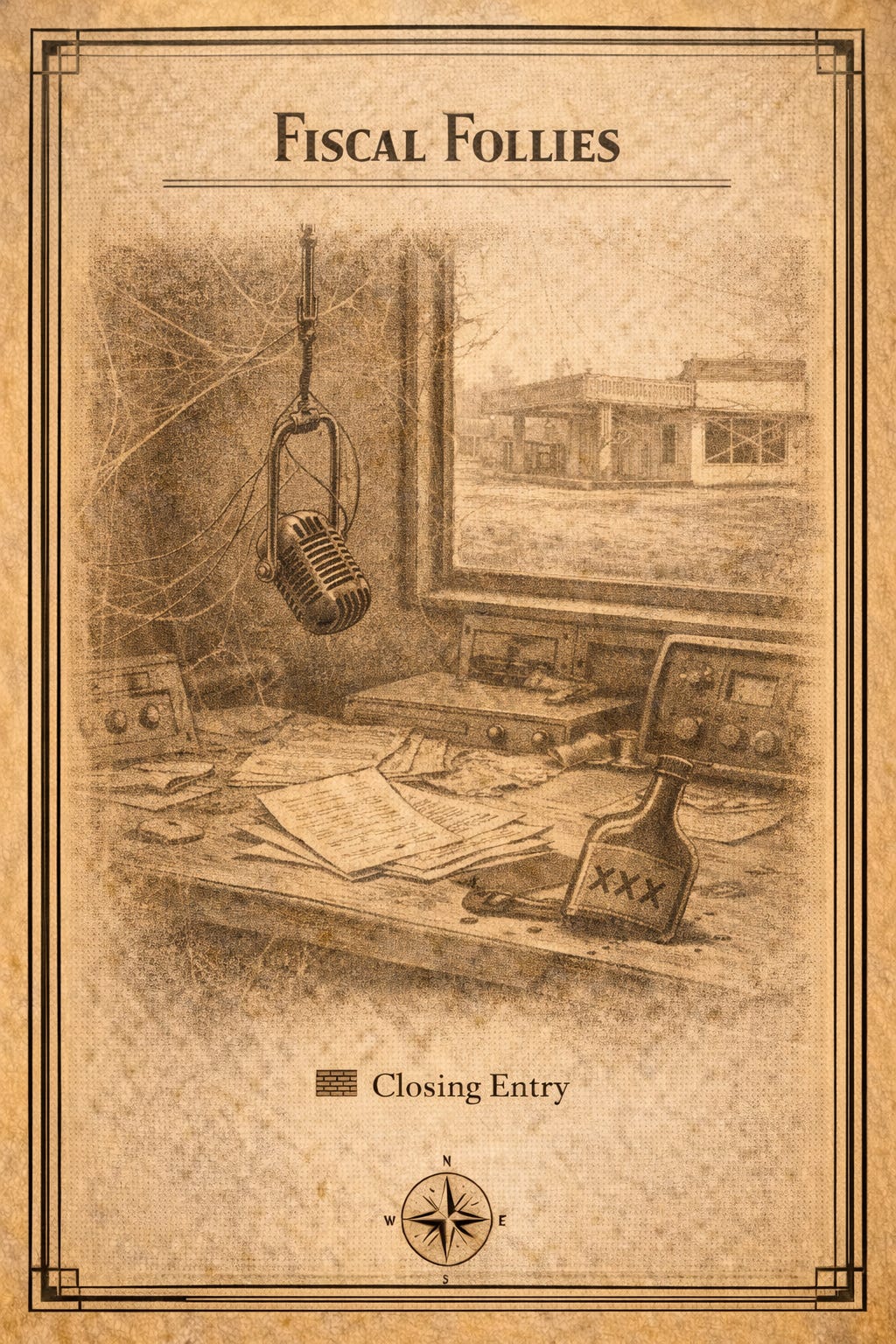
The old Signal ads were not propaganda. They were artifacts of a time when essential systems were allowed to be boring, and boring was trusted.
The oil crises did not teach Americans that government was unnecessary. They taught Americans that competence could vanish without warning.
The voice that once entered the living room calmly, confidently, and on schedule never quite returned.
And so the ledger remains open, numbers flickering, while we argue over who should be holding the pen and wonder why the lights feel less steady than they used to.
📌 Fiscal Follies is an ongoing examination of how economic systems fail quietly, politely, and on schedule.
🧭 Next entry pending.