

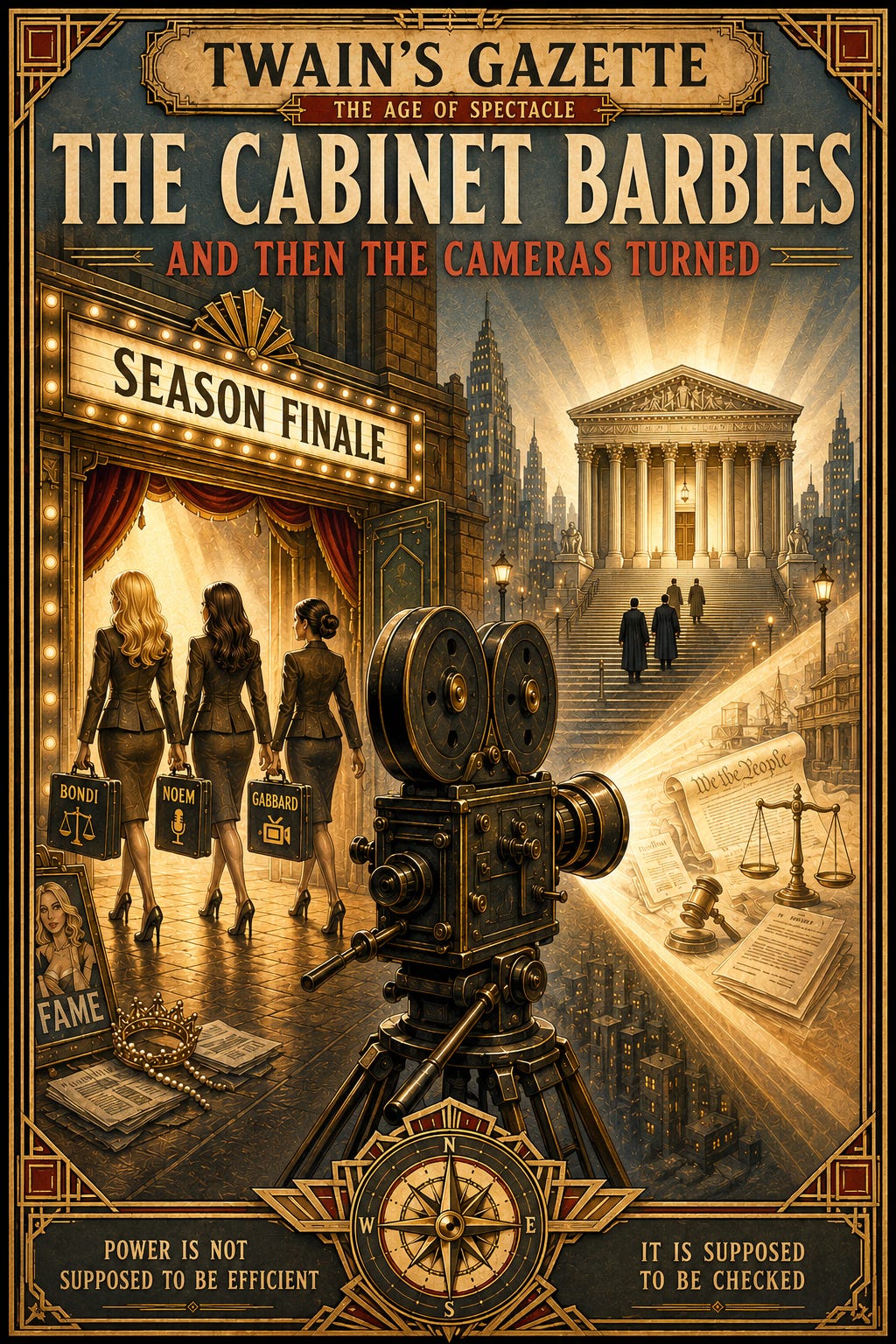
There was a time, not so long ago, when American government felt less like a constitutional republic and more like a season of The Apprentice: Washington Edition.
Every morning on the new brought a new headline.
A new feud.
A new firing.
A new social media post.
A new declaration that some institution, agency, university, newspaper, law firm, foreign country, historical monument, or random windmill was Public Enemy Number One.
For a while, the most visible faces of the administration were not judges, legislators, or policy experts.
They were the women.
The television-ready personalities.
The culture-war combatants.
The Cabinet Barbies.
The women who dominated the headlines, the television appearances, the photo opportunities, and the culture-war sound bites.
Pam Bondi.
Kristi Noem.
Tulsi Gabbard.
Whether they resigned, were pushed aside, or simply fell from favor, the result is the same: the most visible women of the administration are no longer the story.
Some were talented. Some were controversial. Some were simply very good at commanding a camera.
But one by one they disappeared from the center of the stage.
And something unexpected happened.
The cameras turned elsewhere.
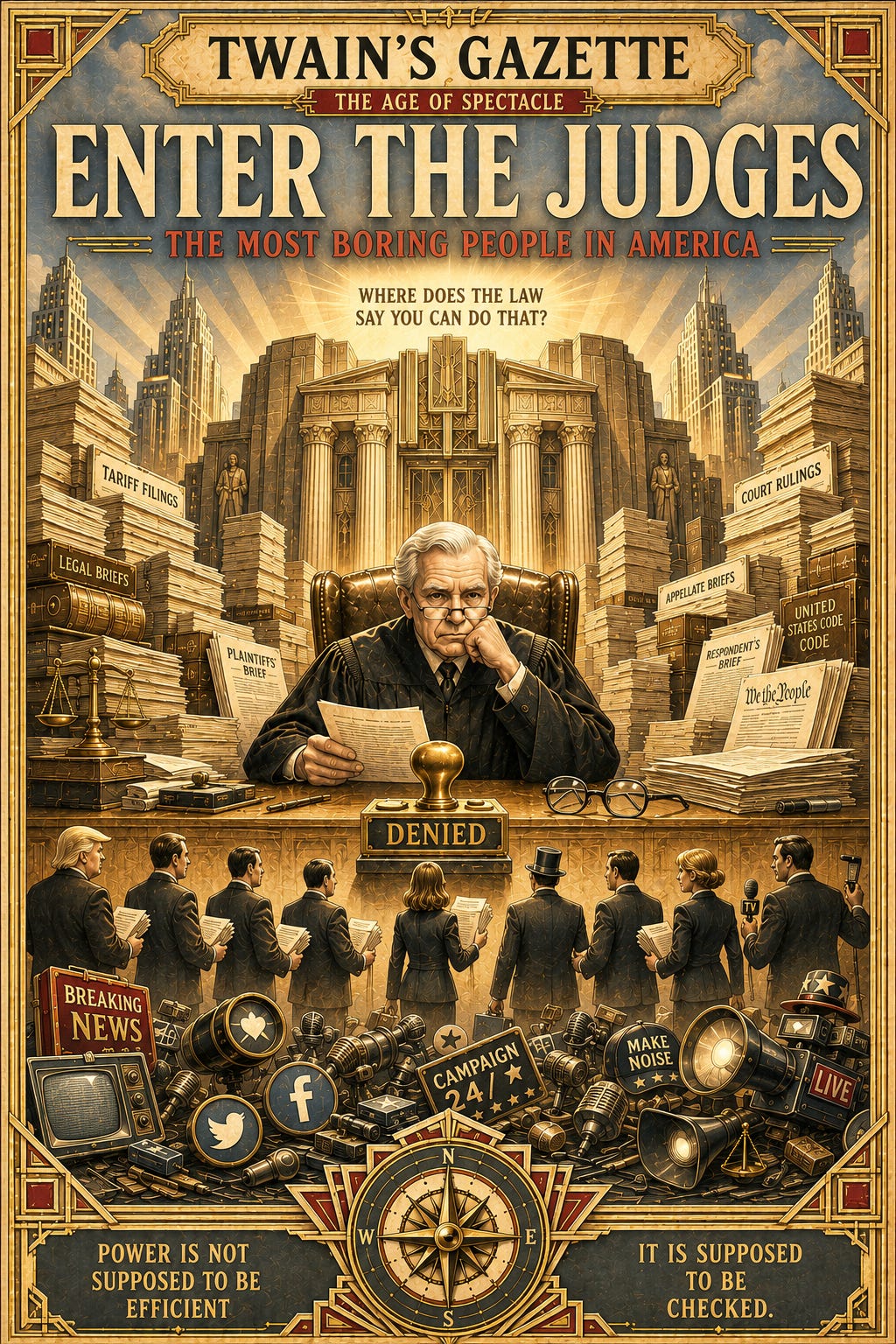
🏛️ Enter the Judges
While America was watching personalities, another group quietly kept showing up to work.
Federal judges.
Not exactly social media influencers.
No one buys a federal judge action figure.
Nobody stands in line for a judge’s autograph.
Federal judges do not generally arrive in matching outfits while music plays dramatically in the background.
Instead, they sit at desks and ask annoying questions.
Questions like:
“Where does the law say you can do that?”
It is the most boring question in government.
It is also one of the most powerful.
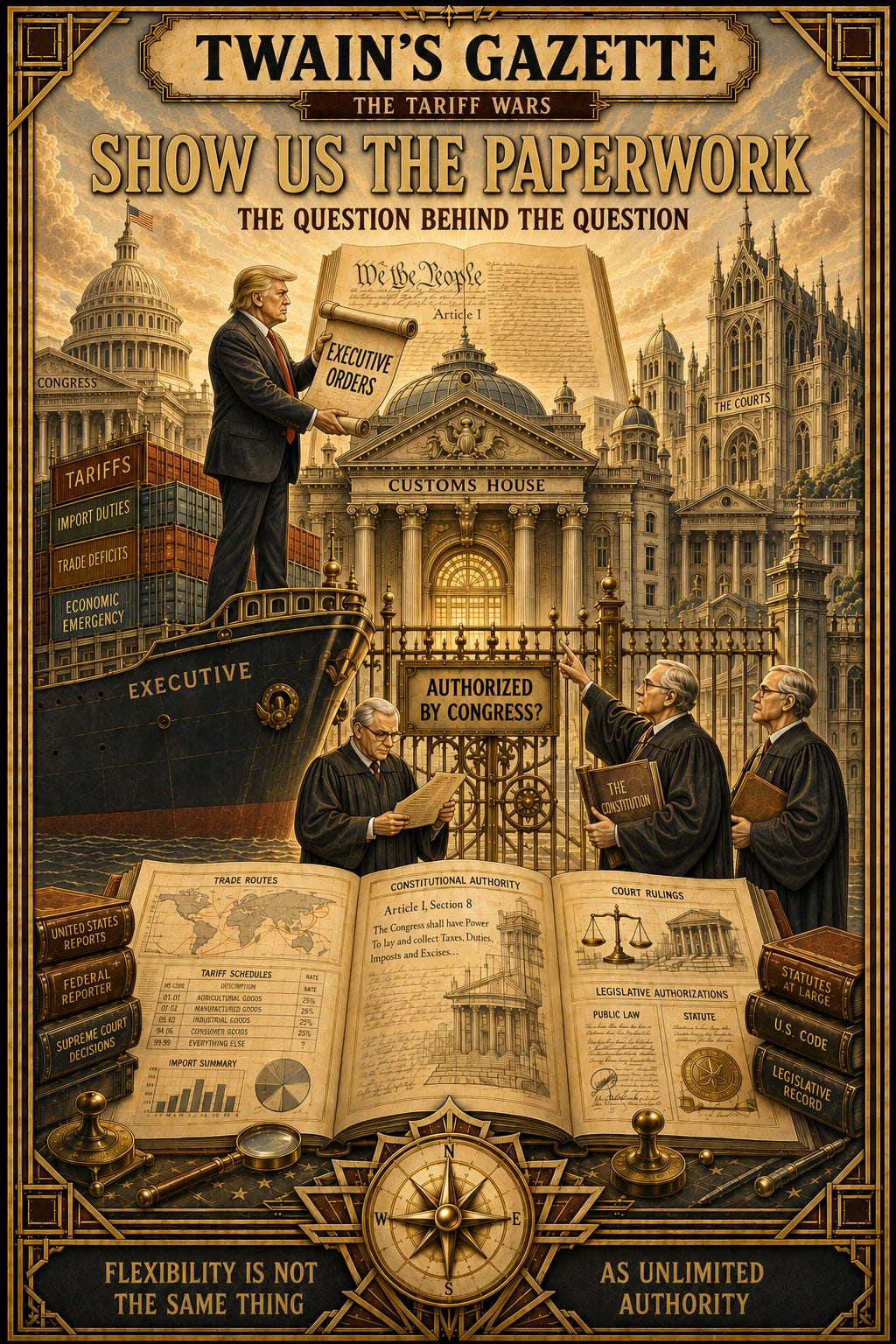
💰 The Tariff Wars
The clearest example may be Trump’s tariffs.
The administration imposed sweeping tariffs using emergency powers.
The courts responded with a simple challenge:
“Show us where Congress authorized that.”
That question matters because the Constitution gives Congress authority over taxation and trade.
Presidents have historically been granted flexibility.
But flexibility and unlimited authority are not the same thing.
Several courts have now questioned whether the administration exceeded the authority Congress actually granted.
The legal battle is continuing, but for the first time in a long time, the courts appear willing to ask whether executive power has expanded beyond its constitutional boundaries.
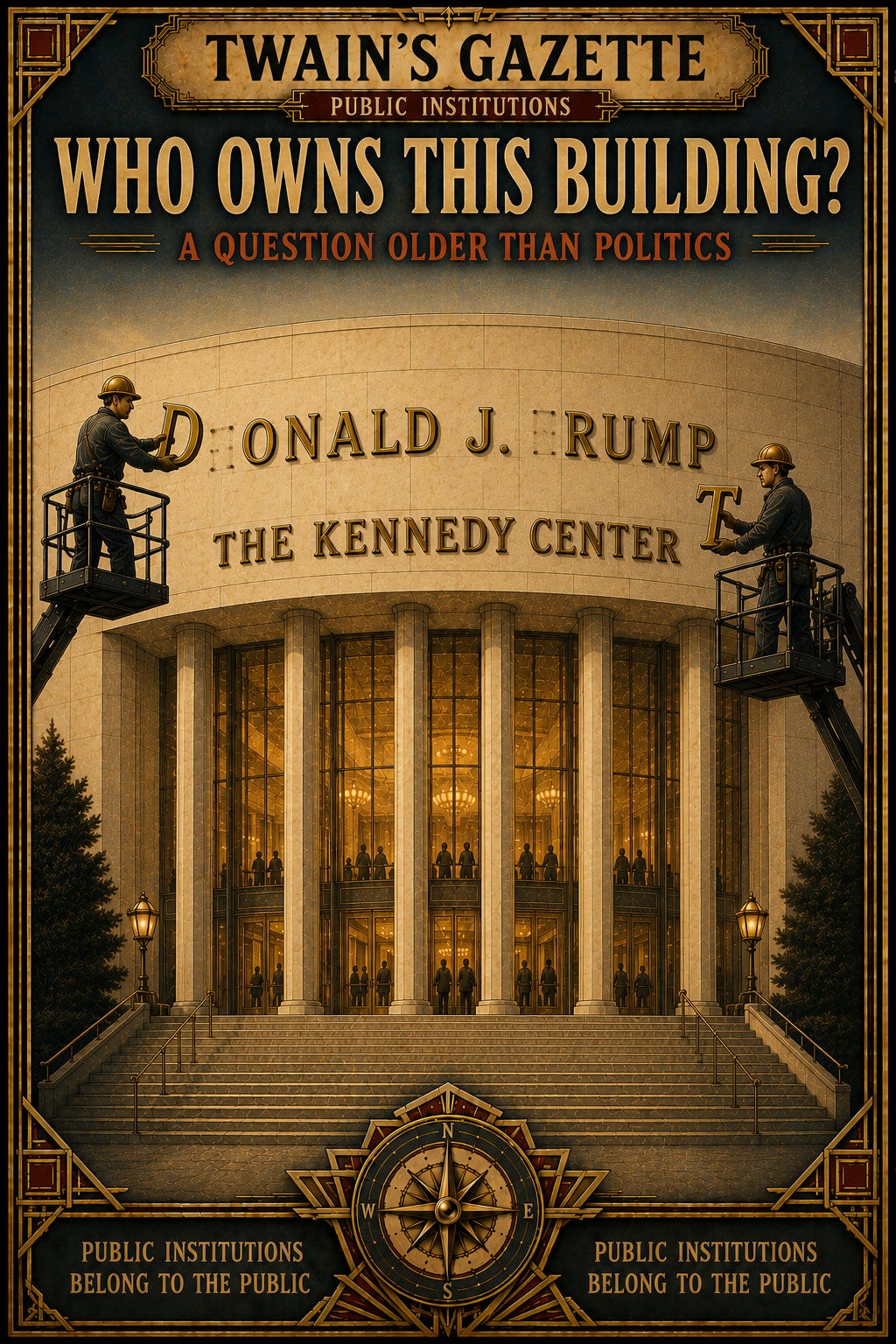
🎭 The Kennedy Center
Then came the dispute over placing Trump’s name on the Kennedy Center.
Again, the issue was not whether one likes Trump.
Or dislikes Trump.
The question was remarkably old-fashioned:
Who actually has the authority to do that?
Judges increasingly seem interested in reminding everyone that government institutions belong to the public, not to whichever politician happens to occupy the White House at a given moment.
Imagine that.
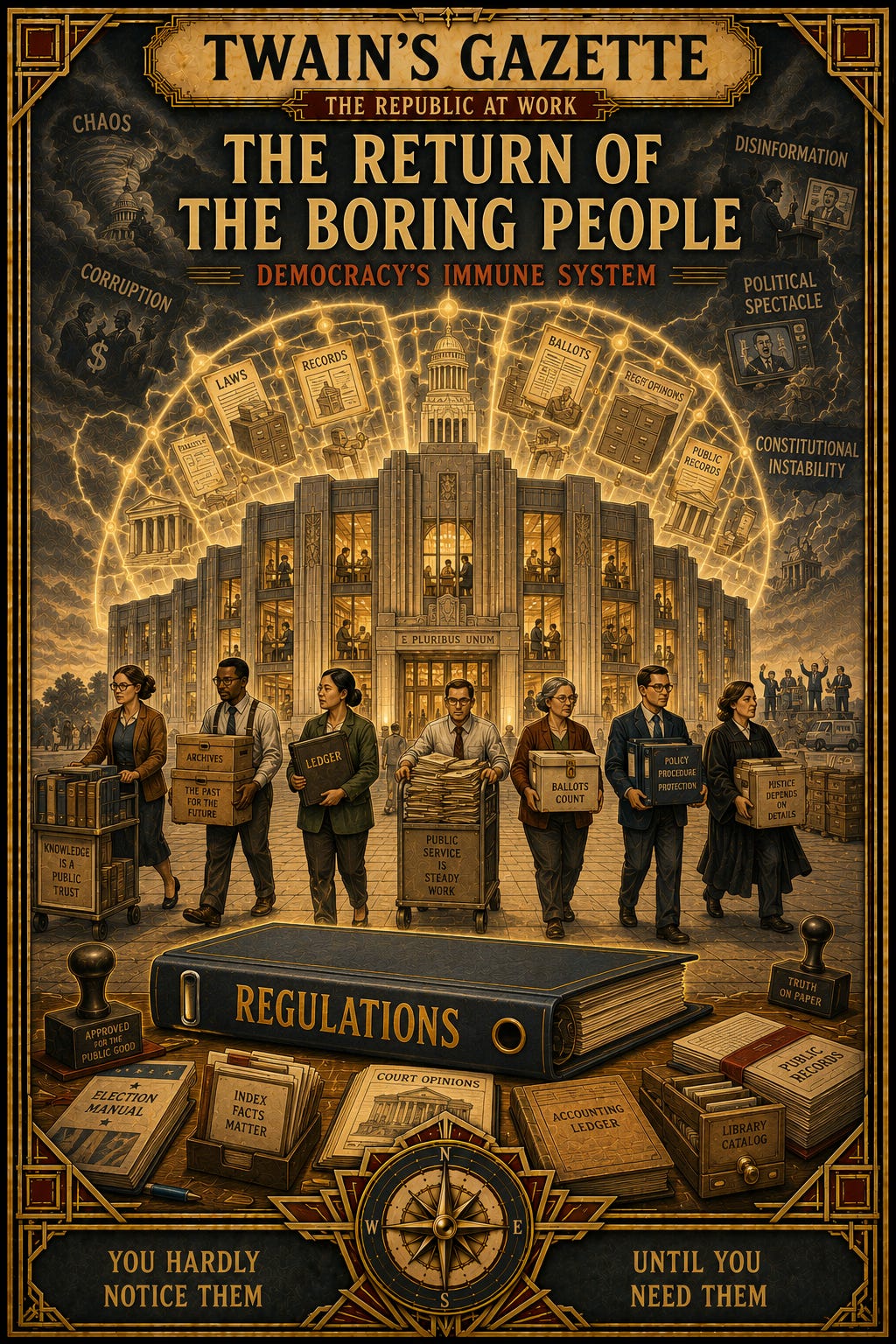
📚 The Return of the Boring People
The funny thing about democracy is that its survival often depends upon the least exciting people in the room.
Clerks.
Auditors.
Accountants.
Librarians.
Archivists.
Election workers.
Civil servants.
Judges.
The people whose greatest weapon is a three-inch binder filled with regulations no one else wants to read.
They are the immune system of government.
You hardly notice them when everything is working.
But when a constitutional fever starts rising, suddenly they become very important.
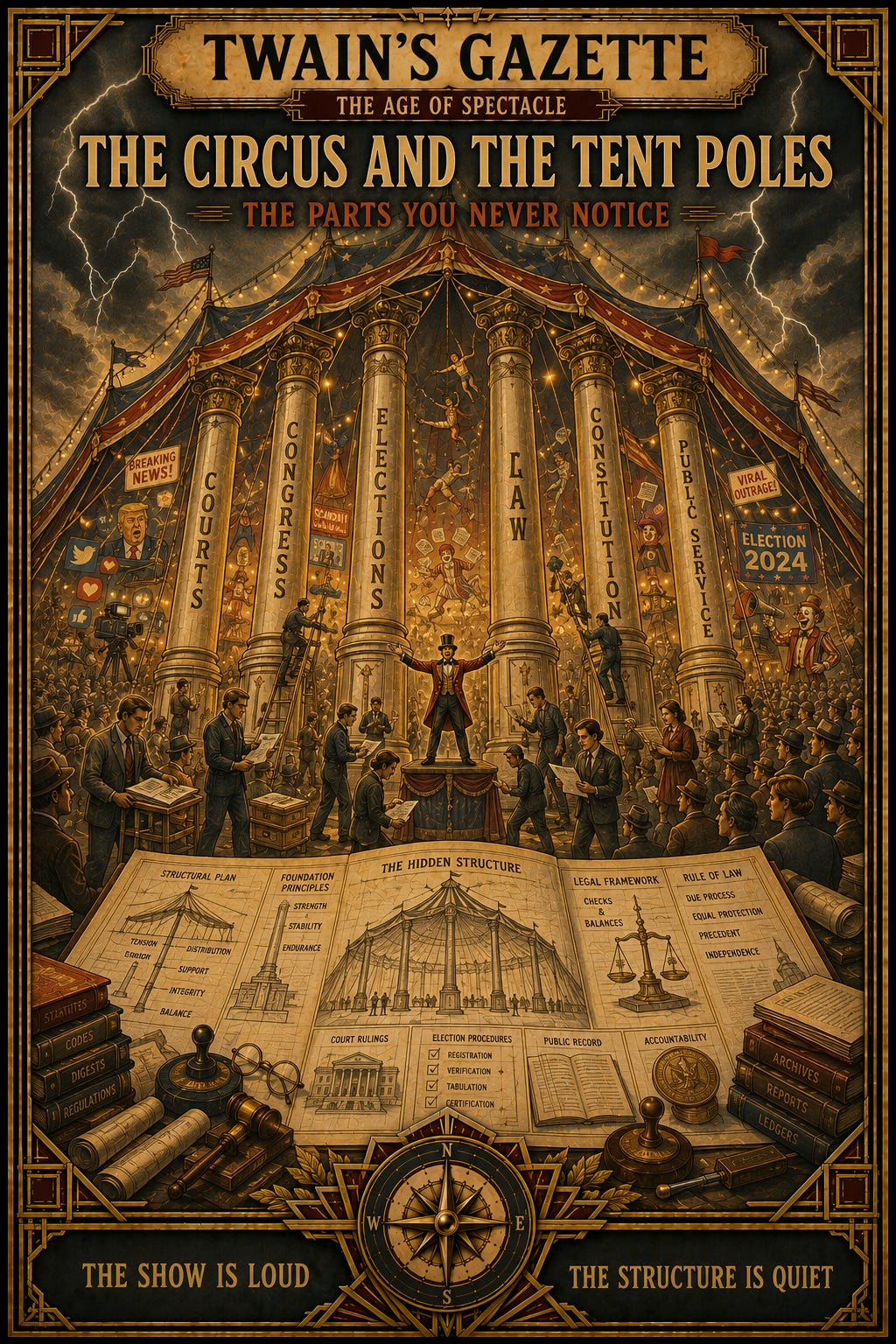
🎪 The Circus and the Tent Poles
For years we have been watching the circus.
The headlines.
The outrage.
The performers.
The endless stream of distractions.
But every circus requires tent poles.
The courts are beginning to look like tent poles again.
Not because they are liberal.
Not because they are conservative.
Because they are asking whether the rules still matter.
And that question is bigger than any president.
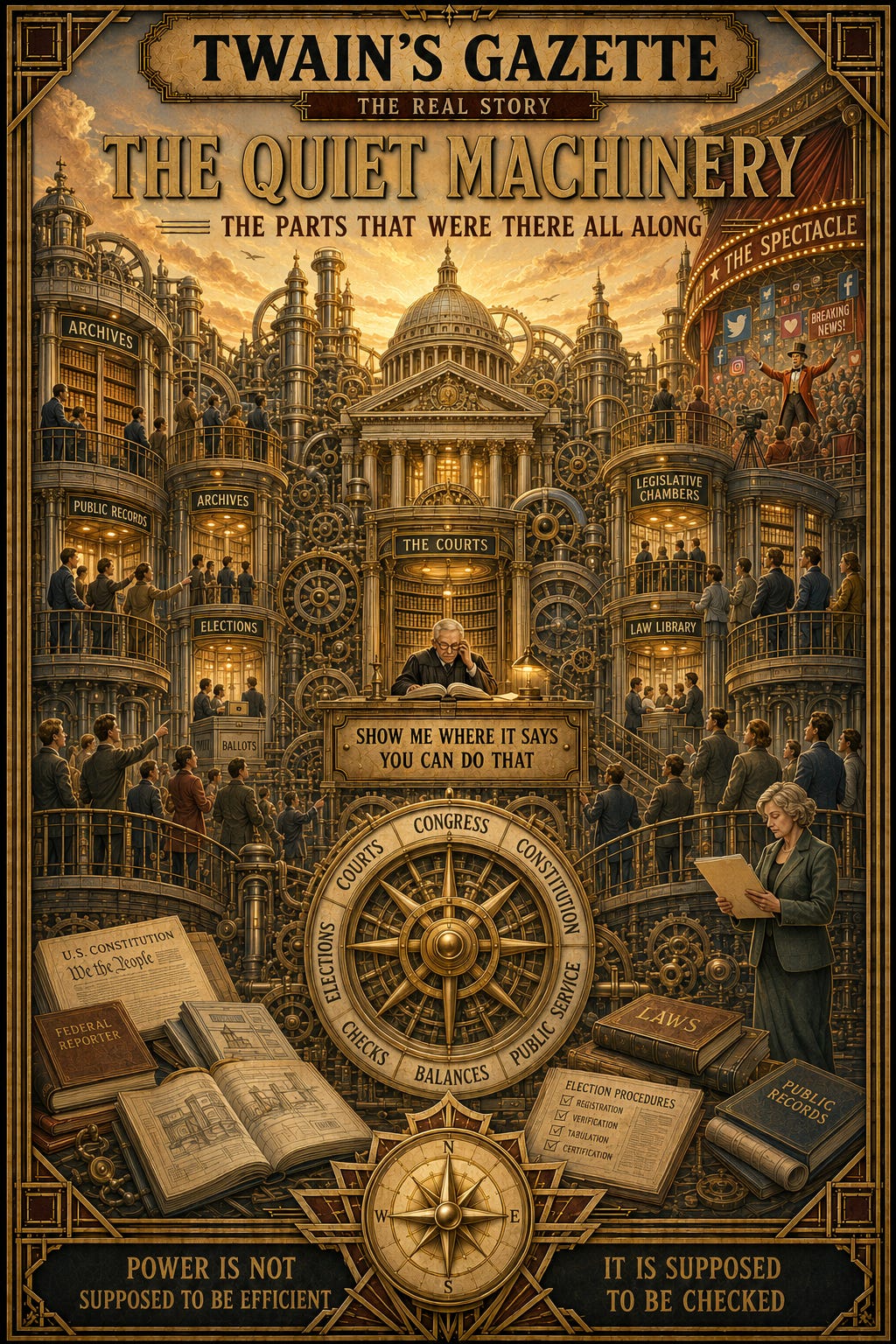
🧭 The Real Story
The real story may not be that the Barbies are gone.
The real story may be that Americans have finally started paying attention to the institutions that were there all along.
Congress.
The courts.
The Constitution.
The quiet machinery of democracy.
None of it is sexy.
None of it makes great television.
But republics are not sustained by television.
They are sustained by checks and balances.
The Founders understood something we periodically forget:
Power is not supposed to be efficient.
It is supposed to be checked.
And perhaps, just perhaps, we are beginning to see those checks kick in.
Not with a bang.
Not with a revolution.
But with a judge looking over a pair of reading glasses and asking the most dangerous question in American government:
“Show me where it says you can do that.”
The Barbies are gone.
The bureaucrats are back.
And somewhere in the background stands Susie Wiles, perhaps the most powerful person in Washington that most Americans couldn’t identify in a grocery store.
The question for Part Two is simple:
Who is Susie Wiles, and what happens when the television stars leave but the operators remain?
🧭 Twain’s Gazette of the Absurd
“The circus changes. The tent poles remain.”