

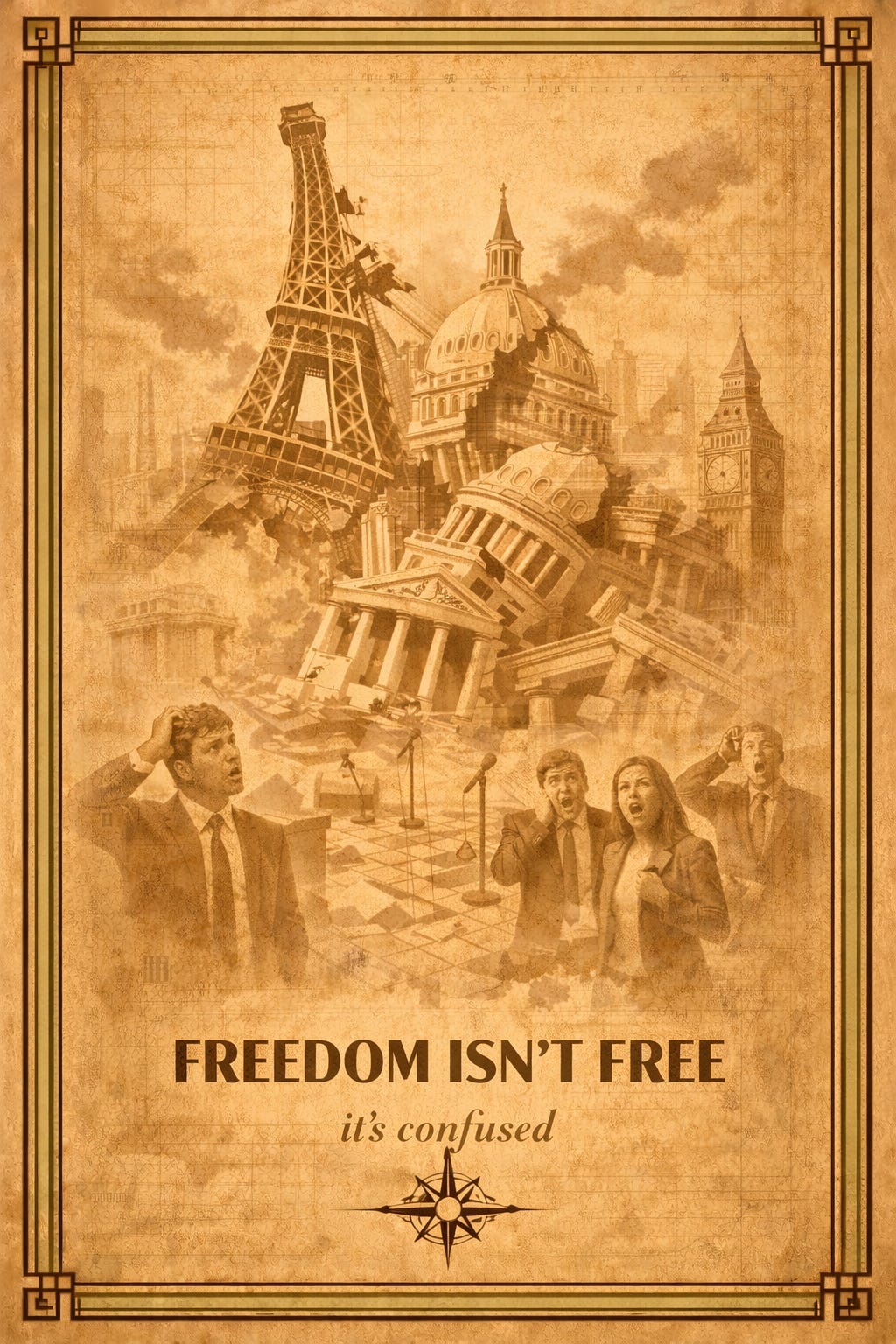
🧭 I. Freedom Isn’t Free, It’s Confused
In Team America: World Police, every geopolitical problem has the same solution: blow something up and declare victory. Paris is destroyed to save Paris. Cairo is reduced to rubble to prevent rubble. The joke lands because it isn’t really a joke. It’s a blueprint.
Action is mistaken for virtue. Noise for leadership. Rubble for resolve.
Two decades later, the puppets have been replaced by real people, but the script hasn’t changed. The only difference is that now the explosions arrive as policy.
Enter the new villain: fentanyl. Or, more precisely, Fentanyl™, Weapon of Mass Destruction. No bomb does what this does, we are told. Hundreds of thousands dead. A substance so apocalyptic it demands a military response.
Cue the anthem. Roll the credits. Nobody ask who wrote the screenplay.
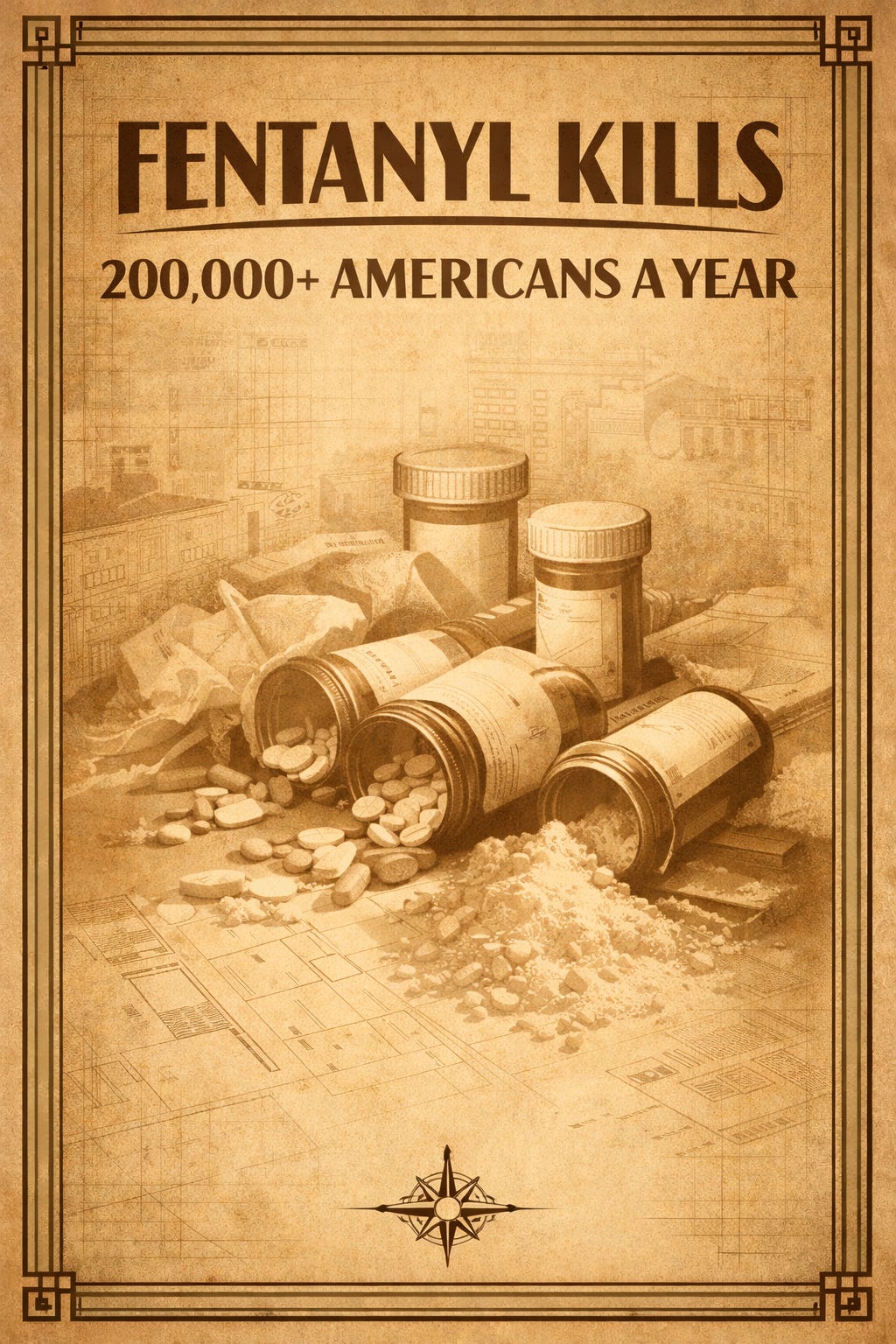
💊 II. The Fentanyl Myth, Defined
Let’s be clear at the outset: fentanyl is dangerous. Lethal, even. But danger alone does not make a weapon. A collapsing bridge is dangerous. A financial system built on fraud is dangerous. Neither is an act of war.
According to the Centers for Disease Control, synthetic opioids, primarily fentanyl, were involved in about 72,776 deaths in the United States in 2023. Provisional data for 2024 show a decline, to roughly 48,000 deaths involving synthetic opioids, even as total drug overdose deaths across all substances hover between 100,000 and 110,000 per year.
These numbers are catastrophic. They are also not the numbers being shouted into microphones.
In a widely circulated clip, President Trump claims fentanyl kills “200 to 300,000 people every year,” a figure used to justify formally classifying it as a weapon of mass destruction. That number does not exist in public health data. It has no CDC address. It does not answer the phone.
To reach 200,000 or 300,000 deaths, one must sweep multiple years into a single pile, stack them neatly, and label the heap “annual.” This is not epidemiology. It is arithmetic cosplay.
What the data actually describe is not an invasion, but a slow, methodical failure of domestic design:
A for-profit healthcare system that prescribed pain relief the way developers pour concrete
Pharmaceutical overprescription that created dependency at scale
Abrupt crackdowns that shut the tap without building an exit ramp
A toxic illicit market where potency beats safety every time
And polysubstance use fueled by despair, poverty, trauma, and untreated mental illness
As Sam Quinones documents in The Least of Us, fentanyl did not arrive with banners flying. It arrived like a market correction. When prescription opioids were restricted, demand didn’t vanish. It simply went shopping.
Fentanyl won because it is cheap, potent, compact, and replaceable—the same qualities every efficient system rewards. It now shows up everywhere: heroin, cocaine, methamphetamine, counterfeit pills. Often without warning. Often without consent. Not because anyone declared war, but because the supply chain worked.
Public health experts call this a crisis. International law does not call it a weapon of mass destruction. WMDs are designed to kill many people at once. Fentanyl kills many people slowly, predictably, and profitably—through systems we built ourselves.
Calling it a weapon does not clarify the crisis. It relabels a structural failure as a foreign attack, allowing everyone involved in the construction to step back and admire the ruins.
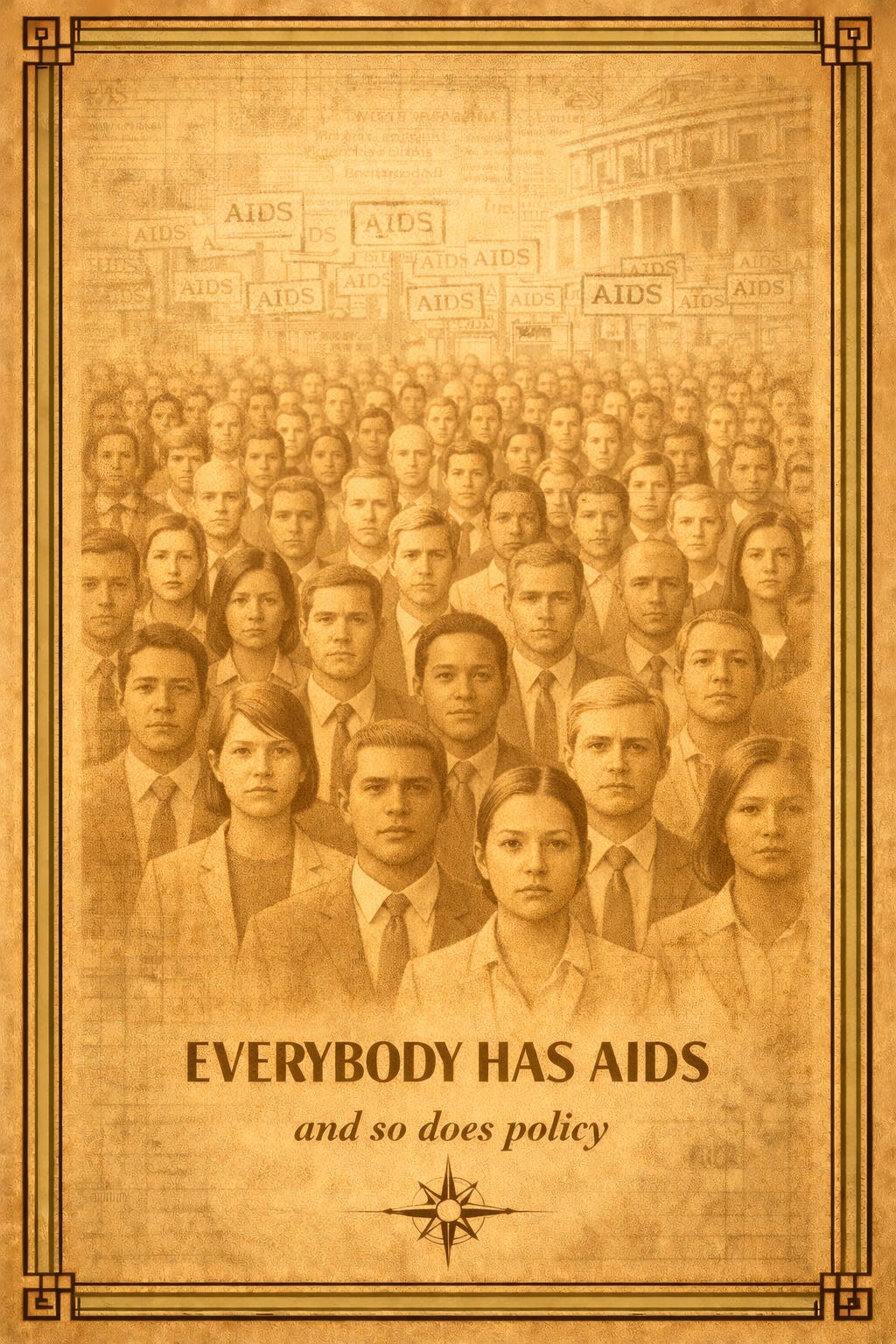
🎭 III. Everybody Has AIDS (and So Does Policy)
One of Team America’s most memorable gags is the line that solves all confusion: everybody has AIDS. Context evaporates. Complexity dies quietly. Certainty marches on.
Fentanyl policy works the same way.
All overdoses become one story.
All substances become one substance.
All deaths become crimes.
Treatment gets crowded out by theater. Housing disappears behind headlines. Harm reduction is dismissed as moral weakness. Nuance is labeled sympathy. Sympathy is labeled treason.
What matters is that someone, somewhere, is doing this to us. Preferably someone foreign. Preferably someone we already dislike.
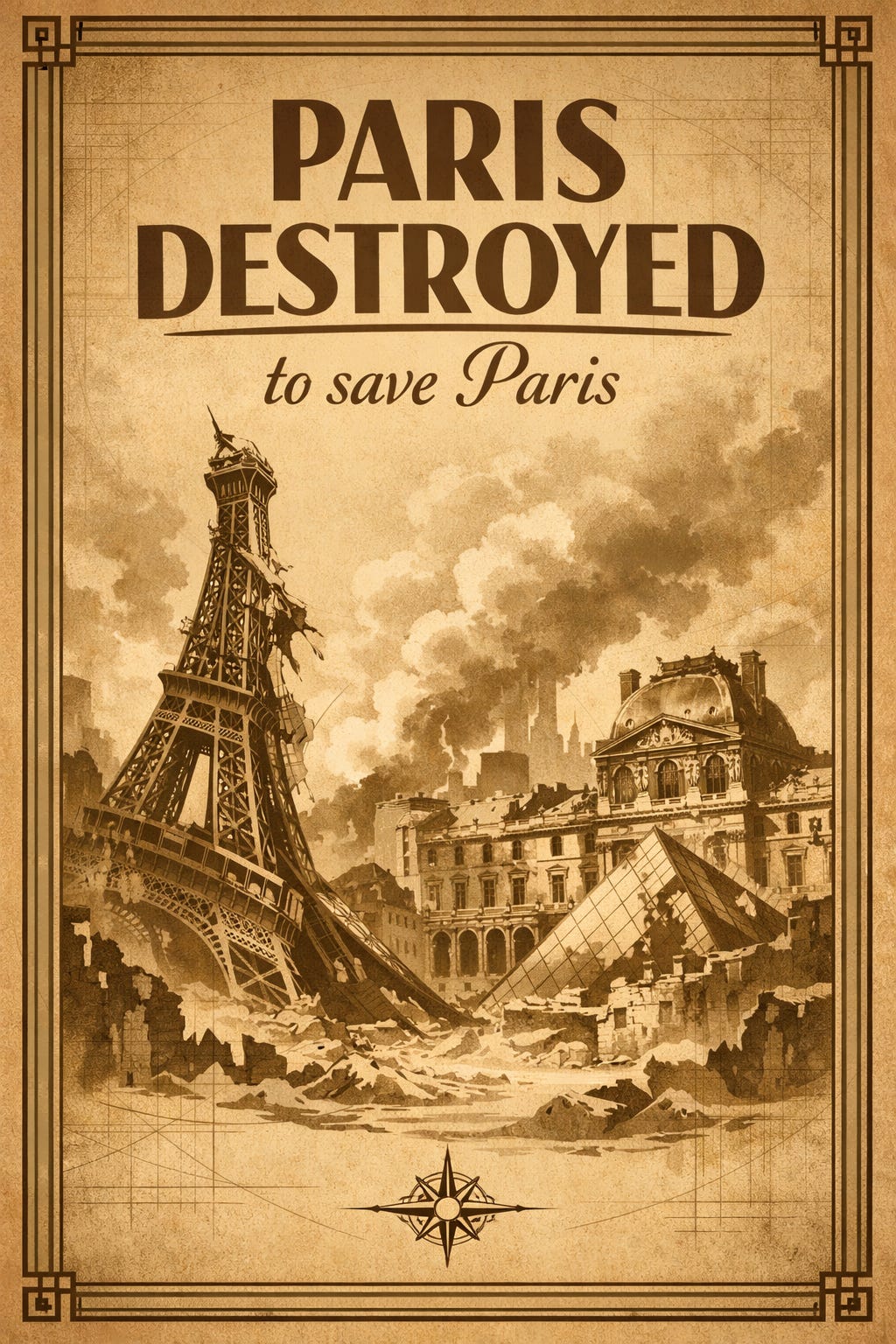
🗼 IV. Paris Was Destroyed to Save Paris
In Team America, Paris is saved after it has been completely annihilated. The Eiffel Tower collapses. The Louvre explodes. The team congratulates itself.
The joke isn’t cruelty. It’s accounting.
If the intention was noble, the outcome doesn’t count.
That logic has escaped the screen.
🚢 V. Tankers Seized to Save America
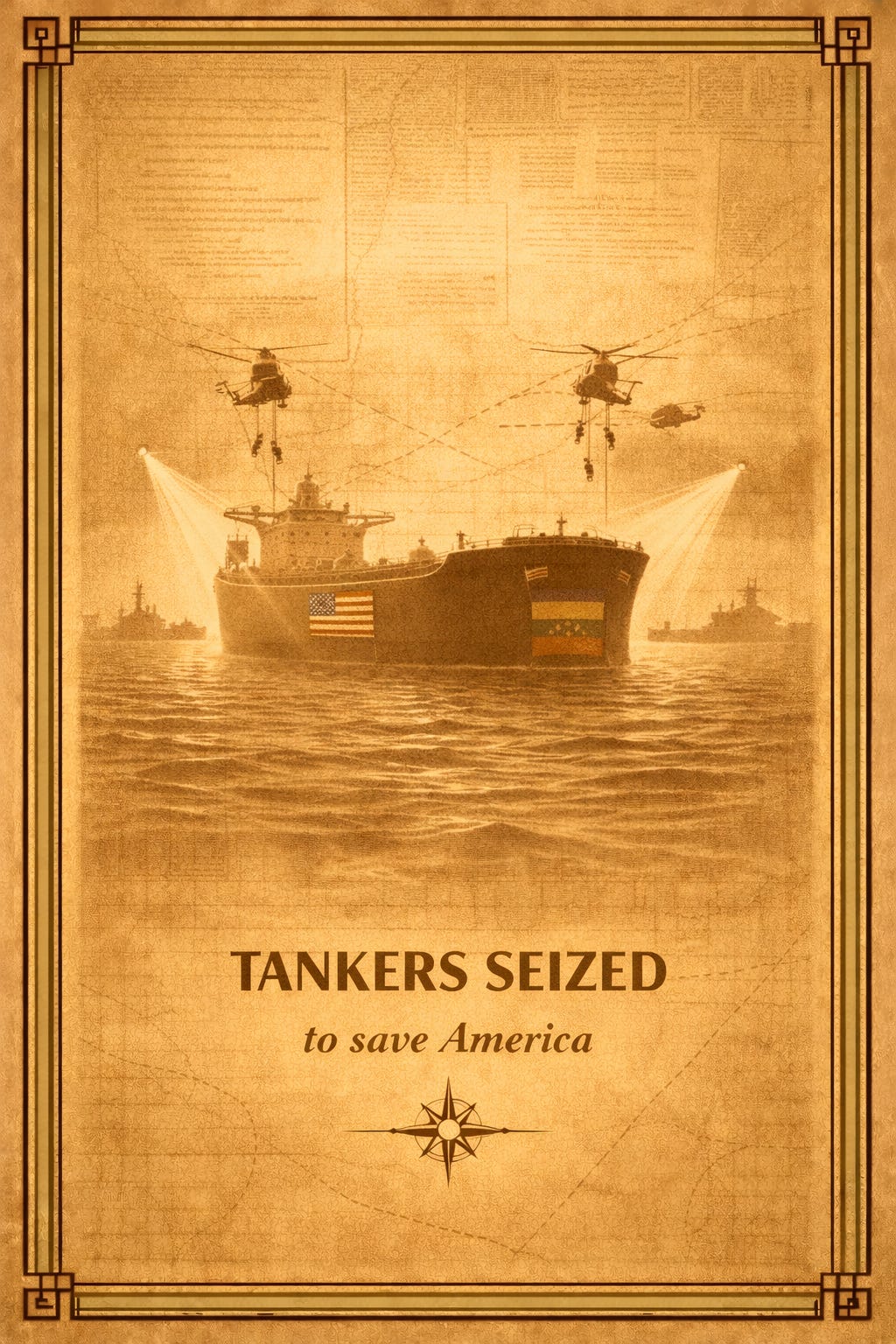
Under this same logic, the United States now seizes Venezuelan oil tankers in international waters—waters that do not belong to us—under explanations that slide from sanctions to security to fentanyl terrorism.
Evidence is scarce. Jurisdiction is asserted, not explained. Due process is optional. The public is told to trust the confidence.
Somehow, an oil tanker becomes a drug lab by declaration alone. Somehow, Venezuela is blamed for fentanyl deaths largely traced through Mexico-based trafficking networks, global chemical precursors, and domestic demand.
Once fentanyl is called a weapon of mass destruction, precision becomes unnecessary. Everything dangerous becomes adjacent. Every adversary becomes complicit.
Paris must be destroyed to save Paris.
Tankers must be seized to save America.
⚰️ VI. Civilians Killed to Save Civilians
The logic keeps expanding.
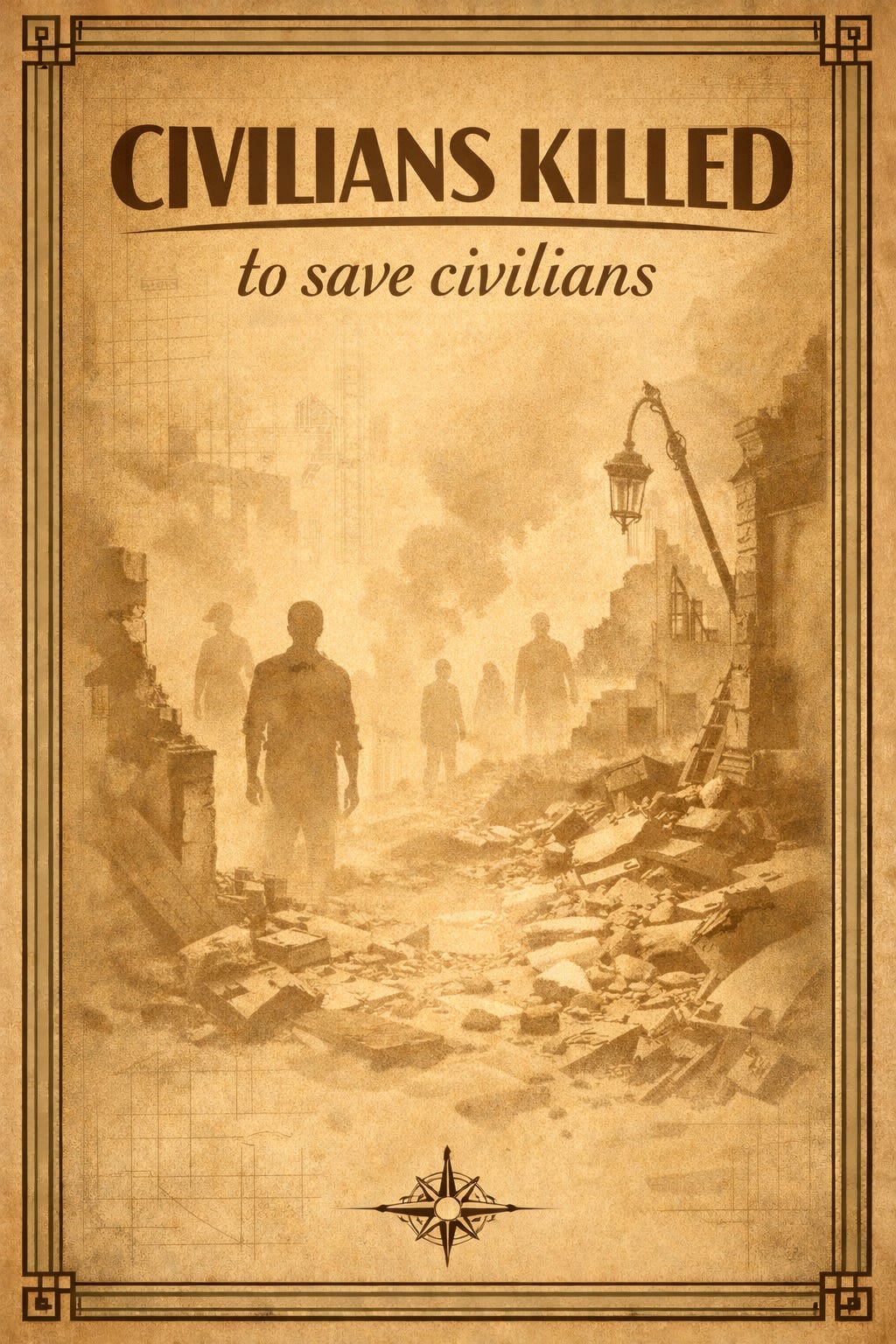
Boats are bombed. Economies collapse under sanctions. Civilians disappear into footnotes. These deaths are described as tragic necessities, like structural cracks discovered after demolition.
But killing civilians to save civilians is not strategy. It is evidence that the map has replaced the territory.
When addiction is framed as war, people become acceptable losses. Numbers replace names. And numbers, unlike people, are easy to rearrange.
⚖️ VII. Laws Broken to Defend the Law
Every empire eventually discovers it is exceptional.
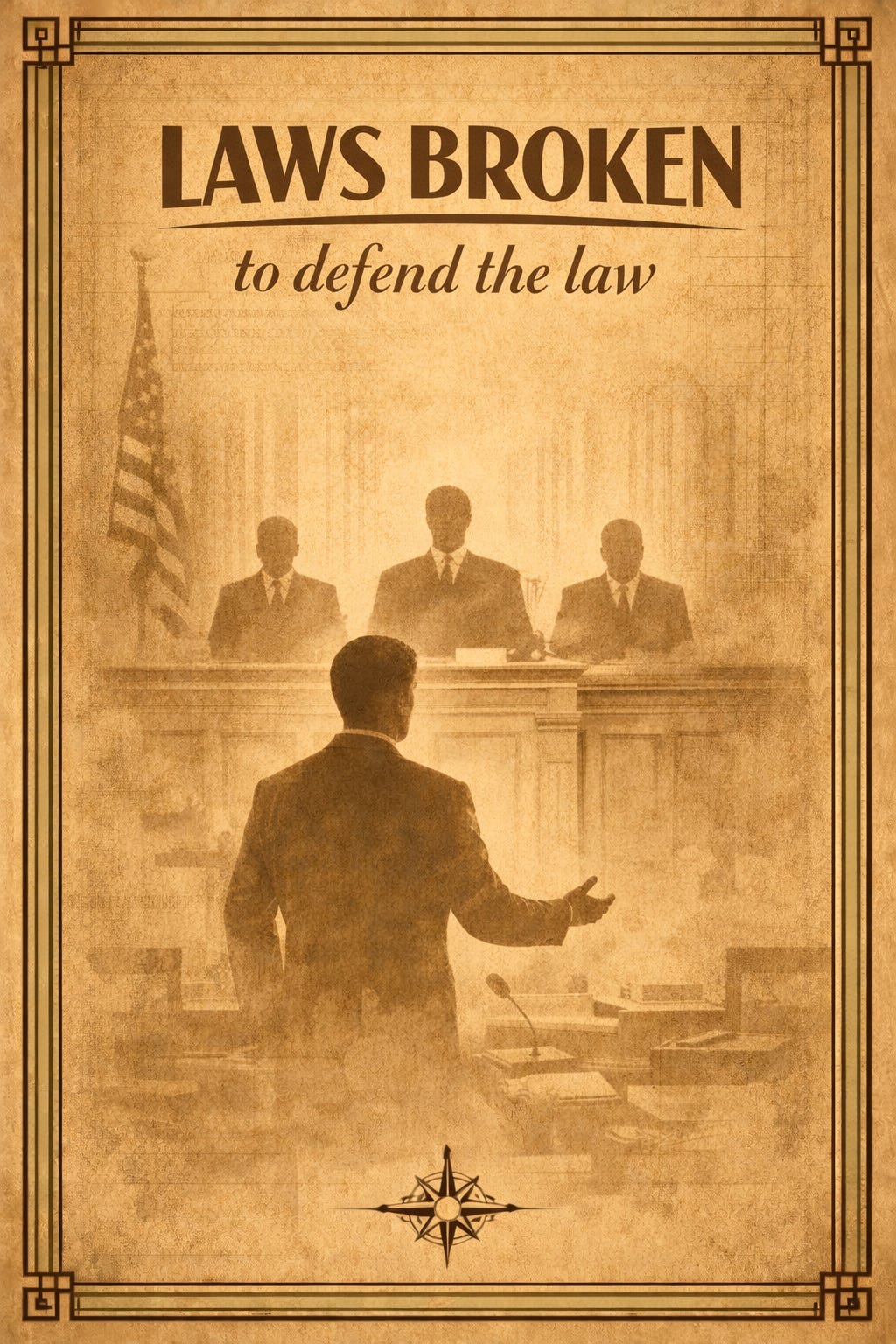
International law must bend. Sovereignty must yield. Due process must wait. All in the name of defending the very principles being bent.
Breaking the law to defend the law is how power reassures itself when the foundation begins to wobble. The architecture becomes circular. The blueprint eats its own legend.

🎭 VIII. Puppet Strings and Plausible Deniability
In Team America, the heroes are literal puppets. They never notice the strings.
Today’s fentanyl panic works the same way. It is not about solving addiction. It is about performing control. Someone must be punished so no one has to admit where the structure failed.
Calling fentanyl terrorism converts an internal collapse into an external enemy. It swaps care for commandos. Policy for spectacle.
🧠 IX. The Real Enemy Is Boring
The least satisfying truth is the correct one.
The fentanyl crisis is not sabotage.
It is not invasion.
It is not a Bond villain.
It is bureaucracy, markets, neglect, and despair doing exactly what they were designed to do.
No final boss. No victory parade. Just systems that produce bodies and then express surprise at the count.

🎬 X. Curtain Call
Team America: World Police ends with the world technically saved, minus several cities.
The fentanyl narrative risks making that punchline into doctrine.
Declaring a drug a weapon does not resurrect the dead.
Militarizing addiction does not heal the living.
And myths do not replace care, no matter how confidently they are shouted.
Freedom isn’t free.
But confusion is very expensive.

If this essay saved you the trouble of shouting at the television,
consider buying the author a drink.
Satire is unpaid labor.
Fact-checking is thirsty work.
And irony pairs best with something neat.