


🎤 I. The Fall of the Mighty (The Rapper Version)
If you were wondering whether the Republic was truly on fire or merely smoking gently in the corner, you need only look to the most reliable barometer of American political health:
the nation’s musicians.
When the President of the United States becomes the subject of a hit rap track literally titled “F* Donald Trump,”**
you’re not in a “normal moment.”
You’re in a late-stage empire, the kind where marble crumbles and trumpets sound like alarms.
YG and Nipsey Hussle didn’t release a political statement.
They released an American diagnosis — quick, brutal, and medically necessary.
If the body politic were well, “FDT” wouldn’t exist.
But here we are.
And in times of national decay, musicians are always the first responders.
Because Americans may lie with their words, and politicians may lie with their faces —
but music never lies.
🎧 II. “FDT” as Cultural Seismograph
“FDT” is not a stunt; it is a seismograph reading.
Underneath the profanity is an architectural critique:
a rejection of authoritarian rhetoric
a refusal to soften political cruelty
an insistence on calling a con a con
a reminder that silence is complicity
It is not polite.
It is not tidy.
It is not meant for brunch.
It is the sound of a nation hitting the alarm button.
But to understand “FDT,” one must place it in the grand structure of American protest music — a blueprint that stretches from Billie Holiday’s stage lights all the way to Kendrick Lamar’s street hymns.
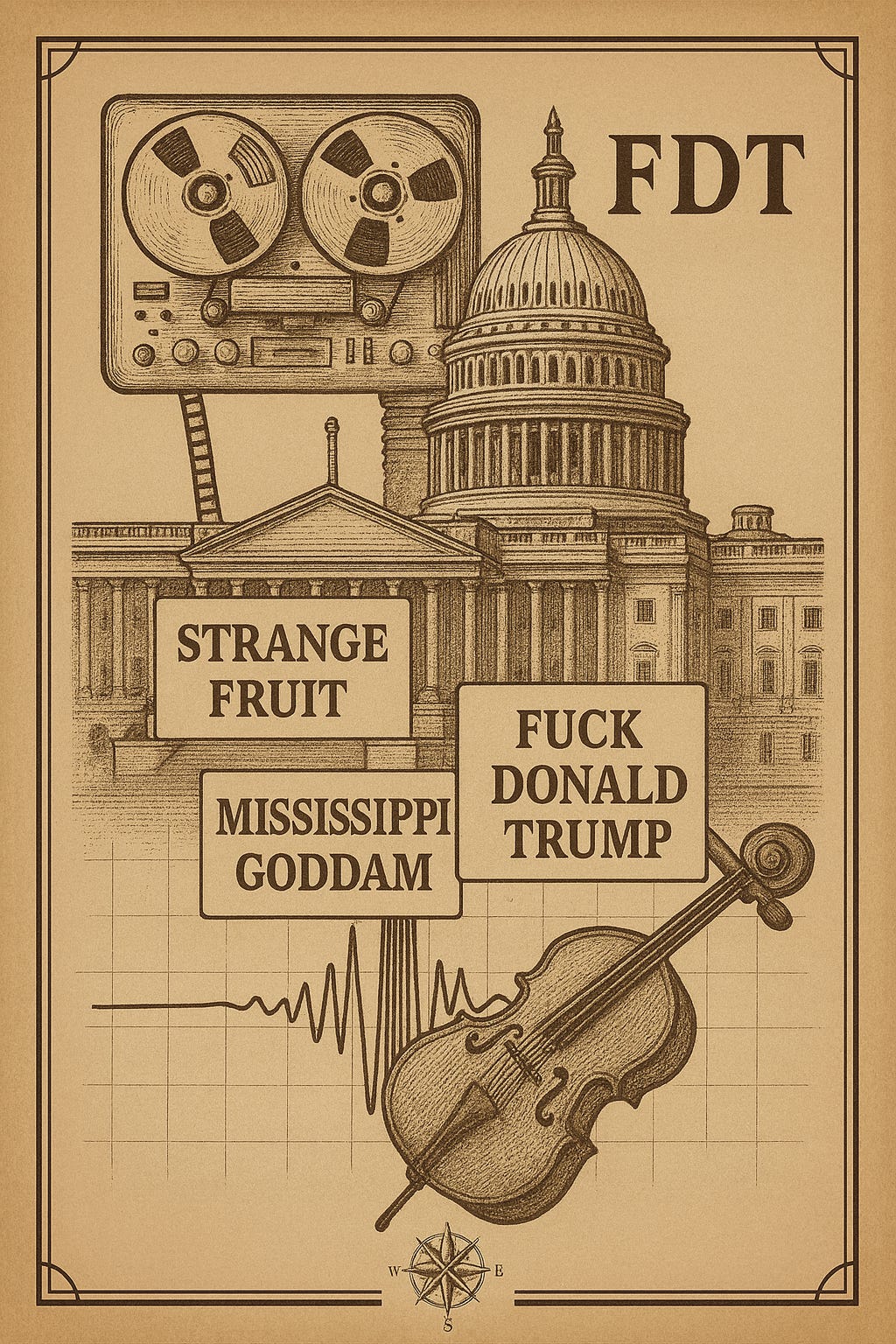
🎺 III. “FDT”: The Protest Song So Accurate the Government Tried to Erase It
Before we crown “FDT” as merely a viral moment, let’s examine this gem of American hypocrisy:
The U.S. Secret Service attempted to censor the song.
During production:
They contacted the label
They demanded lyric changes
They monitored the release
This places “FDT” in elite company — the select group of protest songs targeted by federal authorities:
Billie Holiday’s “Strange Fruit” (FBI harassment)
Nina Simone’s “Mississippi Goddam” (banned)
N.W.A’s “F* tha Police”** (FBI warning letter)
And now:
YG & Nipsey Hussle’s “F* Donald Trump.”**
When the government panics, the art is telling the truth.
🔥 IV. Why “FDT” Hit Harder Than Critics Expected
“FDT” captured what millions felt but few institutions dared to say:
the erosion of democratic norms
the rise of racist political rhetoric
the targeting of Black and Latino communities
the collective exhaustion of Americans who recognized a threat in real time
“FDT” is not refined.
It is not diplomatic.
It is diagnostic.
A cardiogram of a failing republic.
🧨 V. A Raw Counterpart to “Alright”
If Kendrick Lamar’s “Alright” became the hopeful, soaring, spiritual backbone of the BLM era —
the breath, the balm, the collective uplift —
then “FDT” became the political exorcism.
“Alright” = survival.
“FDT” = clarity.
One sings hope.
The other shouts warning.
Both are essential.
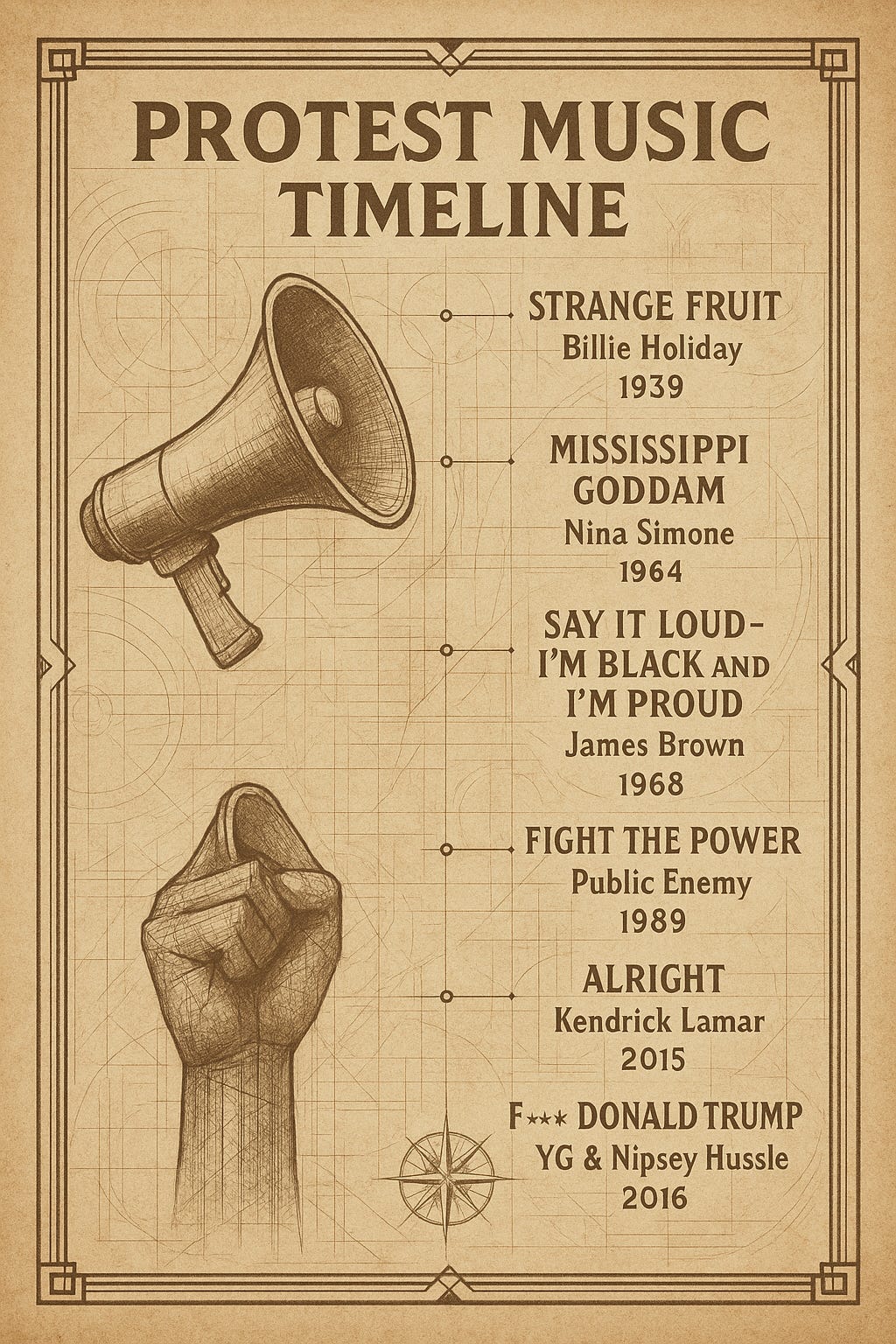
🎶 VI. “FDT” in the Long Line of American Protest Music
America’s protest music tradition is long, loud, and architecturally diverse.
“FDT” stands in a lineage that includes:
Billie Holiday — “Strange Fruit” (1939)
The quietest scream in American history.
Nina Simone — “Mississippi Goddam” (1964)
A Broadway-style detonation of political rage.
James Brown — “Say It Loud — I’m Black and I’m Proud” (1968)
A reclamation of dignity in the face of national denial.
Public Enemy — “Fight the Power” (1989)
Blueprint-level construction of resistance.
N.W.A — “F* tha Police” (1988)**
A blunt-force indictment of state systems.
Kendrick Lamar — “Alright” (2015)
A modern gospel of resilience.
“FDT” belongs in this lineage not because it is polite, but because it is necessary.
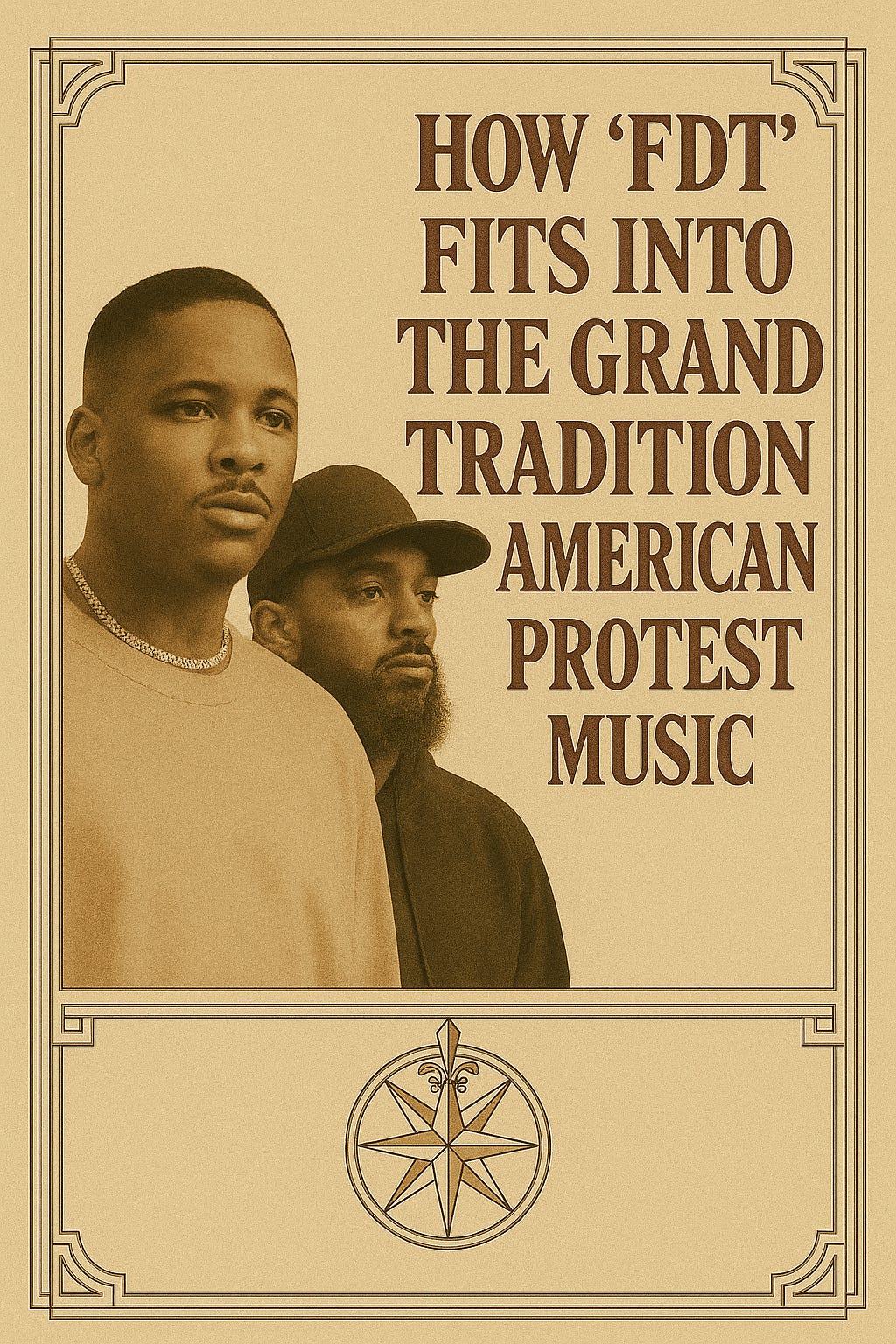
📈 VII. How “FDT” Became a Historical Document
Despite radio censorship, the song surged — not once, but twice:
2016: the original release
2020: a resurgence during protests and the election
It became:
a chant
a meme
a rallying cry
a diagnostic tool
a historical record
After Nipsey Hussle’s death, “FDT” transformed into a kind of cultural relic — a reminder of his leadership, clarity, and refusal to stay silent.
🏛️ VIII. The Architecture of Protest Music: What “FDT” Reveals About the Republic
Protest music in America has always had two wings:
1. The poetic wing
(Billie, Nina, Kendrick)
2. The blunt-force wing
(N.W.A, Public Enemy, YG & Nipsey)
Both wings are required to keep the cultural structure standing.
“FDT” occupies the brick-throwing, truth-shouting, civic-defibrillator wing.
It is not polite because the political conditions were not polite.
In a functioning republic, you do not get “FDT.”
In a collapsing one, you need it.
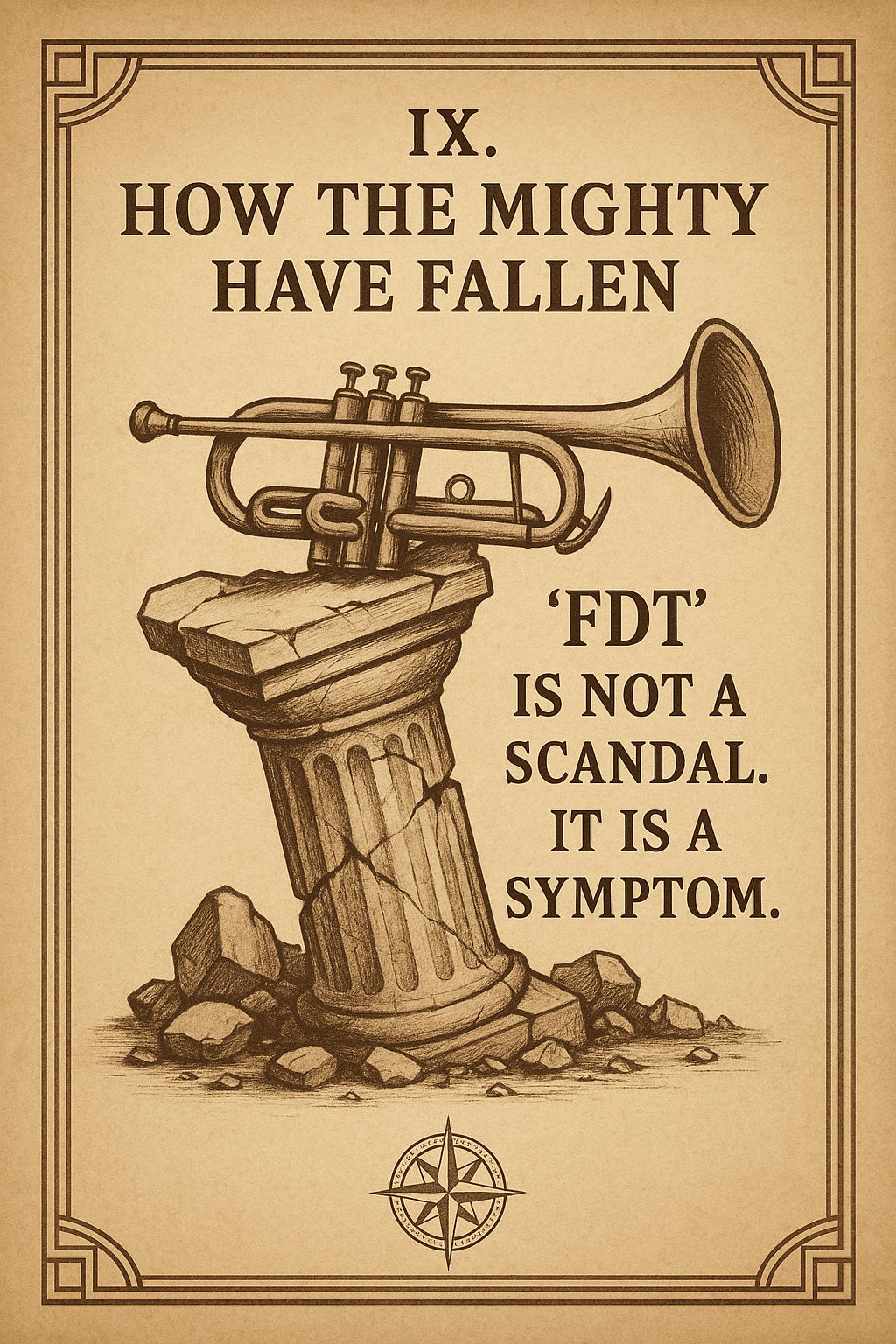
⭐ IX. How the Mighty Have Fallen
“FDT” is not a scandal.
It is a symptom.
It tells us:
The mighty have not just fallen —
they’ve been falling for years,
and the artists simply announced it first.
As they always do.
Welcome to the American protest tradition,
updated for the 21st century,
with a beat sharp enough to cut marble
and honest enough to embarrass the powerful.