


⚙️ 1. The Blueprint of Power
The Founders built the presidency like a furnace — powerful enough to warm the Republic, dangerous enough to burn it down.
So they drew blueprints not for a throne, but for a workshop — a place where Congress could reach for tools when the fire got too hot.
Some presidents respect those boundaries. Others melt them.
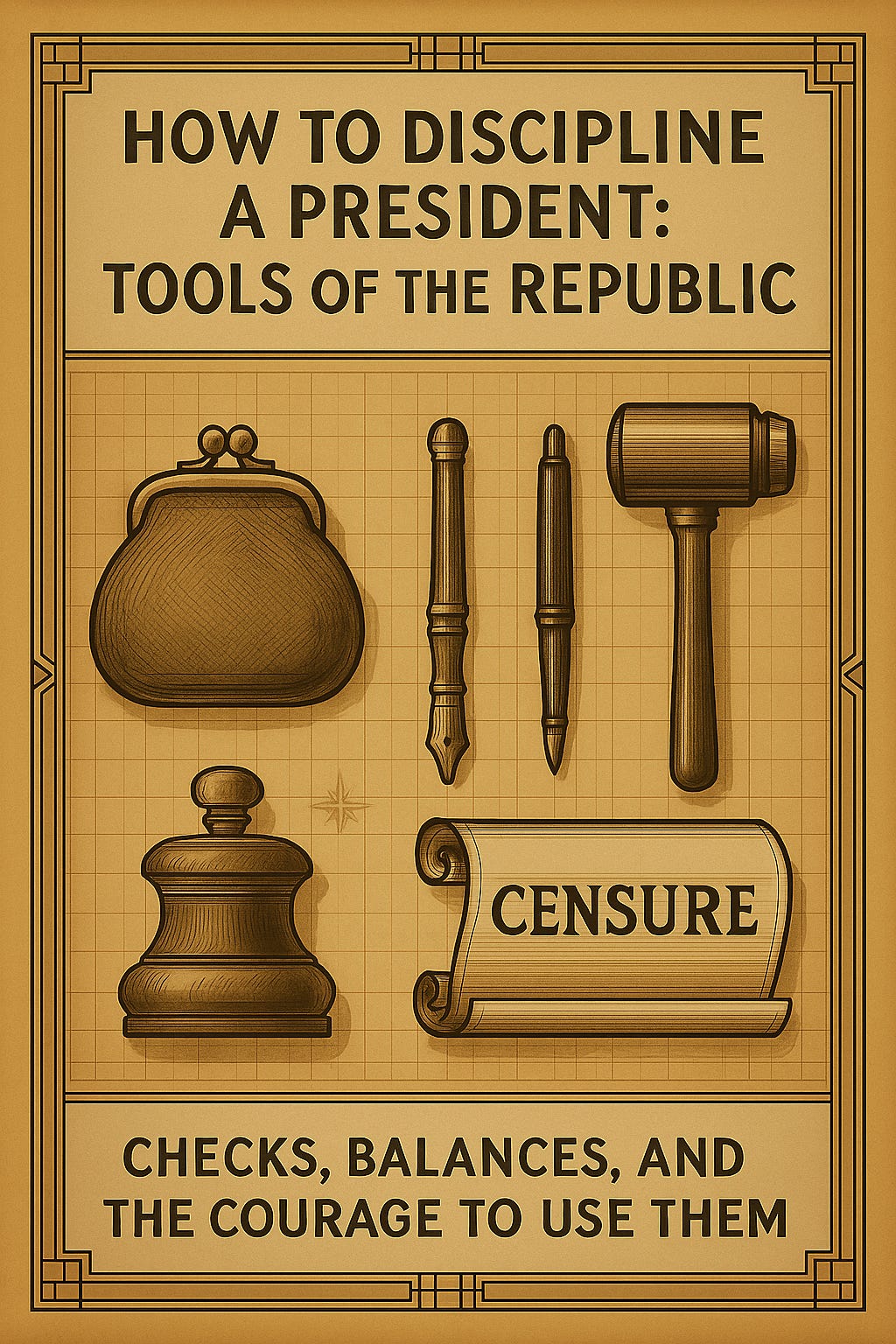
That’s why the Republic keeps a toolkit — the purse, the gavel, the pen, the scroll, and the hammer — each a device of restraint in the hands of the legislative branch.
Every tool, a check.
Every check, a question: Do we have the courage to use it?
🧰 2. The Tools of the Republic
The Purse — Congress’s wallet. Control the money, control the motion.
The Gavel — Oversight. Hearings, subpoenas, investigations — the sound of accountability.
The Pen — Legislation. Words that outlive kings.
The Scroll of Censure — A symbolic reprimand; a scar on the record.
The Hammer of Impeachment — The heavy instrument of last resort, used rarely but remembered forever.
These are the instruments of discipline.
They hang on the wall of the Republic like tools in a well-ordered workshop.
But lately, the lights in that workshop have dimmed.
⚖️ 3. The Check That Can’t Cash Itself
A check, by design, stops a bad hand from overreaching.
But what happens when that hand simply ignores the stop?
Federal judges have ordered the President to fund SNAP benefits — reminding him that hunger is not partisan, and the Constitution doesn’t recess with Congress.
Yet here we are: the judge has ruled, the law has spoken, and the President has shrugged.
Because in practice, the judiciary has no army, no purse, no direct line to the grocery store.
It writes justice in ink, but ink doesn’t move money.
That takes an obedient executive — and faith, that rare commodity the Republic’s been short on lately.
🏗️ 4. The Architecture of Accountability
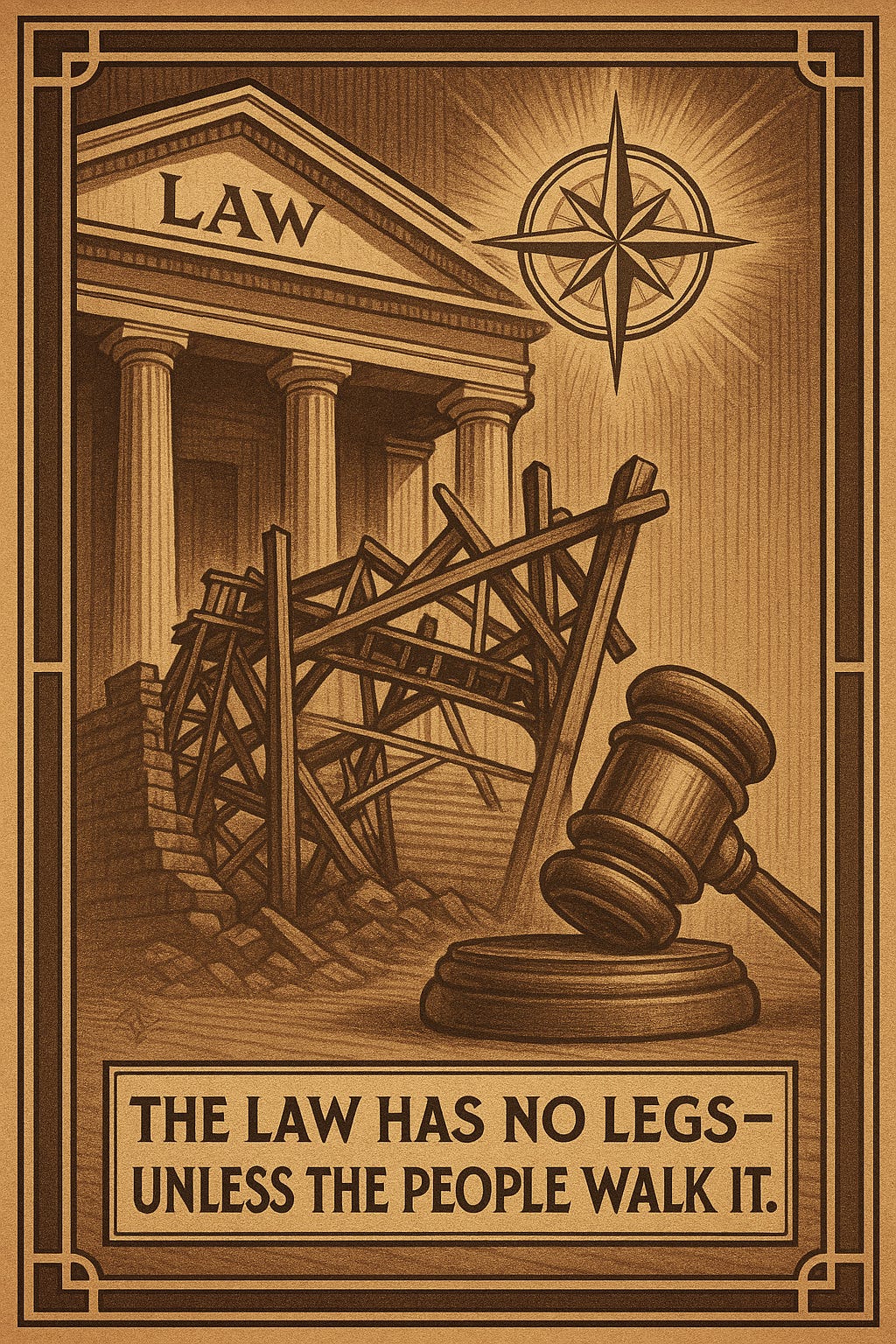
We call it checks and balances, but it’s really scaffolding held together by cooperation.
When one branch refuses to bear its weight, the whole structure creaks.
Congress can defund, subpoena, and impeach — but only if it acts.
The courts can order compliance — but only if the executive obeys.
And the people can vote — but only if we’re awake enough to notice the cracks.
Every generation inherits this architecture.
Some renovate it.
Others strip it for parts.
🪞 5. The Limitations of a Check
The SNAP case — and the courts’ demand that the President obey the law — shows how a check becomes a plea when courage goes missing.
A judge can demand, “Fund the program.”
The President can reply, “We’ll see.”
And the nation discovers, again, that the rule of law depends on the rule of conscience.
In theory, the system works.
In practice, it stalls in committees, appeals, and photo ops.
The Republic’s gears are not broken; they’re just rusted by neglect.
🧭 6. The Hidden Compass
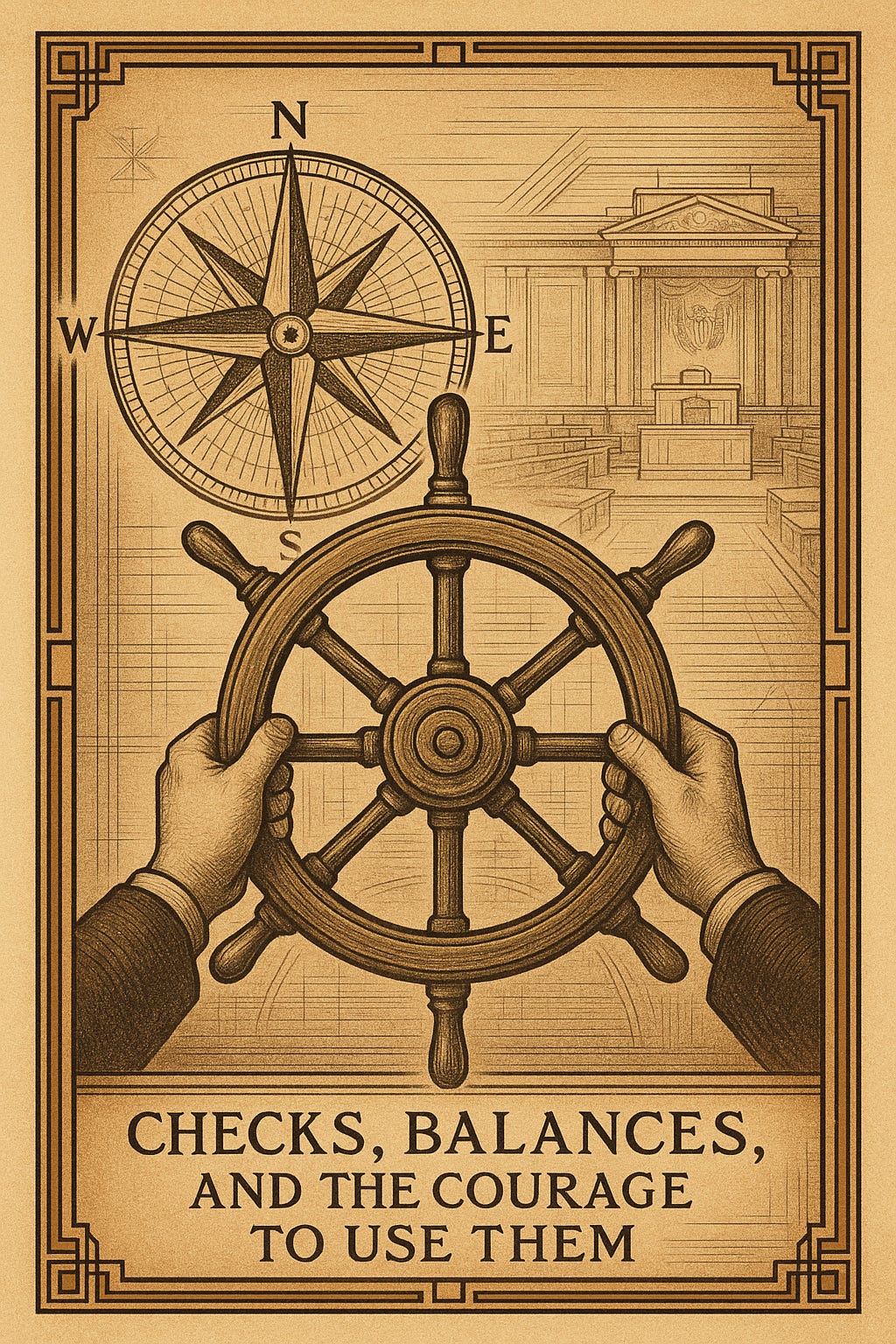
The Twainian compass rose — slyly hidden in each blueprint — reminds us that direction still exists, even when leadership doesn’t.
“Checks, Balances, and the Courage to Use Them”
isn’t just an engraving.
It’s an unfinished national renovation.
Democracy isn’t self-driving.
It demands hands on the wheel, voices in the chamber, and eyes that still see the blueprint beneath the dust.
Because the law has no legs — unless the people walk it.
🪶 Twain’s Gazette of the Absurd

🧭 The Twainian Compass Rose — engraved and eternal — rests at the bottom of every civic design.
Its message is the same as ever: direction exists, even when leadership falters.
💡 Subscribe for weekly dispatches on power, parody, and public architecture.