

🕰️ I. This Again
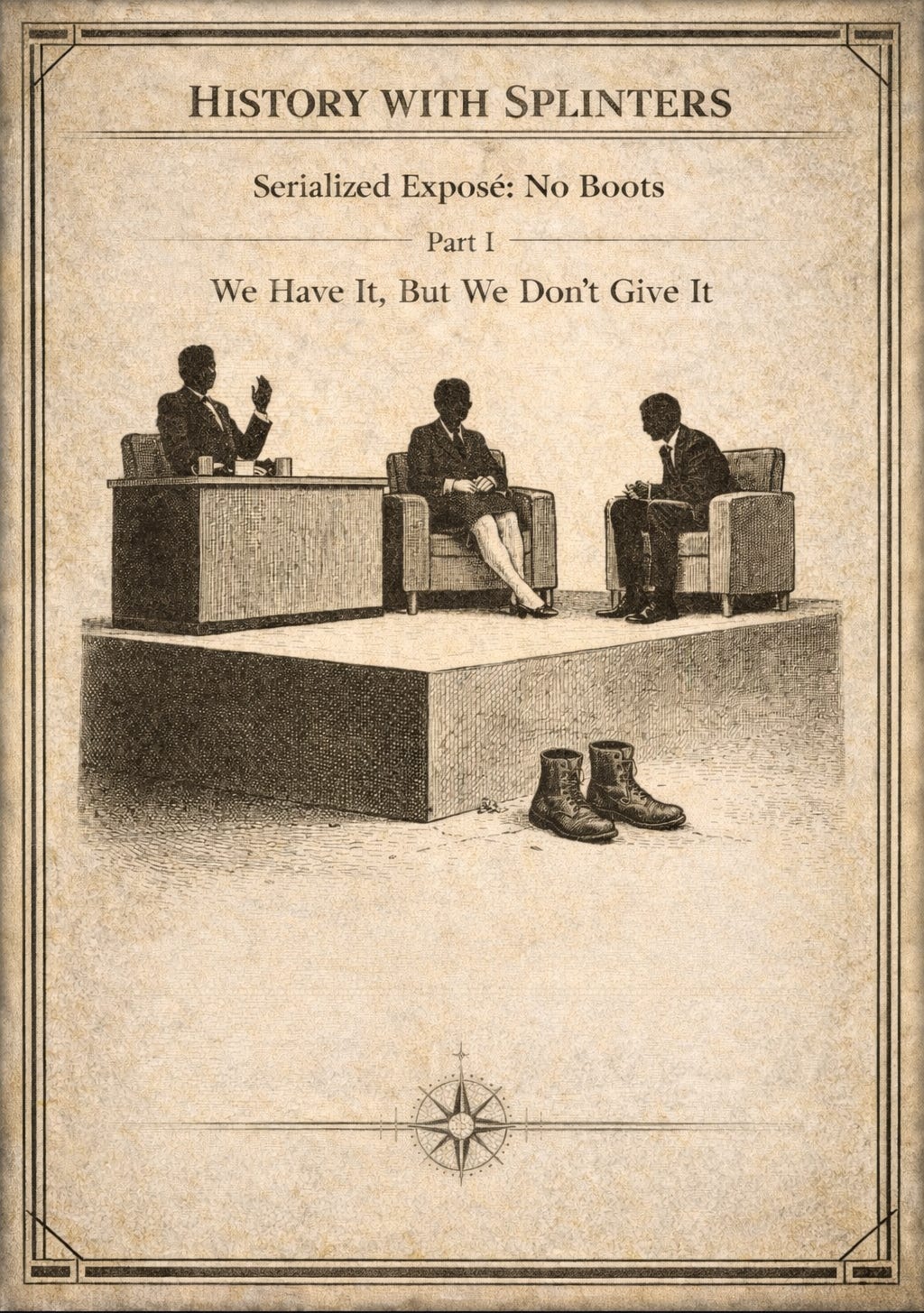
On a summer night in 1978, the great American bootstrap sermon briefly wandered onto late-night television.
The setting was The Tonight Show Starring Johnny Carson. The exchange was polite. The tone was civilized. And the claim was as old as the republic.
Dorothy Fuldheim, then eighty-five years old, assured the audience that no one starves in America and that people do not need to sleep on the streets. Food exists, she explained. Help is available. The implication hovered, unspoken but familiar: suffering persists because people fail to avail themselves of what is there.
🎩 II. Said Nicely
Sitting beside her was Richard Pryor. Pryor did not interrupt. He did not mock. He waited, then replied with a sentence that history keeps trying to forget.
“Yes, ma’am. They sleep in the streets and they die here in America.”
When Fuldheim doubled down, insisting that people could always get something to eat, Pryor offered the line that collapses a century of argument into six words:
“We have it. But we don’t always give it.”
There it was. The entire case file, opened in public.
That exchange exposes the oldest trick in our moral toolbox: demanding that people pull themselves up while quietly removing the boots.
📌 III. Still the Problem
This was not a debate about resources. America has always had those. It was a debate about obligation. About whether the existence of food, shelter, and wealth carries with it any duty of distribution, or whether availability alone absolves responsibility.
Fuldheim’s position was not cruel. That is precisely why it matters. It was the voice of someone raised inside a system where access had never been in question. Where the difference between having and getting had been blurred by insulation. Where scarcity existed as an abstraction, not a daily negotiation.
Pryor spoke from the other side of that abstraction. He was not making a policy argument. He was describing a system failure so normalized that it could be denied on national television without irony.
That denial has a long pedigree.
📚 IV. As Taught
Before the New Deal, the United States ran on Fuldheim’s assumption. Poverty was not evidence of structural imbalance but of individual failure. Relief was discretionary. Charity was voluntary. Hunger was regrettable but instructive. If resources existed somewhere, the moral ledger was considered balanced.
History records the result with grim consistency: vast fortunes at the top, mass precarity below, and a thin charitable veil stretched over a yawning economic divide. People survived on whatever kept them alive. They died in mines, mills, fields, and tenements. And when they failed to endure quietly, they were accused of lacking responsibility.
🧱 V. Installed Once
The New Deal shattered that logic by taking Pryor’s sentence seriously decades before he spoke it aloud.
We have it.
So we must give it.
Systematically.
Predictably.
Without moral screening.
That principle built jobs, pensions, labor protections, and a middle class that did not exist before. It did not make people dependent. It made adulthood survivable.
🪵 VI. Trimmed Back
This serialized exposé begins here because the argument never really moved on. It simply learned to dress better.
Today, when safeguards are described as indulgence and instability as motivation, the claim remains the same one Fuldheim made in 1978: the resources are there; the failure is personal. The floor, we are told, is unnecessary. Responsibility should suffice.
Pryor answered that claim once. History answered it again in the 1930s. And now, quietly, carefully, that answer is being challenged.
Not because the past was misunderstood.
But because it is inconvenient.
🧭 VII. Orientation
This is History with Splinters.
We begin with the part they keep sanding down.
Next: where the idea that suffering builds character came from, who benefited from it, and why it keeps returning whenever safeguards start to look like rights.