

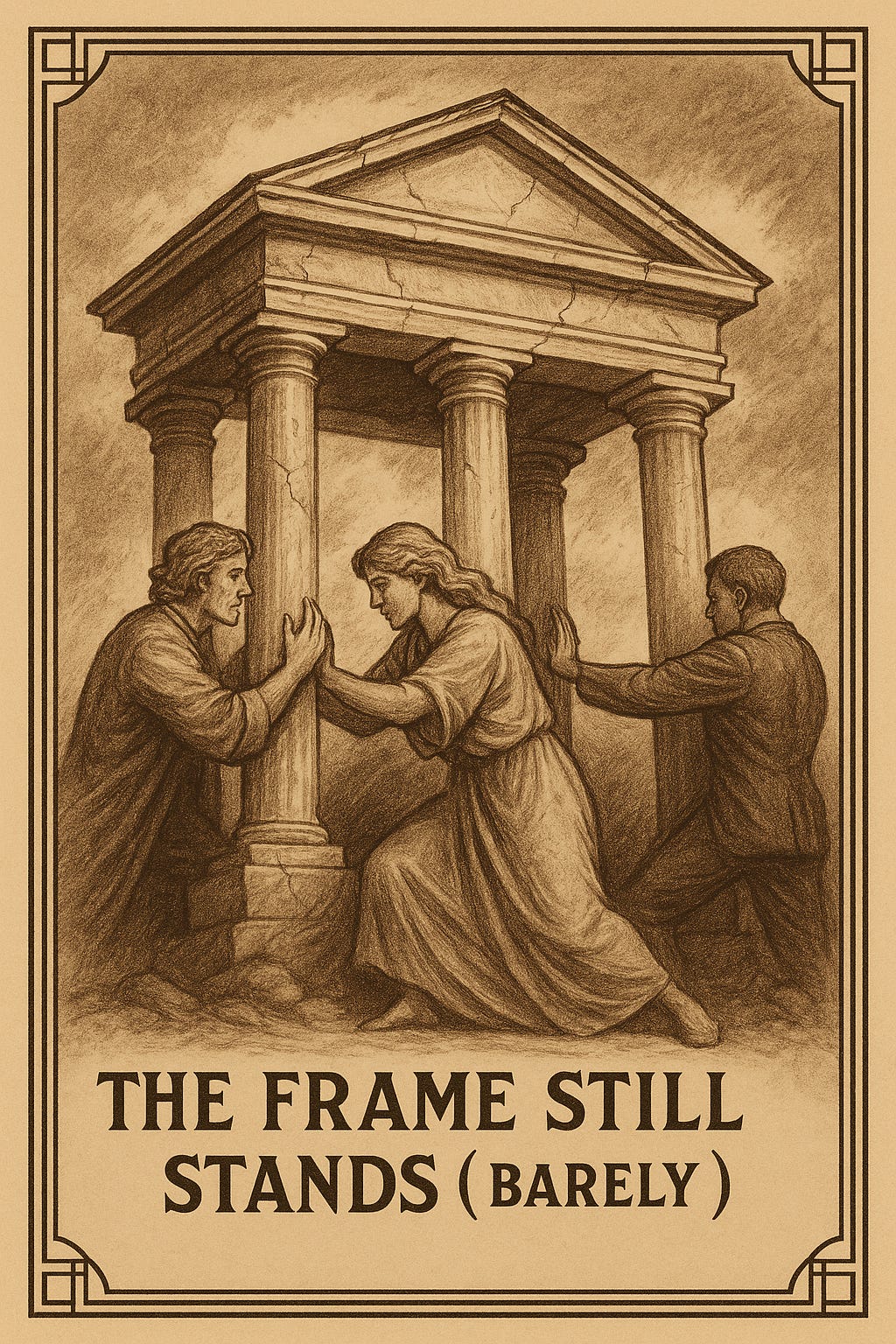
🏛️ The Frame Still Stands ( Barely )
The Republic wasn’t built on faith — it was built on friction.
Three branches leaning against each other, not out of trust, but structural necessity.
Like a tripod, it stands because none of the legs will yield.
Checks and balances aren’t polite cooperation.
They’re political load-bearing walls designed to stop collapse.
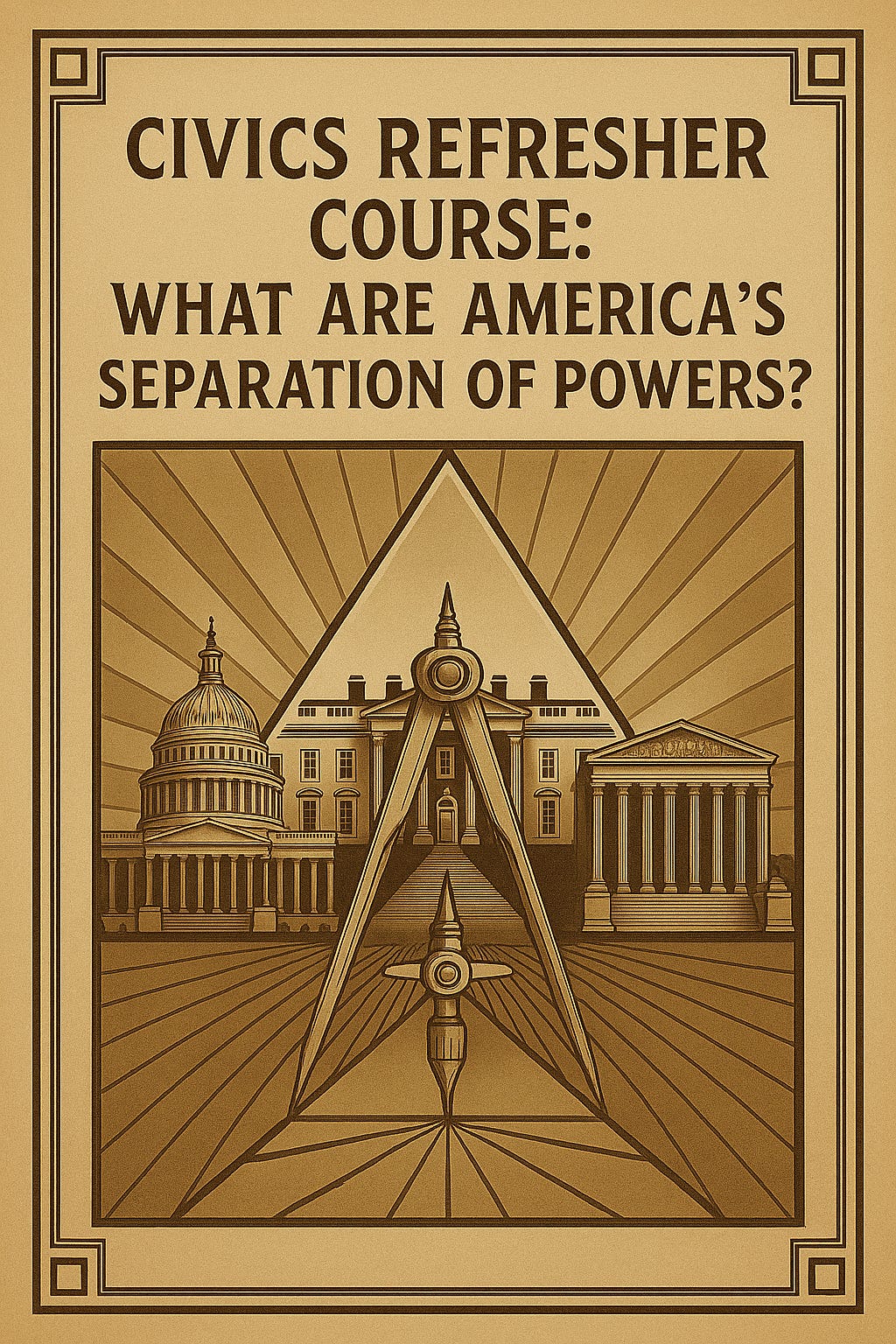
⚙️ The Three-Beam System
Legislative → Writes the blueprints
Executive → Builds from the plans
Judicial → Checks the measurements
Each has tools to keep the others honest:
Congress funds and investigates.
The President enforces and vetoes.
The Courts review and restrain.
It’s not teamwork — it’s mutual supervision with stationery.
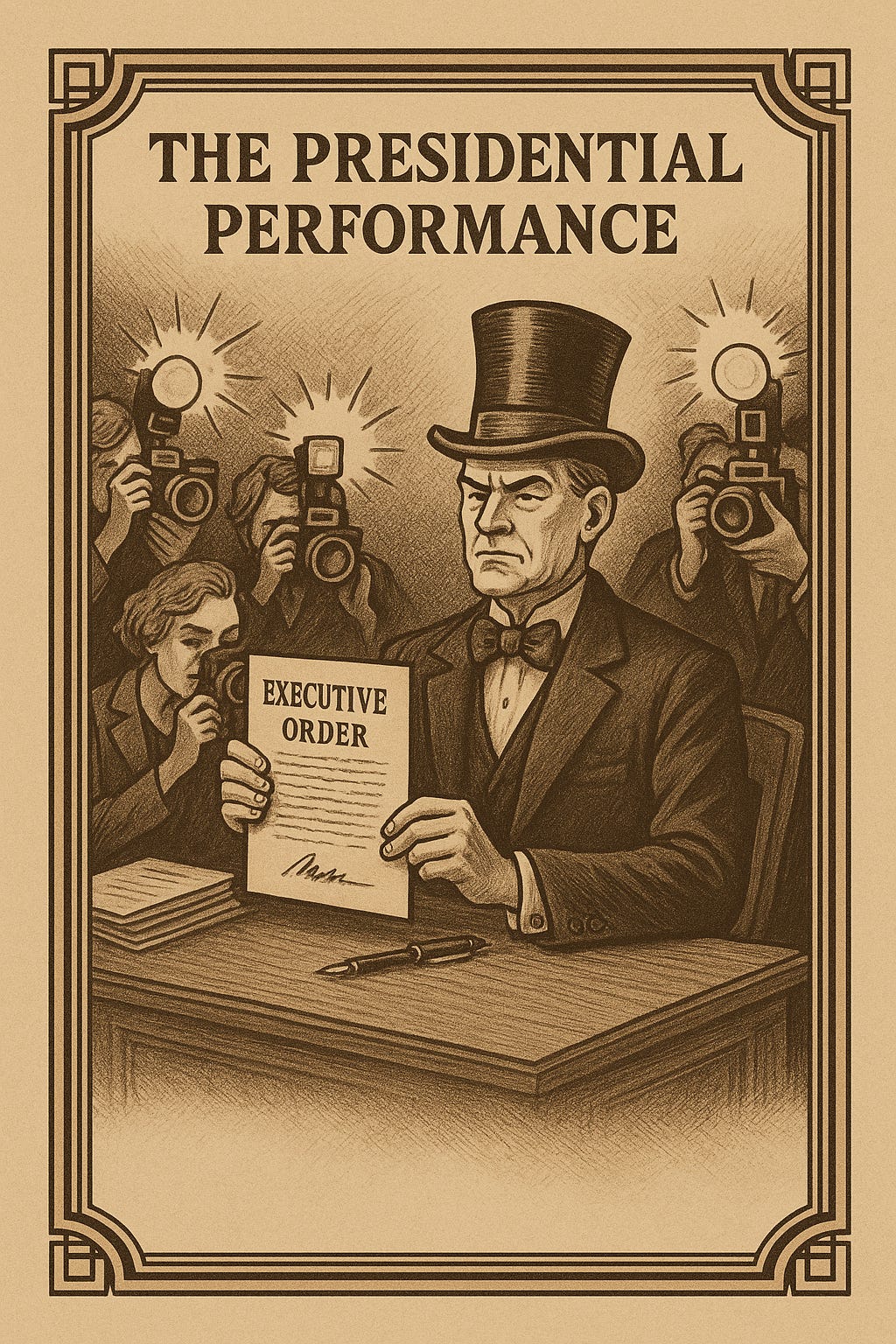
🎩 The Presidential Performance
Modern Presidents sell themselves like monarchs with marketing budgets.
Hundreds of executive orders in a hundred days!
Photographers click, pens fly, headlines scream — and the nation gasps as though new law were born.
It’s not.
Executive orders are memos, not miracles.
They tell agencies how to enforce law, not what the law shall be.
But because the bureaucracy reacts instantly and the courts crawl, the illusion grows:
Drama looks like power.
🐢 The Lag That Lets Illusion Grow
The courts are meticulous — which is a kind way of saying glacial.
Judges brief, argue, deliberate, and write.
Meanwhile, the executive machine hums along until told otherwise.
That lag makes it look as if a signature changes reality.
In truth, the President is renting that power until the courts send the invoice.
🚓 Who Actually Obeys What
Military: Follows lawful orders only; illegal ones must be refused.
Federal Law Enforcement: Acts under executive direction until a judge says “stop.”
State & Local Police: Answer to governors and their own constitutions; they can refuse unconstitutional federal edicts.
So yes — enforcement begins with the President’s memo,
but ends with the Constitution’s permission slip.
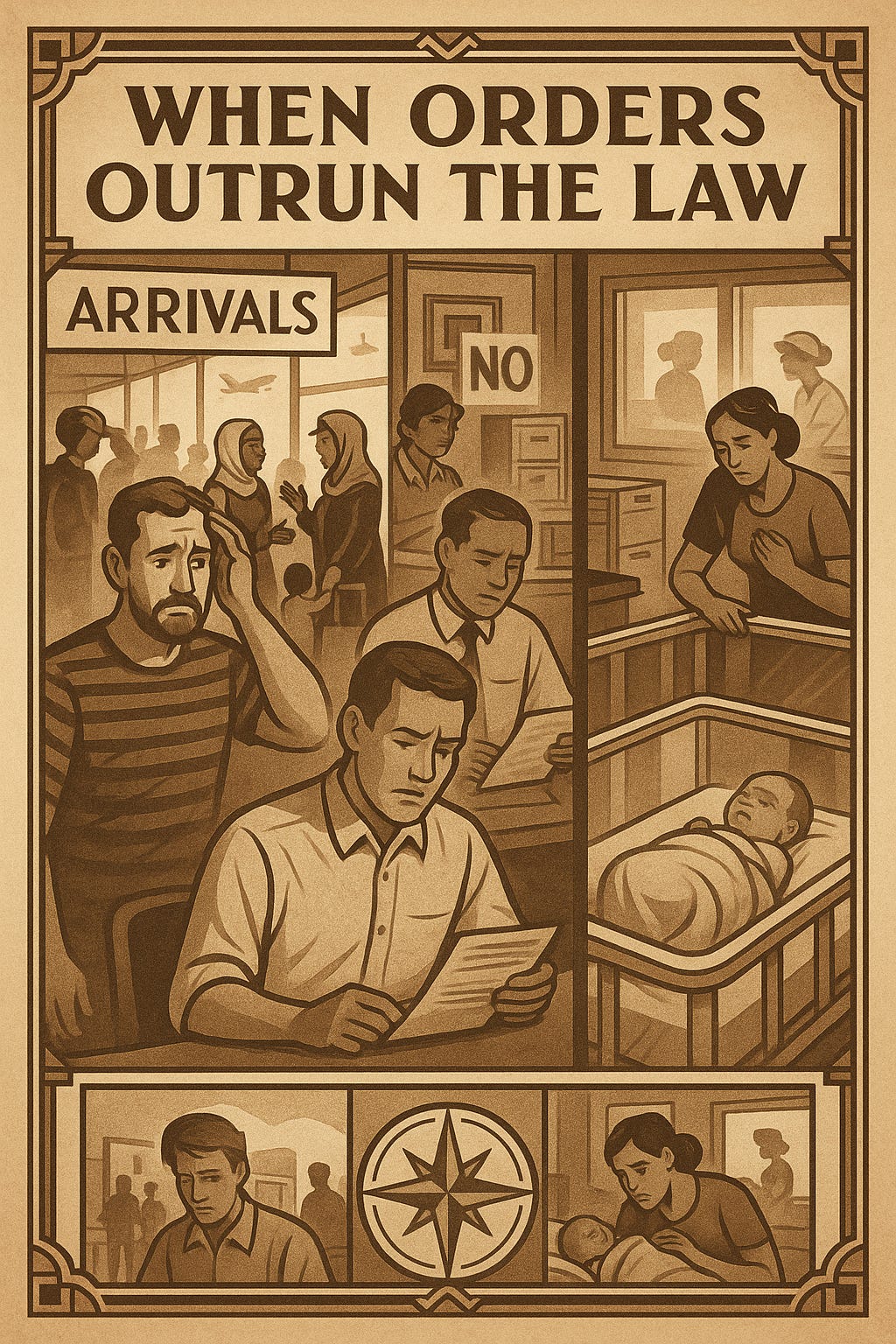
🧱 What It Looks Like in Real Life
Airports detaining travelers mid-flight.
Federal offices stripping DEI posters overnight.
Hospitals stalling newborn citizenship paperwork.
Those moments — before judges rule — are the dangerous twilight of power.
The Constitution always catches up, but sometimes only after the damage lands.
⚖️ When Law Catches Up
Eventually, the courts step in:
Truman’s steel mills, Nixon’s tapes, the travel bans, the citizenship orders — all checked or crushed.
Each ruling re-draws the same blueprint line:
“The Executive executes; it does not legislate.”
💡 The Structural Lesson
Power appears absolute when the rest of the structure goes quiet.
Congressional paralysis and judicial delay don’t grant the President new authority — they simply leave old authority uncontested.
⚠️ The danger isn’t tyranny — it’s inertia.
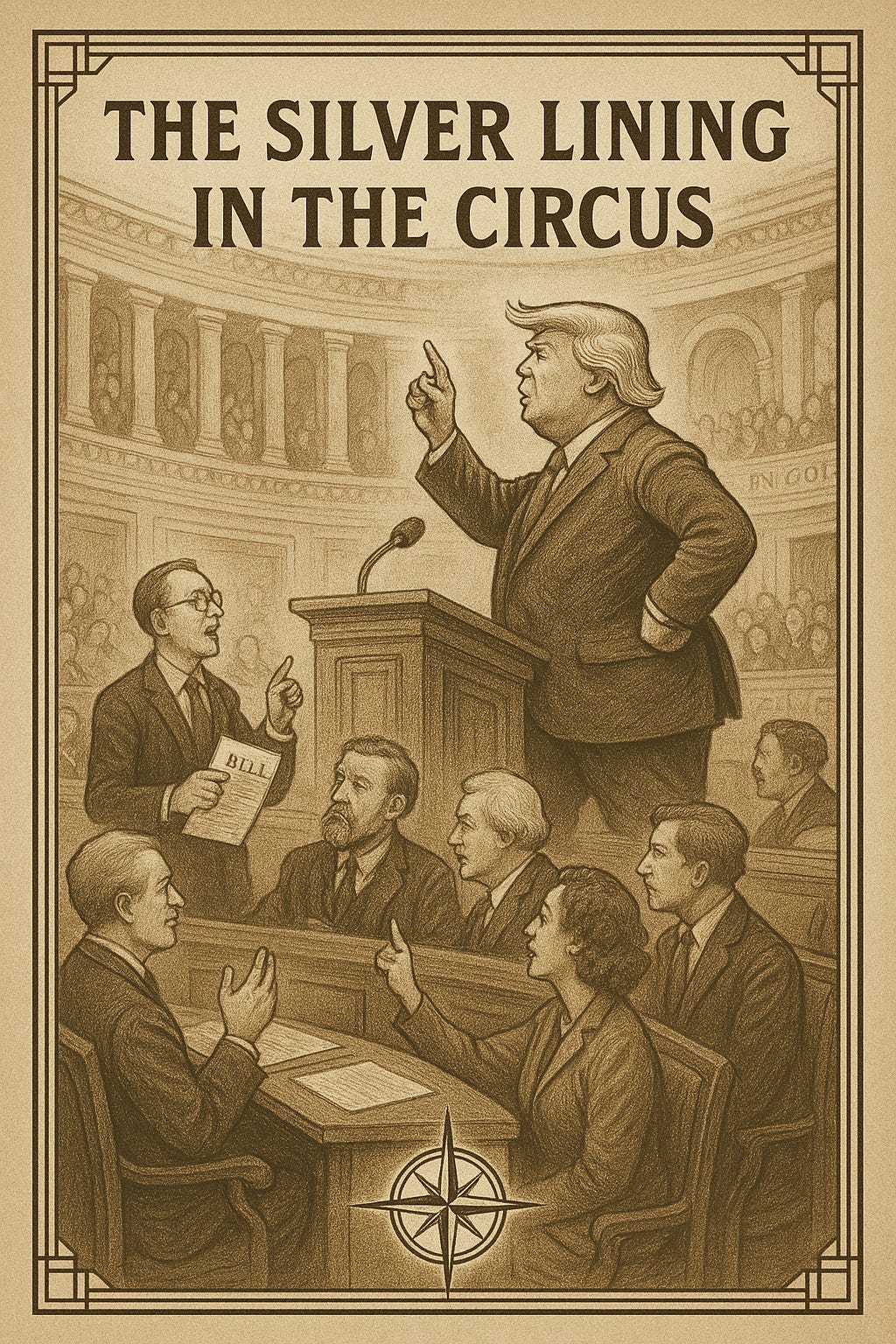
💤 The Silver Lining in the Circus
For decades, Congress has been the least productive construction crew in the Republic — arguing over blueprints, then breaking for recess.
Presidents patched holes with executive orders and declared victory.
But this President — the Lord of The Apprentice — has done something no civics textbook predicted:
he woke the contractors up.
Suddenly members of Congress are on camera again,
quoting Madison between sound bites, introducing bills to prove they still know where the chamber is,
and performing oversight like their pensions depend on it.
It’s messy, undignified, and sometimes comical —
but at least the gears are turning again.
The irony? A President who treats the White House like a reality show has forced the Legislature to remember reality exists.
🧭 Final Blueprint
A signature isn’t sovereignty.
An executive order isn’t a law.
The system still works — just on a time delay long enough to hurt real people in the meantime.
So keep reading the blueprints, keep checking the beams, keep tightening the bolts.
The house still stands — because we do.