

A note before we begin
Jason Arday was found dead at his home in South London on August 14, 2026. Police described his death as unexpected but not suspicious. A coroner subsequently opened an inquest after determining that there was reason to suspect an unnatural death.
As of this writing, the cause and circumstances have not been finally determined.
I will therefore not pretend to know precisely how Jason Arday died.
But I do know what happened to him while he was alive.
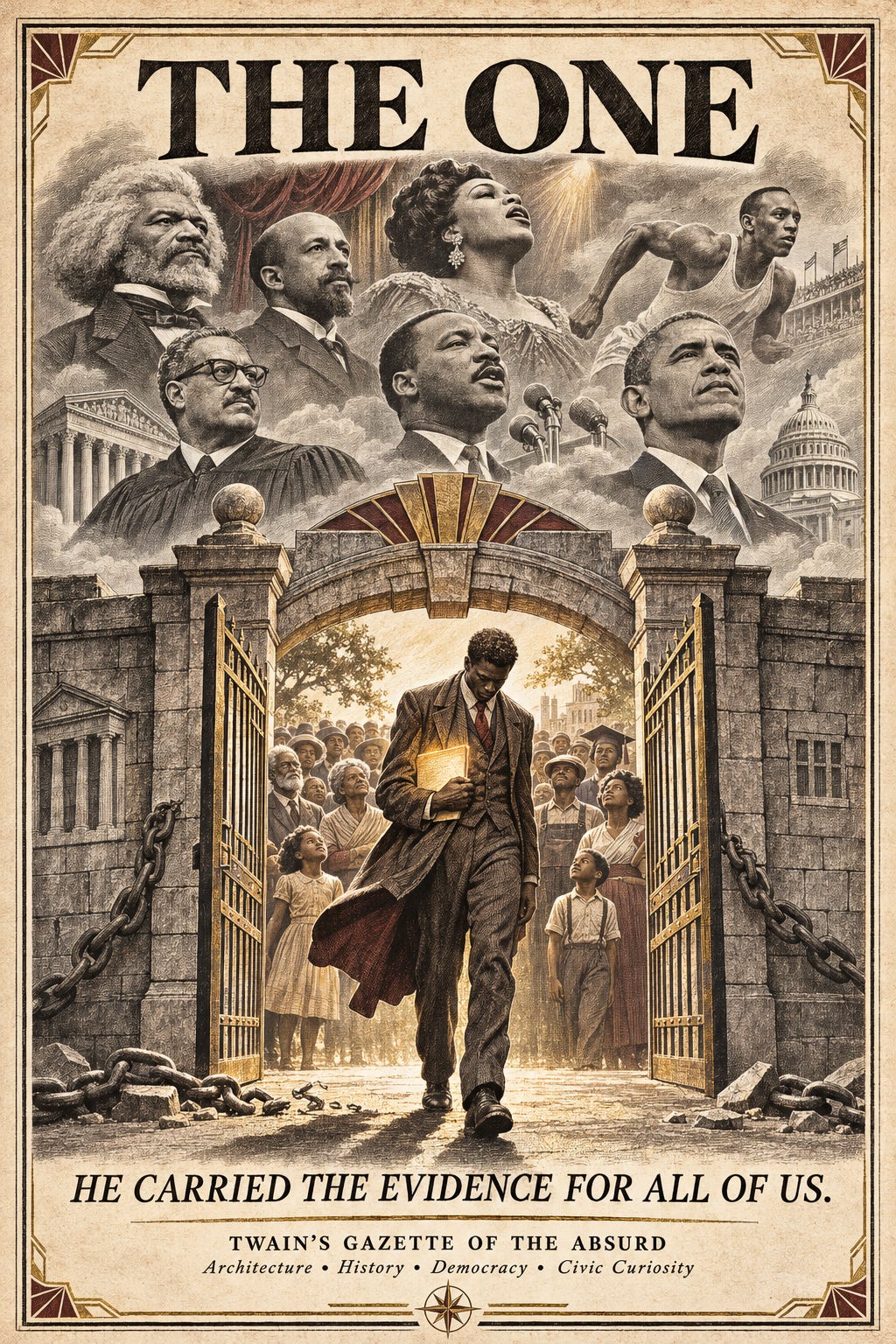
The One
In the Black community I grew up in, we had something called The One.
The One was the one who broke through the barrier.
The one who conquered everything despite being Black in a society organized to make Blackness an obstacle.
Frederick Douglass.
W.E.B. Du Bois.
Leontyne Price.
Jesse Owens.
Thurgood Marshall.
Martin Luther King Jr.
Barack Obama.
The One did not merely succeed for himself. He carried the evidence for all of us.
He was our contribution to society, presented for inspection.
He was proof to white people, and sometimes to ourselves, that Black people could do anything white people could do if white people would simply get out of the way.
The One was required to run faster, jump higher, speak better, dress better, behave better and think more brilliantly than everyone around him.
He could not merely cross the finish line.
He had to cross it carrying the entire race on his back.
Jason Arday became The One.
He was Black. He was autistic. He came from an ordinary family in South London. He said he did not speak until he was eleven and did not learn to read and write until he was eighteen.
Then he earned a doctorate.
Then he became a professor.
Then, at thirty-seven, he became the youngest Black professor in the more than 800-year history of Cambridge University.
Oh, they loved that story.
Cambridge loved it. The newspapers loved it. Publishers loved it. Diversity departments must have thought Christmas had arrived early and brought its own brochure.
Here was Blackness, disability, adversity, aspiration and institutional redemption wrapped inside one human being.
The One had arrived.
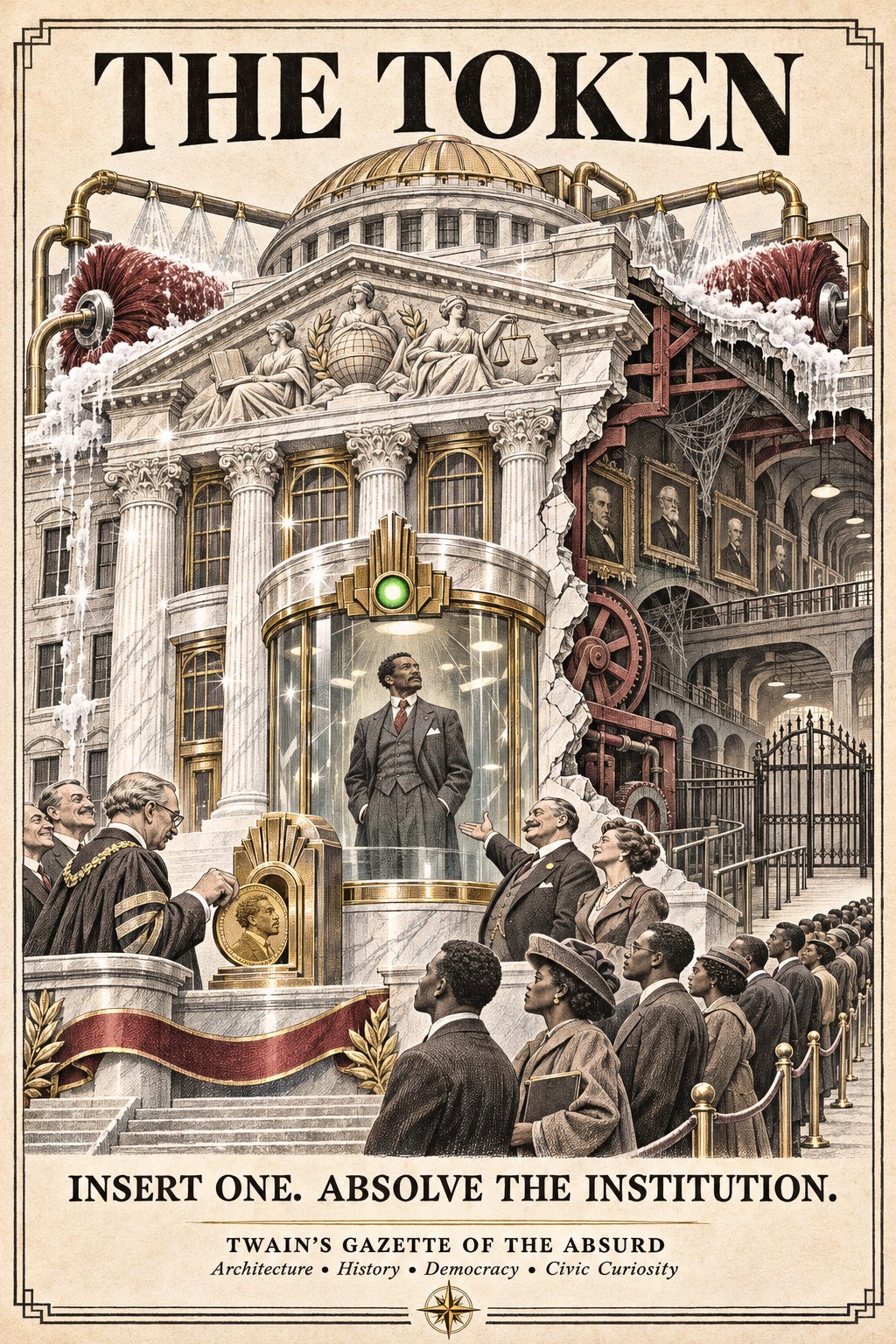
The Token
There is another name for The One in the black community after the institution lets him through the gate.
The token.
The token is not admitted simply to participate. He is displayed as evidence.
Look, the institution says. We have one.
The token is the coin you put into the institutional car wash to receive your bath of morality.
Insert one Black person.
Wait for the green light.
Presto! Centuries of exclusion have been removed without damaging the original finish.
But tokens are permitted to travel only so far. The institution loves its exceptional Black person until that person becomes difficult, complicated, independent or impossible to control.
Sammy Davis Jr. could entertain white America. He could sing, dance, act and make everyone laugh. But when he became involved with white actress Kim Novak in 1957, the entertainment establishment reminded him exactly where the boundary stood. Accounts differ in their details, but they agree that Davis was threatened and pressured to end the relationship.
He could cross the color line professionally.
He was not permitted to cross it romantically.
Martin Luther King Jr. was useful when America wanted a clean story about racial progress. But the actual King opposed economic exploitation, militarism and the Vietnam War. The FBI surveilled him, tried to discredit him and collected allegations about his private sexual life.
That is what happens when The One stops being the one they can use.
The institution does not merely disagree with him.
It begins excavating the human being, looking for something that will invalidate the symbol.
And because every human being contains contradictions, eventually the excavators find dirt.
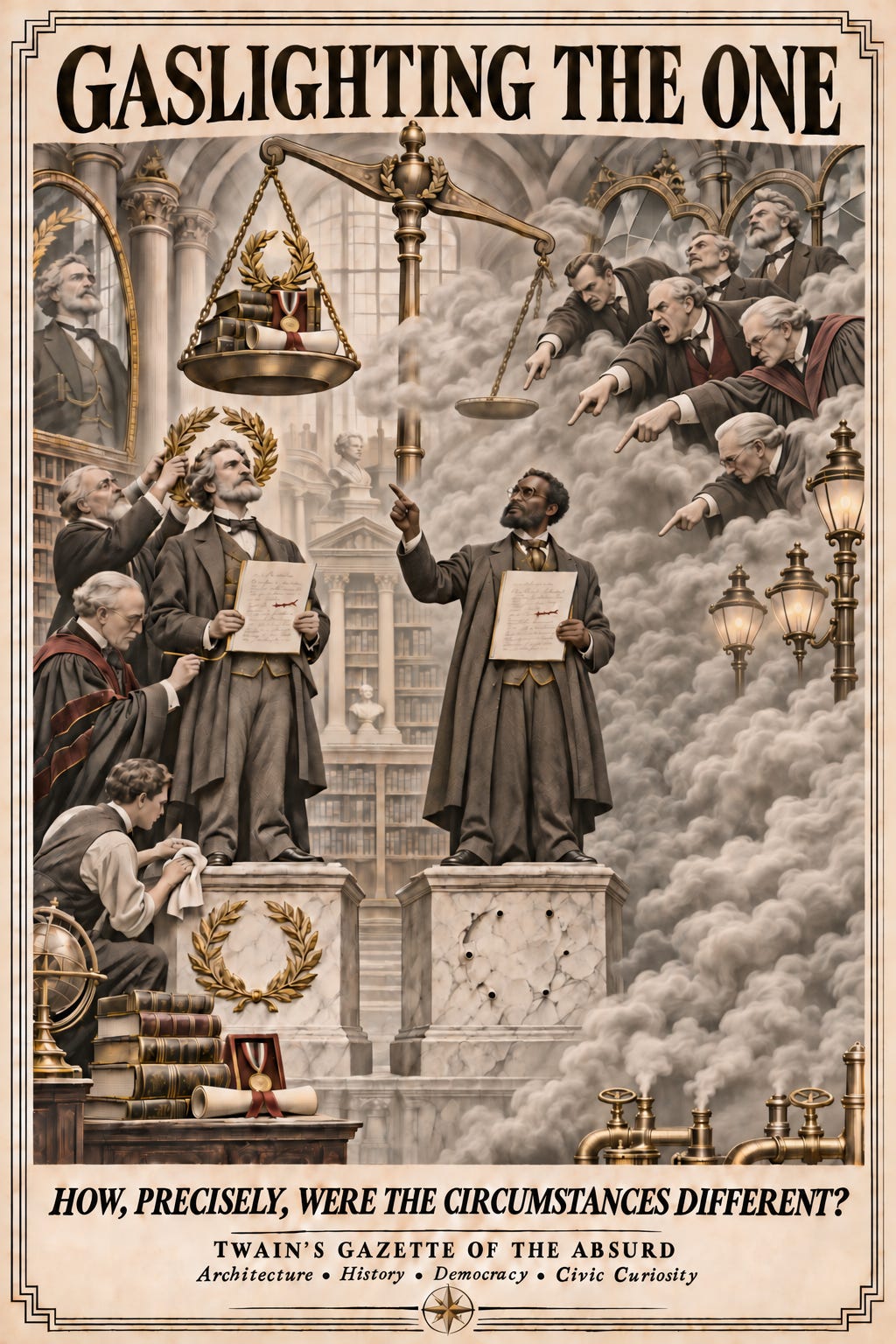
Gaslighting the One
We have another term in the Black community:
Gaslighting.
Gaslighting is when someone treats you differently, then tells you that the difference exists only in your imagination.
You notice that a white person can make a mistake and remain accomplished, while a Black person makes the same mistake and becomes a fraud.
You point it out.
They tell you race has nothing to do with it.
You provide another example.
They say the circumstances were different.
How were they different?
Well, they cannot quite explain that. But your insistence upon discussing race has now become the real problem.
That is the trick.
First they apply the unequal standard.
Then they use your objection as evidence that you are irrational, angry, ideological or obsessed with race.
White people are granted circumstances.
Black people are assigned conclusions.
The Gate
We also know about gatekeeping.
In the black community, gatekeeping is the stranger who tells you that your dog cannot be on the hiking trail even though your dog is a service animal.
It is the person who informs you that you cannot stand there, enter here, sit there, walk through this neighborhood or use that entrance—although everyone else in the same situation is allowed to do it.
It is the person who responds to one small request with:
“Well, what if I did that for everybody?”
They do not have to do it for everybody.
They only have to decide whether the rule is being applied equally to the person standing in front of them.
But when you are Black, the gatekeeper transforms your individual request into a potential invasion. If one Black person is admitted, apparently millions of us are waiting in the shrubbery.
The gatekeeper guards more than physical territory. He also guards the boundaries of knowledge.
He determines whose experience counts as evidence.
Whose interpretation is objective.
Whose ideas are scholarship.
And whose ideas are merely identity politics.
Enter the Race Realist
Nathan Cofnas began investigating Arday in June 2026 after, according to Cofnas, an unidentified Cambridge faculty member contacted him because of dissatisfaction with the university’s response.
I’m thinking the unidentified faculty member was David Harris or Martyn Hammersley. Both Harris and Hammersley are known within their fields as long-standing intellectual critics of anti-racist, decolonial, and “activist” fields in sociology—the very areas of research that Arday championed. These two are the ones that started all this mess.
Yes, they had legitimate academic questions.
However, a university should be able to examine such questions carefully, quietly and fairly—without either shielding the scholar from scrutiny or placing his entire humanity on trial.
Cambridge referred the doctoral allegations to Liverpool John Moores University, where Arday had completed his PhD. That university reviewed the work and concluded that plagiarism had not been established. Two journal articles were later corrected.
The study in question was by Professor Anjum Memon and written by a multiracial research team studying the barriers Black and minority ethnic communities faced when trying to obtain mental-health care. Arday openly stated that his paper “replicates and builds on” their research by asking whether the findings also applied to minority students in higher education.
Cofnas ran Arday’s dissertation through plagiarism-detection software and compared it with an earlier dissertation by scholar Paula Zwozdiak-Myers.
On July 21, 2026, he published his allegations on Substack.
That is when the fire left the faculty offices and entered the public square.
Cofnas was not simply an academic concerned about citation practices. He described himself as a “race realist.” He had previously written that, under what he considered a true meritocracy, there would be “close to zero” Black professors at Harvard.
After Arday’s death, Cofnas said plainly that his larger concern had been DEI. I’m curious. What would he find if he ran every dissertation through plagiarism-detection software?
This is gatekeeping at its highest level.
The View From Nowhere
The white male worldview is rarely described as a worldview.
It is called objectivity.
Black people have a worldview. Women have a worldview. Indigenous people have a worldview. Neurodivergent people have a worldview—and probably an accommodation form they failed to submit three weeks in advance.
But the white male worldview?
That is simply called reality.
A white scholar speaks from experience.
A Black scholar is being subjective.
A white scholar advances an argument.
A Black scholar has an agenda.
A white man exaggerates.
A Black man is a fraud.
A white man represents himself.
A Black man represents every Black person who has ever applied for admission.
That is why autoethnography matters.
Autoethnography says that personal experience can produce knowledge about culture and institutions. It does not claim that memory is perfect or that lived experience cannot be questioned.
It simply admits something traditional scholarship has often tried to conceal:
Everyone is standing somewhere.
The supposedly detached observer also has a race, gender, class, history and ideology.
The view from nowhere has always had somebody standing in it.
And for several centuries, that somebody was a white man who mistook the power to name his world for the ability to see it on behalf of everyone else.
Then Came the Excavators
Questions were eventually raised about parts of Jason Arday’s biography.
Some universities could not verify visiting appointments attributed to him. Reporters questioned fundraising totals and athletic accomplishments. Former classmates offered conflicting memories about his childhood. Critics identified passages in his academic writing that they said were too similar to earlier work.
Some of these were legitimate questions.
If Arday misstated a professional appointment, that should have been corrected.
If he exaggerated a fundraising total, that should have been corrected.
If he failed to distinguish his language from another scholar’s language, that should have been examined according to established academic standards.
But that is not where the public judgment stopped.
Suddenly, everything was placed on trial.
His autism.
His childhood.
His intelligence.
His scholarship.
His doctorate.
His right to have been at Cambridge.
His very existence as an accomplished Black man.
Running thirty marathons did not earn Jason Arday a PhD.
Therefore, exaggerating thirty marathons would not automatically invalidate his PhD.
He still had to enroll in a doctoral program, conduct research, write and submit a thesis, satisfy examiners and defend an original contribution to knowledge.
They do not pass doctorates out like cookies.
No university telephones a random Black person and says:
“Hello, Jason? Cambridge here. We noticed that you are Black and autistic, so we have placed a doctorate in the mail. It should arrive within five to seven business days.”
Arday did the work required to receive a doctorate.
The university that awarded it later reviewed allegations concerning the thesis and allowed the degree to stand. That does not mean the work was perfect or immune from further criticism. It means that people cannot honestly declare the degree imaginary simply because other parts of his biography were disputed.
A dissertation may contain citation problems and still contribute original research.
Two scholars studying the same subject may examine the same evidence and reach similar conclusions.
Improper quotation, unattributed language, stolen ideas and fabricated research are not identical offenses. They must be distinguished carefully.
That is what scholarly judgment is supposed to do.
Instead, critics placed marathons, fundraising, university titles, childhood memories, autism and citations into one sack marked FRAUD.
Thinking is apparently exhausting.
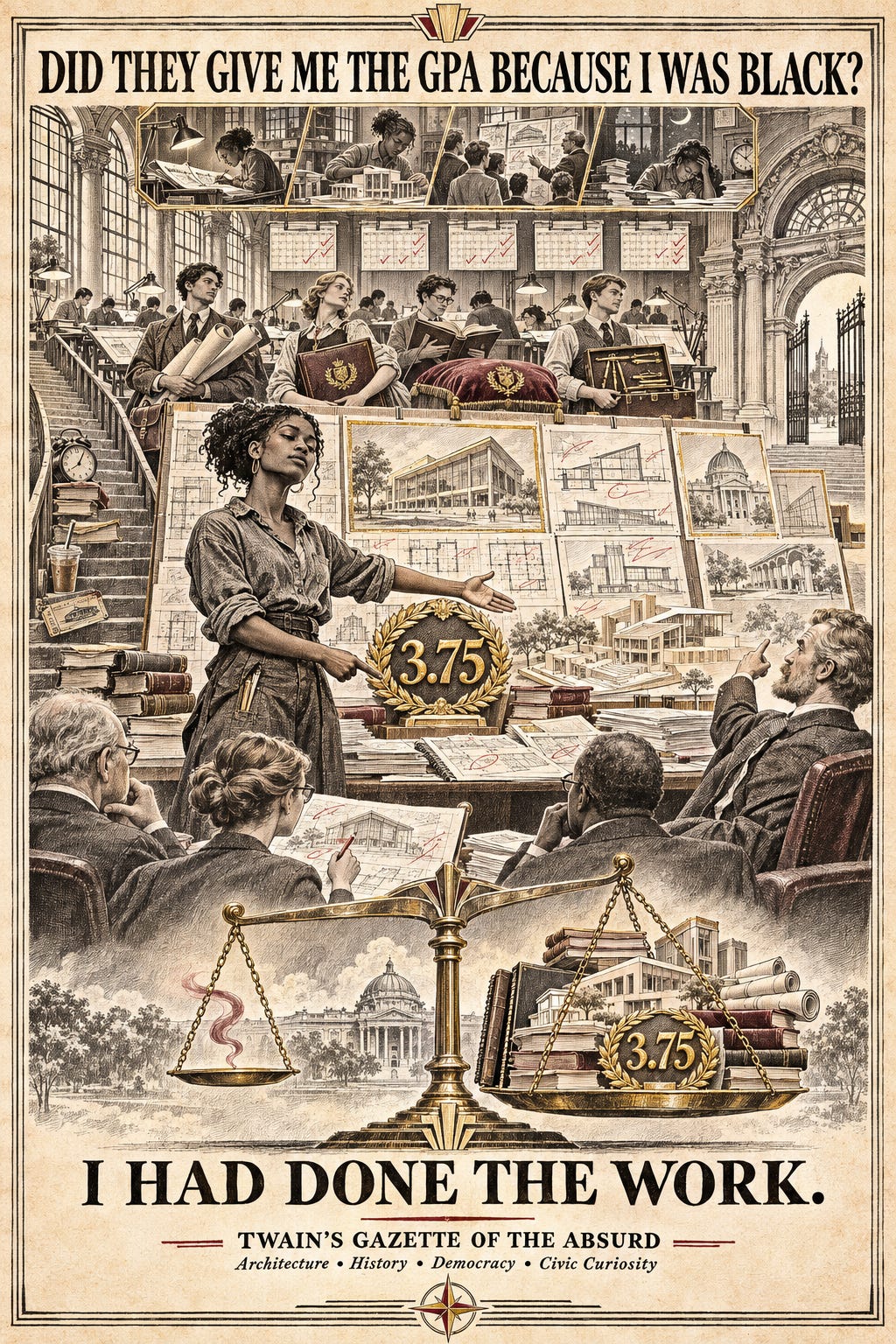
Did They Give Me the GPA Because I Was Black?
I have encountered this in educational circles myself.
When I was in architecture school, a white instructor insinuated that I had been admitted because I was Black.
I asked:
“Did they give me a 3.75 GPA because I was Black?”
I had to pass the same examinations, complete the same assignments, survive the same critiques and satisfy the same academic requirements as everybody else in my class.
In fact, I had to do it without many of the privileges some of my classmates carried into the building with them.
I had done the work.
Yet my Blackness was treated as evidence that the accomplishment had been given to me.
That is the gaslight.
First, we are required to prove that we belong.
Then, when we prove it, the proof itself is declared suspicious.
Our success must have been affirmative action.
Our degree must have been DEI.
Our promotion must have been tokenism.
Our ideas must have belonged to somebody else.
The possibility that we earned what we received remains the final explanation considered.
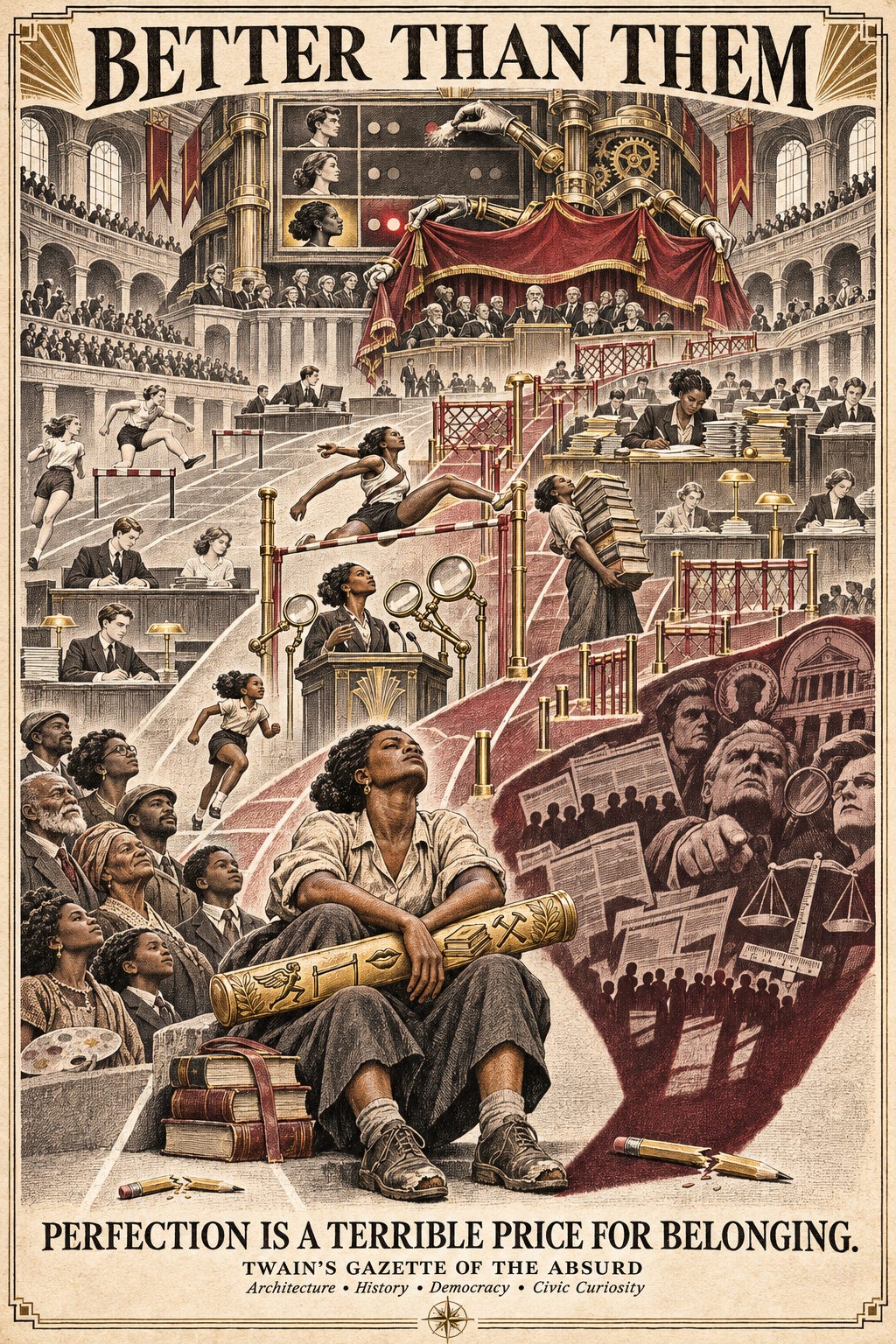
Better Than Them
When I was growing up, we were told that we had to be better than white people.
We had to run faster.
Jump higher.
Speak more carefully.
Know more.
Work twice as hard.
We could not simply be competent because our mistakes would not belong only to us. A white person’s failure was an individual failure. A Black person’s failure became a racial referendum.
This makes you tired.
I am not faster or smarter than every white person.
I am as good as all of them and better than some of them.
I decided a long time ago that I do not have to jump higher, run faster or be more intelligent than any white person to justify my place in the world.
I only have to be myself.
A human being doing the best that I can.
Jason Arday should have been allowed that same humanity.
He may have embellished portions of his biography. He may have made citation errors. He may have been disorganized, unreliable, frightened, ambitious, overwhelmed or trapped inside an inspirational story that grew larger each time an institution repeated it.
Those possibilities do not erase his mind.
They do not erase his work.
They do not erase the barriers he crossed.
And they do not transform Cambridge University into an innocent bystander.
Cambridge helped place him on the pedestal. It benefited from his story. It publicized his difference as proof of its progress. If the university failed to verify claims, provide adequate support or respond proportionately when questions arose, those failures belong to the institution, not merely to the Black man it displayed.
Celebration is not care.
Visibility is not protection.
Representation is not belonging.
The Same Measuring Stick
I am not asking anyone to excuse dishonesty because Jason Arday was Black or autistic.
I am asking for the same measuring stick.
When powerful white men lie, people routinely separate the lie from the entirety of the person. Donald Trump’s false and misleading statements have been documented by numerous fact-checking organizations, yet millions of Americans continue to judge his policies, leadership and political identity separately from his factual reliability.
Jason Arday received no comparable compartmentalization.
A disputed claim did not remain a disputed claim. It became evidence that everything associated with him was counterfeit.
A white man’s lie is something he did.
A Black man’s alleged lie becomes what he is.
That is the racial gaslight.
Accountability asks:
What, precisely, did this person do?
Racism announces:
We always knew someone like him did not belong here.
Jason Arday did not need to be perfect to be a legitimate scholar.
He did not need to run thirty marathons.
He did not need to raise five million pounds.
He did not need to overcome every imaginable obstacle before breakfast.
He had already done something extraordinary.
He had entered the gate, completed the work and contributed his own view of the world.
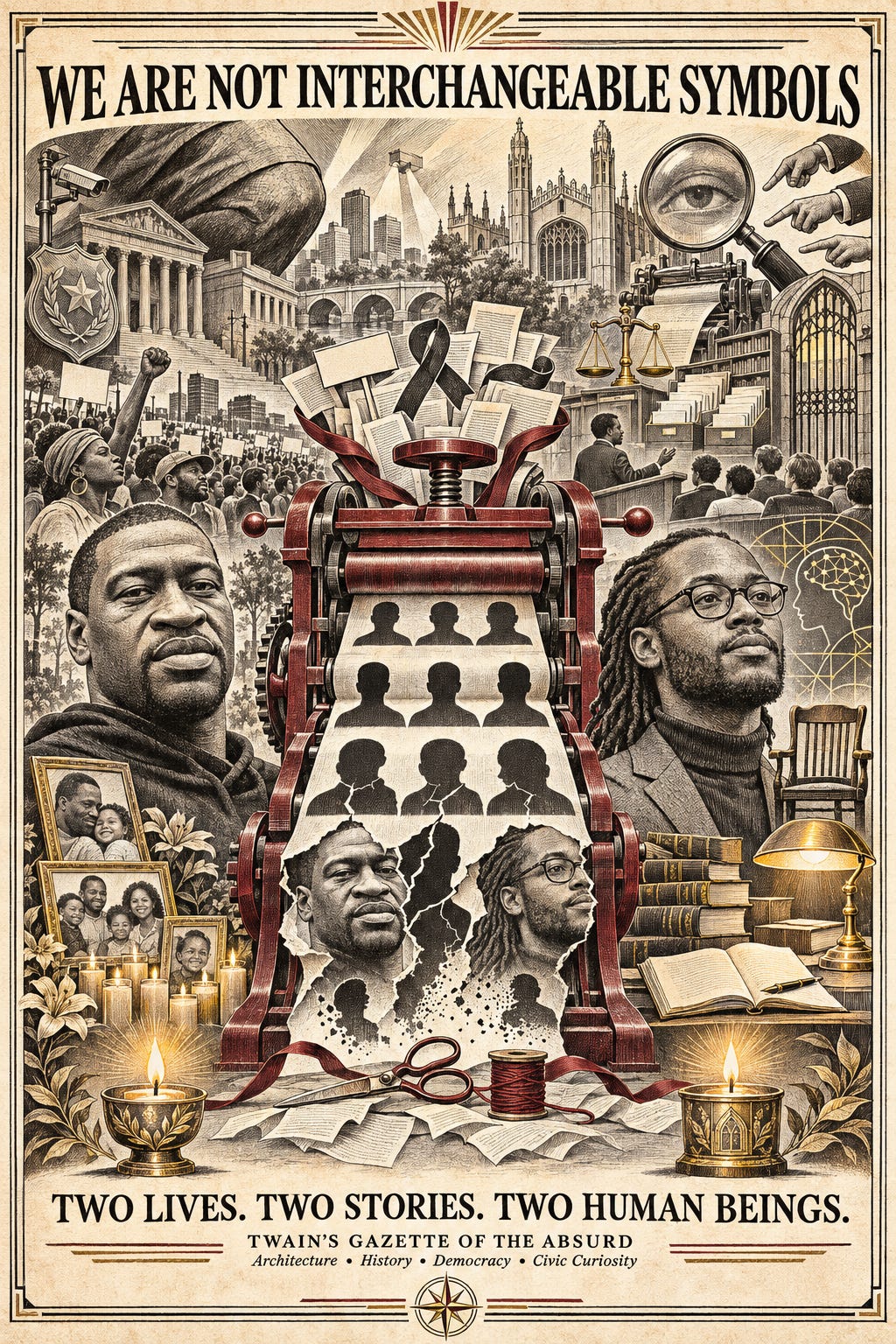
We Are Not Interchangeable Symbols
I was deeply offended when I saw Jason Arday’s death compared with George Floyd’s.
Not because one life mattered more than the other, but because their deaths belong to profoundly different stories.
George Floyd was murdered beneath the knee of a police officer. His death exposed the brutality of American policing and the continuing disposability of Black life.
Jason Arday’s death raises a different set of questions: about Black intellectual life, neurodivergence, academic institutions, ideological gatekeeping and the extraordinary pressures placed upon a Black Cambridge scholar.
I hate the reflex to gather every Black death into the same undifferentiated racial narrative, as though we are interchangeable symbols instead of individual human beings.
We are not one enormous Black body repeatedly dying in different locations.
George Floyd was George Floyd.
Jason Arday was Jason Arday.
Their lives possessed different meanings. Their deaths exposed different structures. Collapsing them into a single racial parable does not honor either man. It erases the particularity of both.
Black lives cannot matter if Black people are not first permitted to possess individual lives.
The Martyr at the Crossroads
It is tragic that it took a martyr to illuminate this kind of nuance.
From W. E. B. Du Bois onward, the Black intelligentsia has been sounding this alarm for generations. It was never that we lacked the words. It was that our words had to be translated through a white male worldview before the larger society would recognize them as knowledge.
That worldview was treated as objective and universal for so long that other ways of seeing the world were rarely accepted as legitimate. The Black scholar could speak, but his experience was called subjective. He could analyze power, but his analysis was called grievance. He could describe racism, but his description had to survive the judgment of people who had already defined their own position as neutral.
Perhaps we are finally ready for this conversation.
Jason Arday stood at precisely the right intellectual crossroads to help us have it: Blackness, neurodivergence, autoethnography, institutional power, academic rigor and the question of whose experience is allowed to become knowledge.
He should have been here to participate in that conversation.
Instead, his death may become its catalyst.
There is something terribly unjust about that. A man should not have to die before we become curious about what he was trying to tell us while he was alive.
But perhaps his death will finally force us to examine the difference between accountability and annihilation, between scholarly scrutiny and ideological prosecution, between including a Black thinker and merely displaying him as evidence of institutional virtue.
Perhaps it will bring something into the light.
We will see what happens.
God rest his soul.
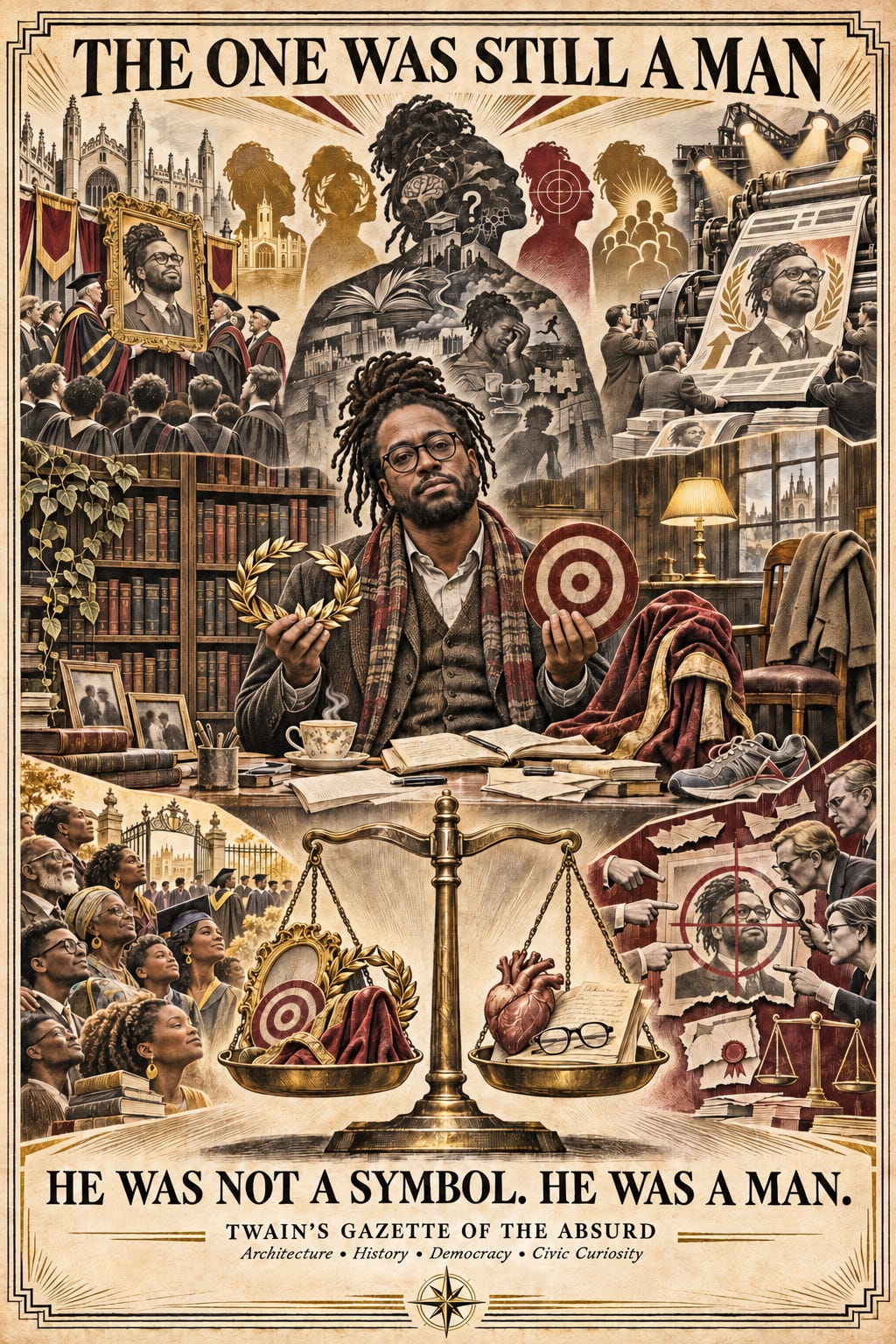
The One Was Still a Man
The tragedy of Jason Arday is that everybody needed him to represent something.
Cambridge needed him to represent diversity.
The press needed him to represent triumph.
His critics needed him to represent the failure of DEI.
Black people needed him to represent possibility.
Very few people permitted him to represent himself:
A complicated Black man.
A neurodivergent scholar.
An imperfect human being.
As I look through photographs of Jason Arday online, the first thing I notice is his large, beautiful doe eyes. There is something open and trusting in his expression, a tenderness that makes the cruelty surrounding his final weeks especially difficult to contemplate.
“I still have this belief, and I think it’s the thing that’s kind of cradled to me my entire life that human beings are great and they can do great things, and that’s I think that that thing sits, I guess, with my faith with God, but it also sits in my faith that human beings are just remarkable, and I’ve never lost my belief in human beings and the capacity of human beings to do great things.”
—Jason Arday, “Everyone’s Life Has Meaning,” Greenbelt Festival, August 2024
The One should never have been required to carry all of us.
He should have been allowed to be one of us.
I know. Absurd, isn’t it?
Luv,
KT