

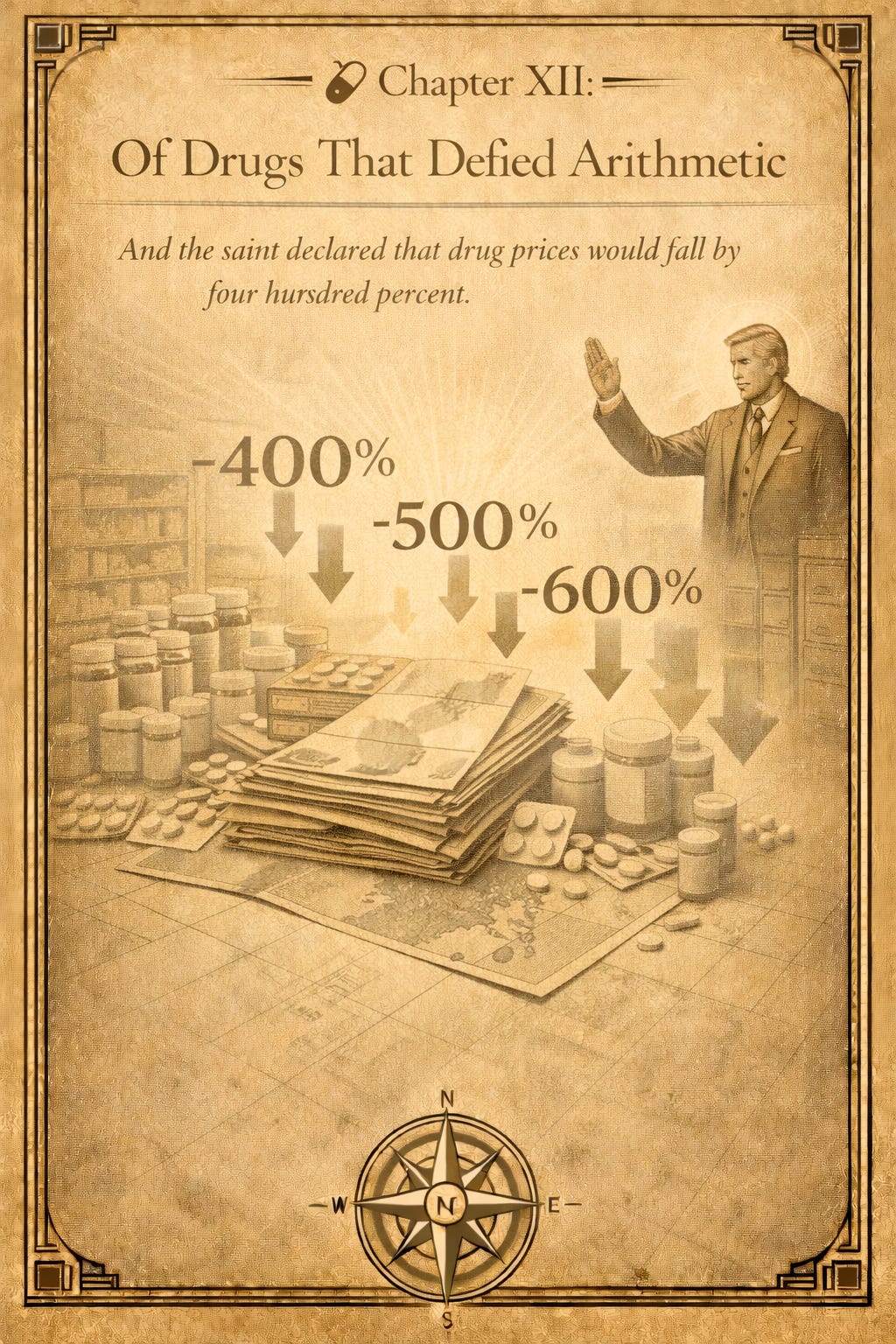
💊 Chapter XII: Of Drugs That Defied Arithmetic
The Gospel
And the saint declared that drug prices would fall by four hundred percent. Then five hundred. Then six hundred.
These were not slips of the tongue. They were said proudly, as though numbers were flexible things, like promises or applause.
Prices would not just come down.
They would fall through the floor.
They would tumble past zero and keep going.
A website was announced. A date was named. The miracle was scheduled. And with that, the math was dismissed as a detail best left to unbelievers.
The Book of Numbers
Prices do not fall below zero.
They can fall a little. They can fall slowly. They can fall unevenly, for some people and not others. But they do not become negative, no matter how confident the speaker.
Lowering drug prices takes time, law, negotiation, and enforcement. It involves contracts, courts, and companies that do not scare easily.
Announcing a website is not the same as changing the system.
And saying a number loudly does not make it behave.
Arithmetic is stubborn that way.
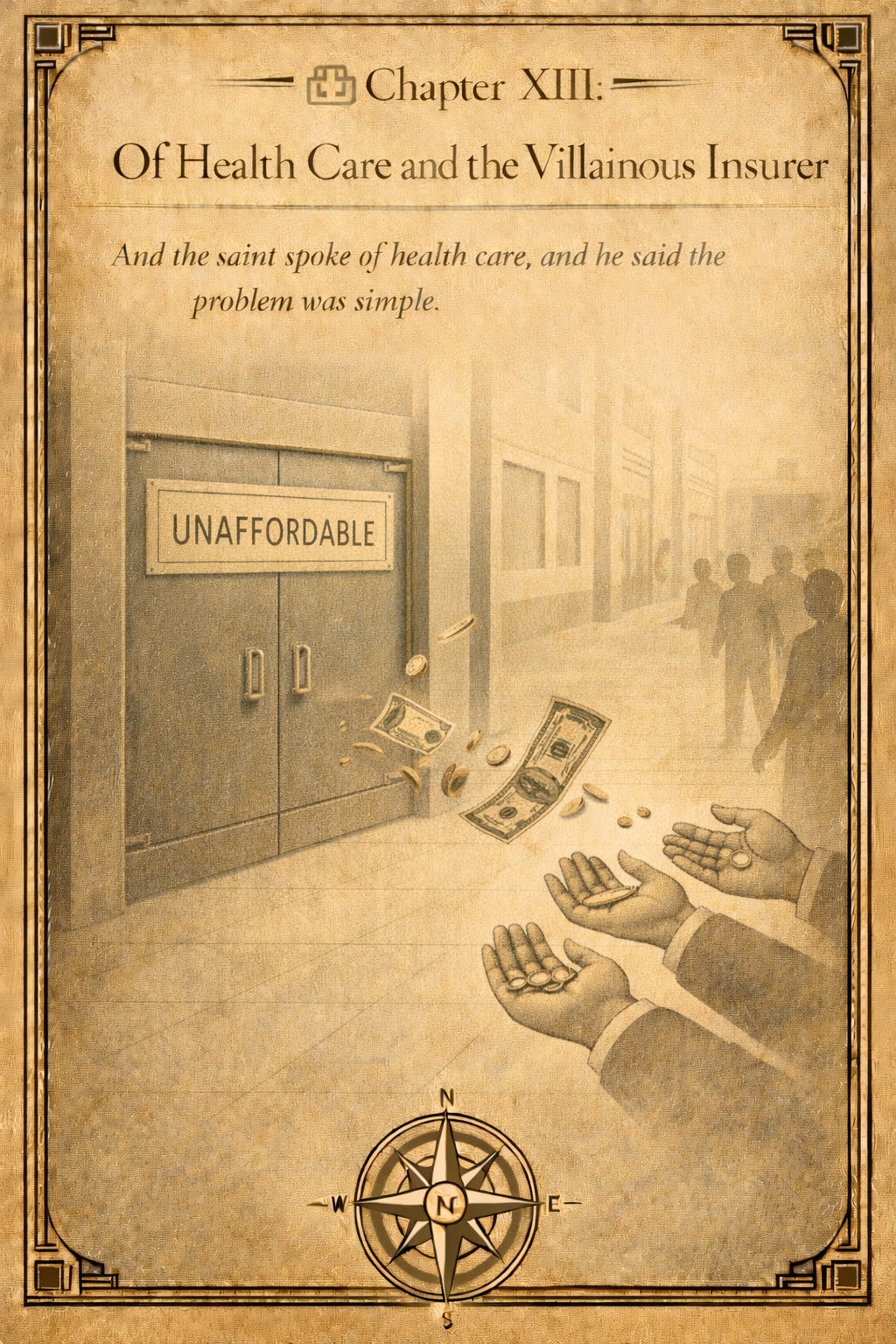
🏥 Chapter XIII: Of Health Care and the Villainous Insurer
The Gospel
And the saint spoke of health care, and he said the problem was simple.
Insurance companies were greedy. Democrats were to blame. The system was broken because the wrong people were getting rich.
The solution, we were told, was just as simple.
Take the money.
Hand it directly to the people.
Let them buy better care for less.
It sounded clean. It sounded fair. It sounded like the kind of thing you might say if you had never been sick for very long.
The Book of Risk and Care
Health care is expensive because illness is expensive.
People do not get sick evenly or politely. Some need a lot of care. Some need very little. Insurance exists to spread that risk so a bad diagnosis does not become a financial death sentence.
When you pull money out of the system without replacing the structure, the healthiest people do fine. The sick get priced out. The old wait longer. The unlucky lose first.
Sending cash without a framework doesn’t fix health care.
It turns it into a gamble.
And gambles are great fun until your name is called.
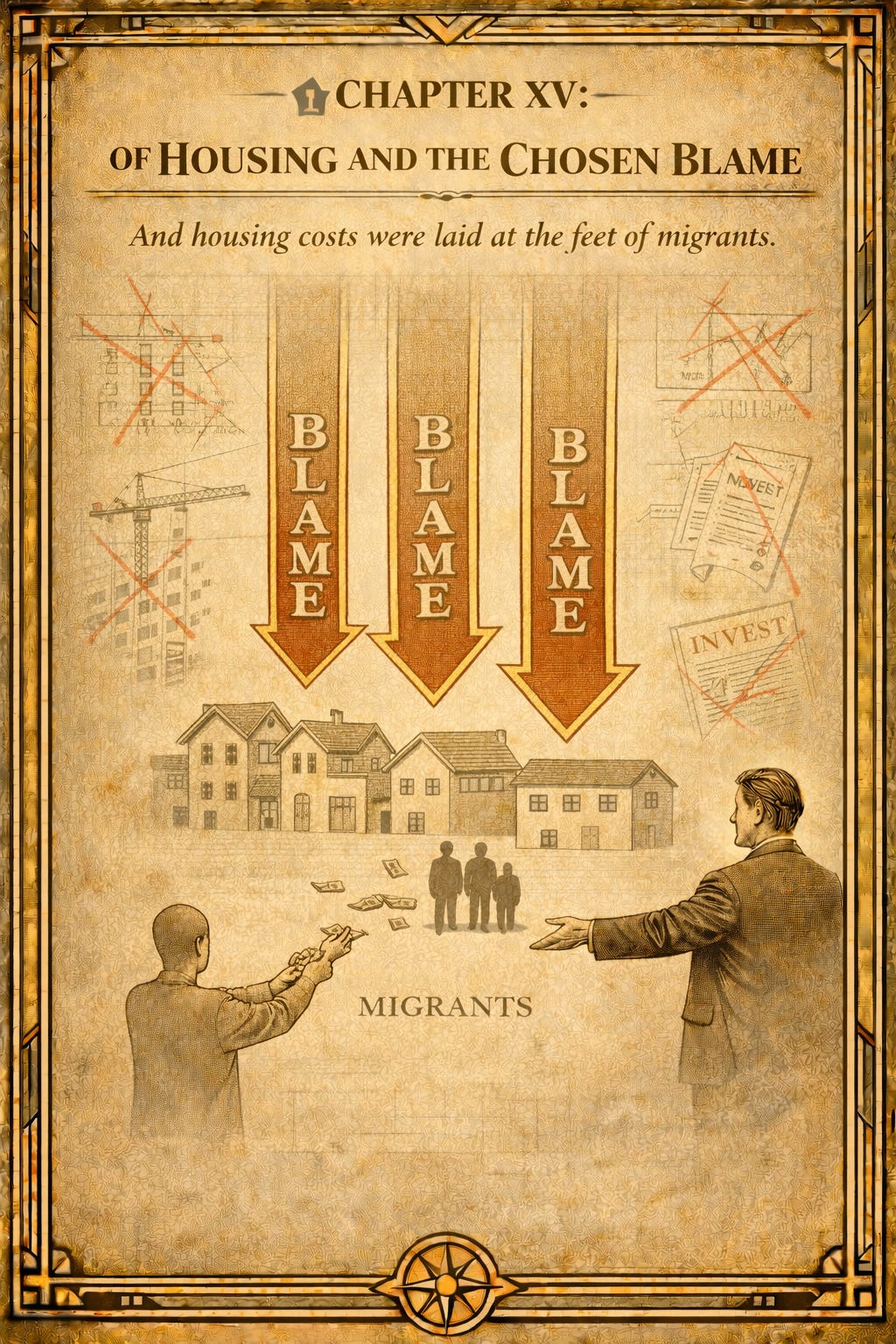
🏠 Chapter XV: Of Housing and the Chosen Blame
The Gospel
And housing costs were laid at the feet of migrants.
Not zoning.
Not years of underbuilding.
Not rising interest rates.
Not investors buying houses the way people buy stocks.
Migrants.
They took the homes.
They took the jobs.
They took over emergency rooms.
They took billions from Minnesota, apparently, though no receipts were produced.
The problem, it seemed, had finally been located. It had a face. And once it had a face, the rest of the story could move on.
The Book of Shelter
Housing is expensive because we did not build enough of it where people live.
That’s it. That’s the sentence.
For years, cities blocked apartments, slowed permits, limited density, and made it hard to build anything smaller than a dream or larger than a shed. Then interest rates went up, materials got expensive, and investors piled in.
Blaming migrants is easier than fixing zoning.
It’s louder than changing laws.
And it costs nothing upfront.
But it doesn’t build a single house.
Blame is quick.
Homes are slow.
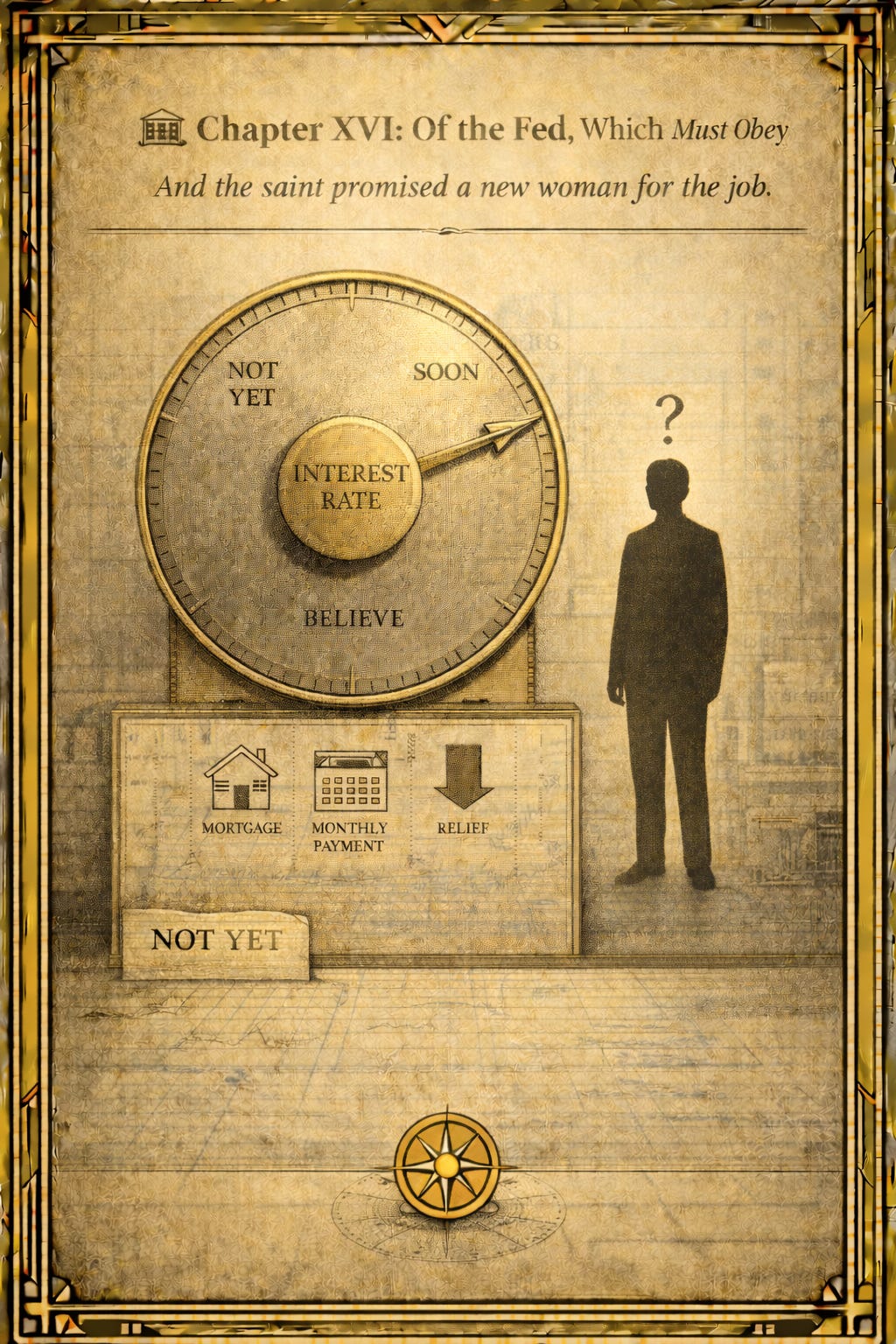
🏦 Chapter XVI: Of the Fed, Which Must Obey
The Gospel
And the saint promised a new man for the job.
This one would believe in lower interest rates. Not argue about them. Not hesitate. Just believe.
Rates would come down. Mortgages would follow. Monthly payments would shrink. Relief would arrive early in the new year, right on time.
The problem, it turned out, was not the economy.
The problem was the person saying “not yet.”
So the fix was simple: pick someone who says yes.
The Book of Common Sense
Interest rates are like the brakes on a car.
Higher rates mean pressing the brakes.
Loans get expensive. People stop buying things.
Lower rates mean easing off the brakes.
Loans get cheaper. People start buying everything, and then they start fighting over who gets it. The one who pays more wins.
Lower rates feel good at first. Monthly payments drop. Credit feels easier. People breathe a little.
But if you ease off the brakes too much, the car doesn’t cruise forever. It starts to pick up speed on its own.
Easy now feels good, but the next thing you know your car is wrapped around a telephone pole.
That’s why the Fed was kept separate in the first place. Not because it’s brilliant, but because politicians are tempted to take their foot off the brake when they want things to feel good right now.
Control later matters more.
And later always arrives.
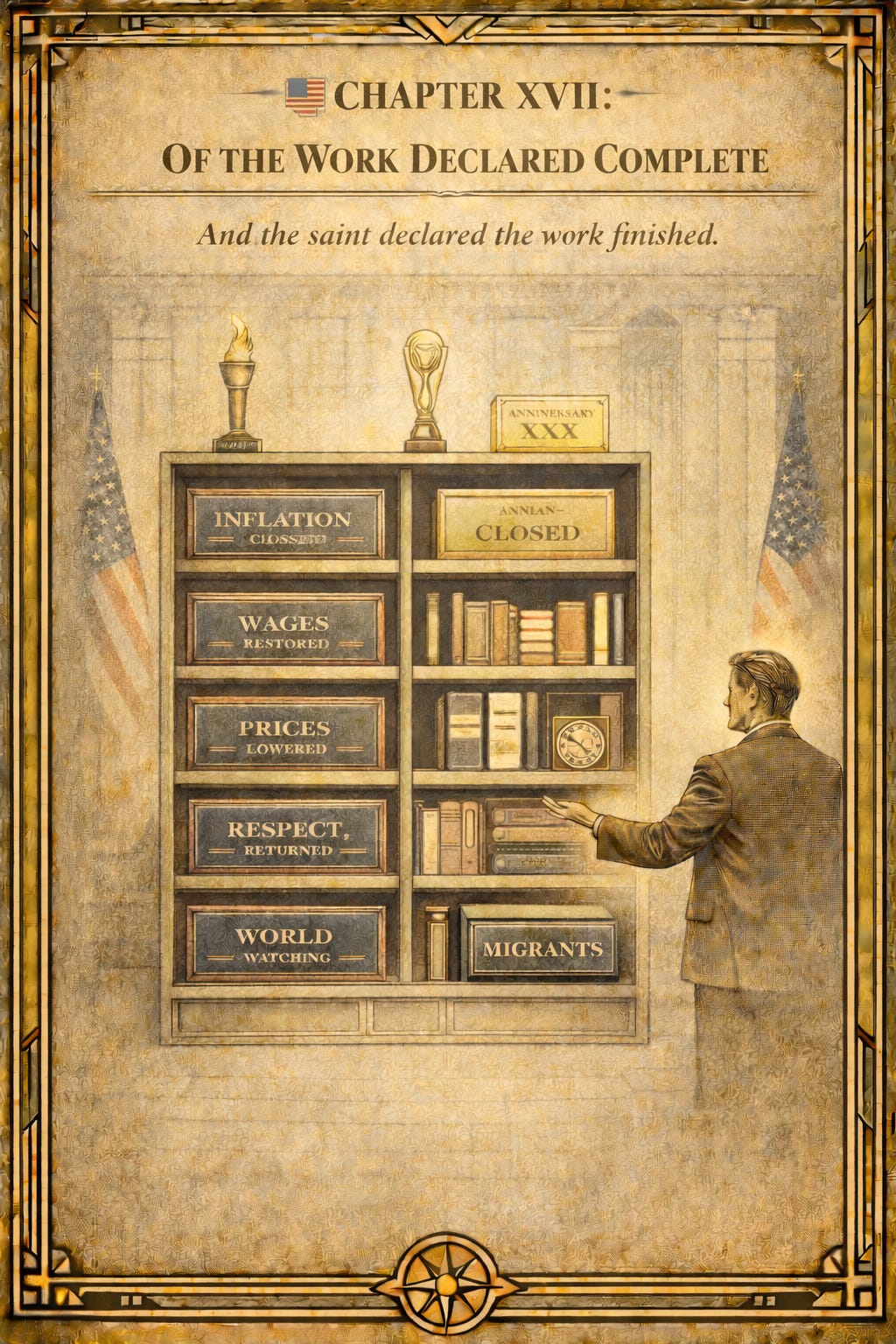
🌟 Chapter XVII: Of Destiny Fulfilled
The Gospel
And at last, the saint declared the work complete.
America was back.
Respected again.
Admired again.
Strong again.
Inflation was over. Wages were up. Prices were down. The world was watching. The Olympics were coming. The World Cup was secured. The anniversary approached, waiting for its proper narrator.
History itself, it seemed, had been tidied up and placed neatly on a shelf.
Destiny had arrived, right on schedule.
The Book of Time
Nations don’t turn on a dime.
They turn like freight trains. Slowly, loudly, and usually after smashing a few things along the way.
They don’t “come back” in a single year. They don’t collapse in one speech. And they don’t get fixed just because someone announces they are fixed and waits for applause.
They inch forward.
They slide backward.
They argue with themselves the entire trip.
Some things get better. Some things get worse. And some things only look improved if you squint or stand far enough away.
Declaring victory early is useful for exactly one reason:
it lets you stop answering questions.
If everything is already great, there’s no need to ask what’s still broken. No need to wait and see. No need to come back next year and explain yourself.
But time has never been impressed by speeches.
It keeps moving.
It keeps notes.
It keeps the receipts in a drawer nobody ever remembers to lock.
Long after the cheering dies down, time asks the same boring questions:
Did it work?
Did it last?
Who paid for it?
Destiny isn’t something you declare from a podium.
It’s what you’re left standing in after the noise clears.
And it always takes longer than promised.
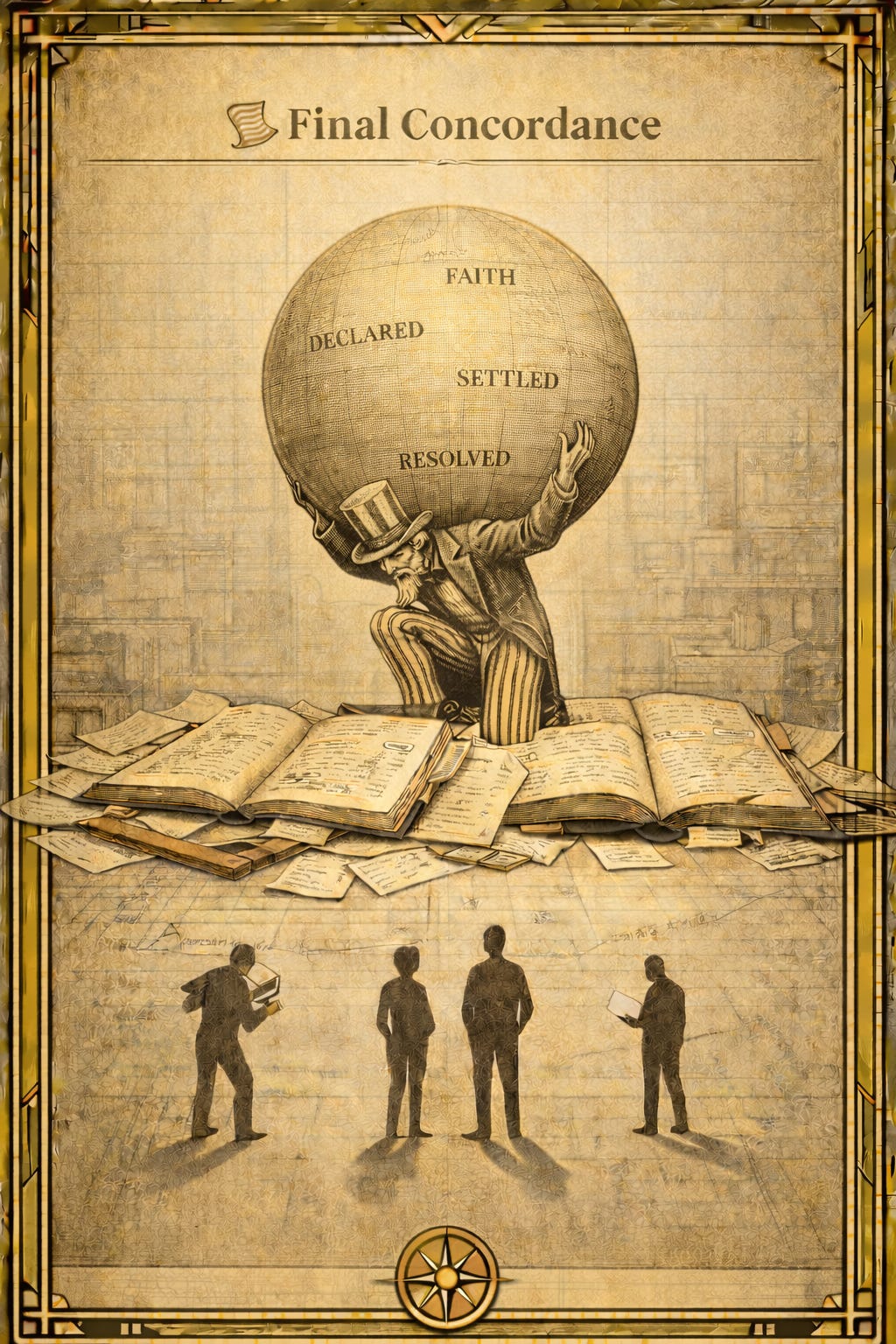
📜 Final Concordance
Faith speaks in absolutes.
Reality moves in gradients.
Faith declares.
Reality documents.
Faith requires belief.
Reality requires evidence, patience, and revision.
This Gospel asks the reader not to choose a party, but to choose between magical thinking and the stubborn, unglamorous world as it is.
And thus ends The Book of St. Donald of the Perpetual Podium.
The saint stepped away from the lectern, satisfied. And when a voice in the back asked what tomorrow would bring, the answer came, as it always does: the same thing we do every day—try to take over the world.