

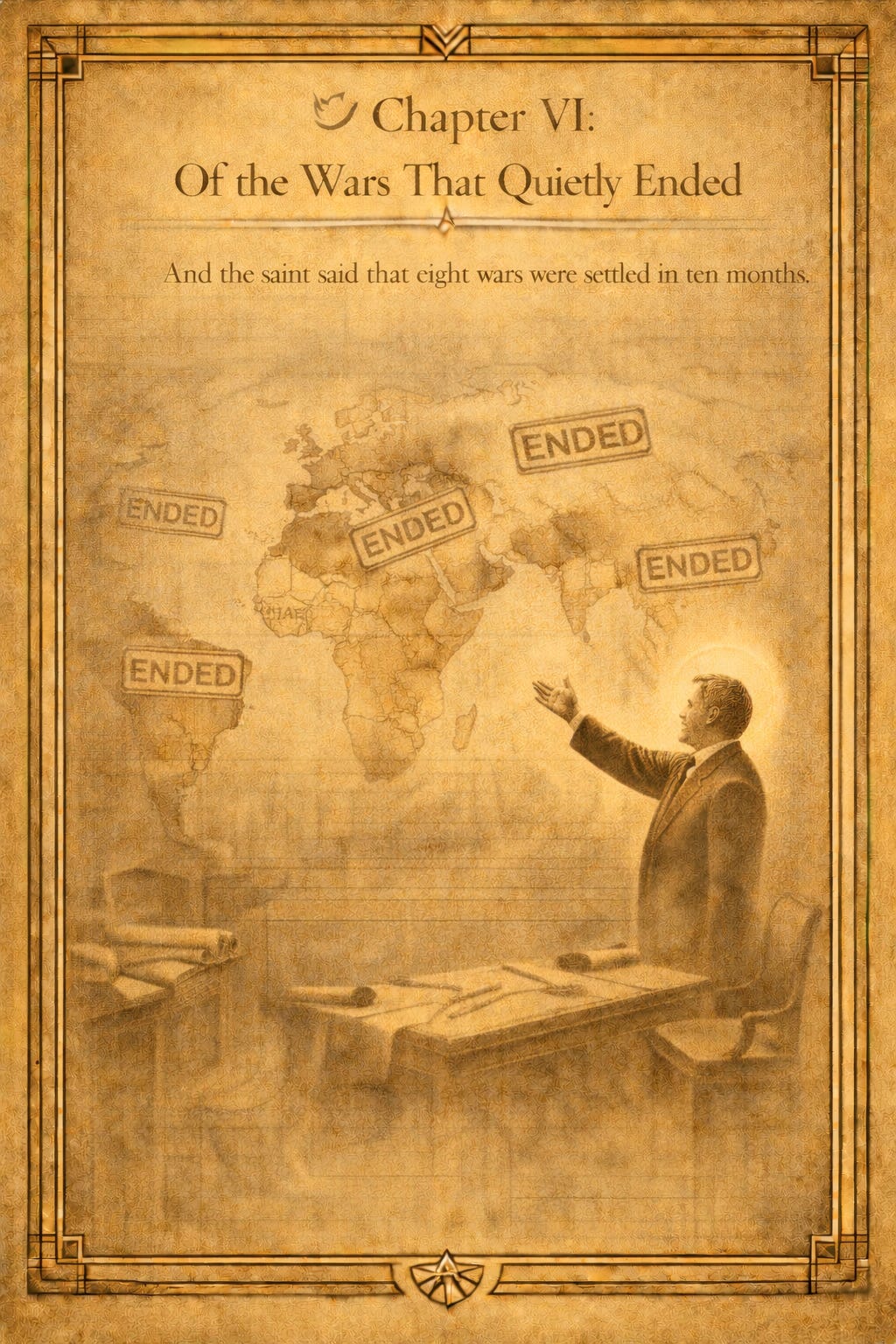
🕊️ Chapter VI: Of the Wars That Quietly Ended
The Gospel
And the saint said that eight wars were settled in ten months.
No names were offered.
No maps were updated.
No flags were lowered.
They simply… ended.
The war in Gaza, we were told, was finished by announcement. Three thousand years of blood and argument were folded up like a lawn chair and put back in the garage.
Hostages were freed, living and dead, which covered every possible outcome and required no follow-up.
In this version of events, wars do not end with treaties or withdrawals or awkward compromises. They end with applause. They end when the microphone turns off.
Peace arrived quietly, so quietly that geography didn’t notice.
The Book of Treaties and Maps
Wars are loud when they end.
They end with signatures, ceasefires, pullbacks, arguments, broken promises, and long explanations no one enjoys giving. They leave paper trails, satellite images, and people who disagree about what just happened.
No list exists of eight wars that ended on schedule. Conflicts named in the speech continued before the applause faded.
Saying a war is over does not make it so.
Silence is not peace.
And clapping is not a ceasefire.
History has a way of ignoring announcements that aren’t backed by facts on the ground.
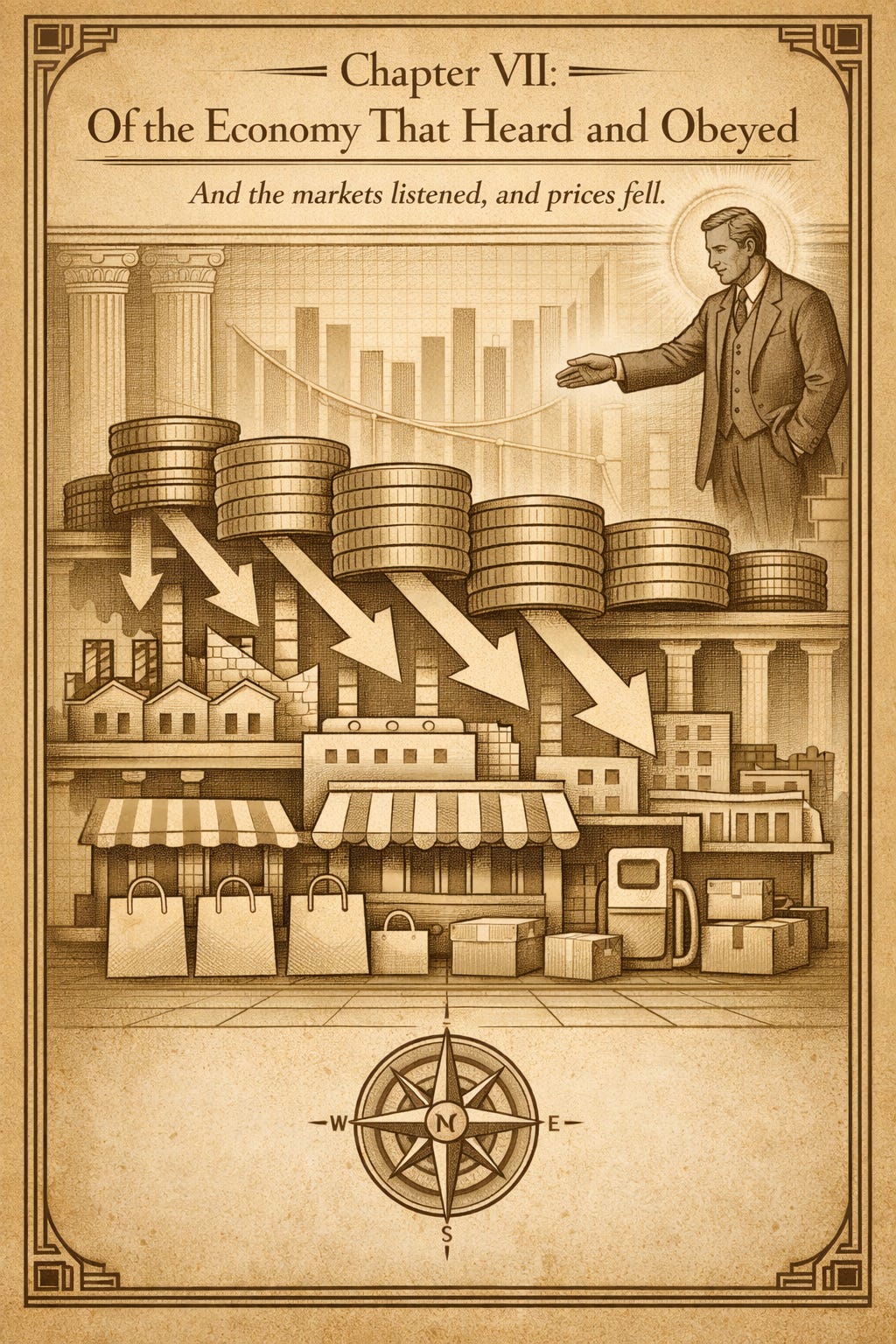
📉 Chapter VII: Of the Economy That Heard and Obeyed
The Gospel
And the saint spoke, and prices fell.
Cars that had been wicked grew righteous. Gas repented. Hotels humbled themselves. Airfares came down from the mountaintop.
Eggs descended mightily.
Turkeys bowed on schedule.
The grocery store became proof.
This was not coincidence. This was obedience.
The economy, long unruly and disrespectful, had finally learned to listen. And it listened quickly. “Fast” was said often, and so speed was felt, if not measured.
Charts were unnecessary. Receipts would do.
The Book of Markets
Prices go up and down the way tides do. Sometimes because of storms. Sometimes because of crowds. Sometimes because everyone shows up at once and wants the same thing.
Food prices swing. Gas prices swing. Travel prices swing especially hard the moment people decide they’re done staying home.
No president whispers to the cash register.
No speech controls the price of eggs.
When prices settle after a period of chaos, that’s not obedience.
That’s gravity doing its job.
Calling it a miracle doesn’t change how it works.
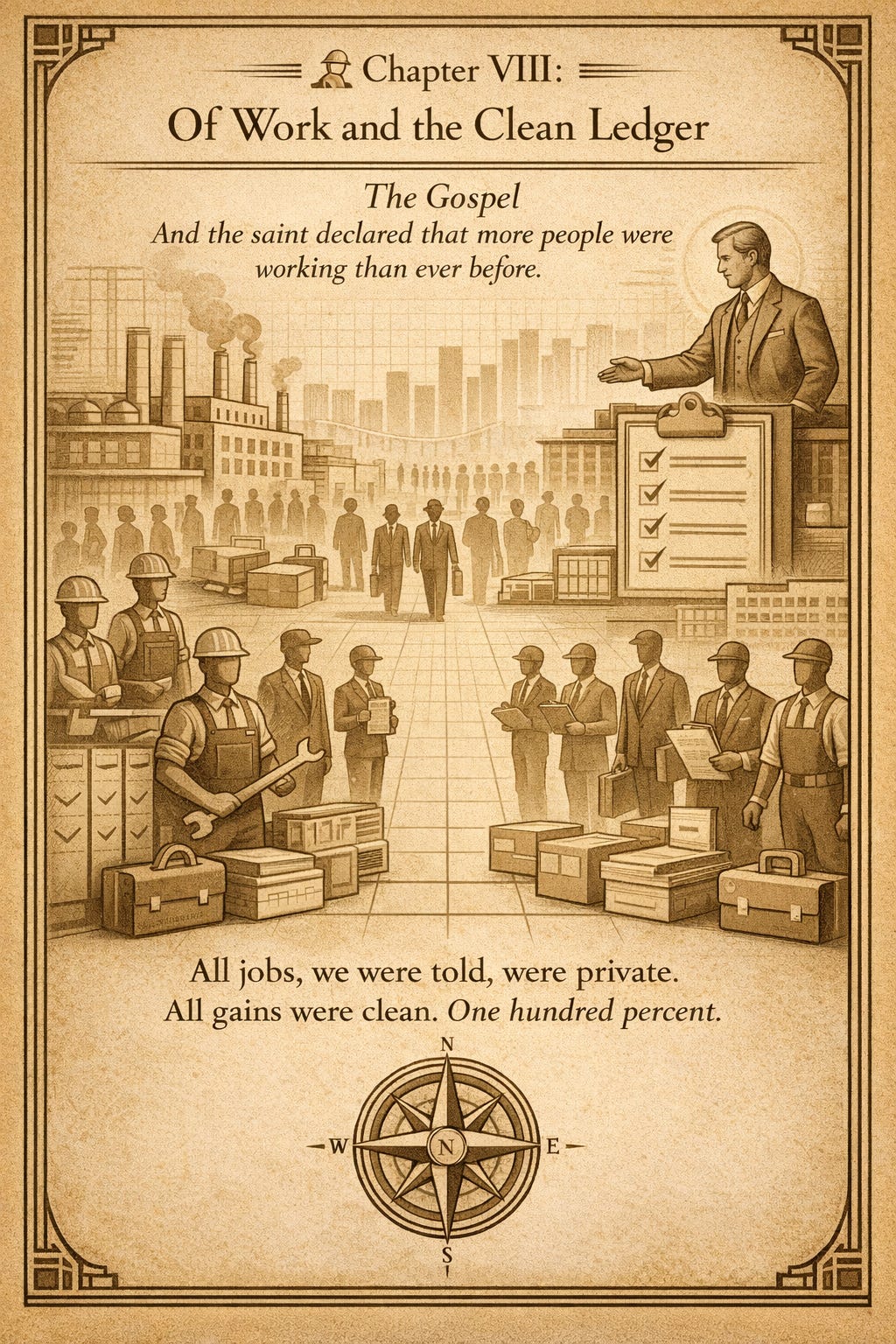
👷 Chapter VIII: Of Work and the Clean Ledger
The Gospel
And the saint declared that more people were working than ever before.
This may be true, depending on how you count and what you ignore, but the number was delivered with confidence, which made it feel complete.
All jobs, we were told, were private.
All gains were clean.
One hundred percent.
One hundred percent is a comforting number. It ends arguments. It forgives questions. It tells the listener there is nothing left to worry about and no reason to ask how we got here.
The ledger, it seemed, had finally been scrubbed.
The Book of Labor
There are more workers because there are more people.
What matters is not how many clocks are being punched, but whether the pay covers rent, whether the hours last, and whether the job survives the next bad week.
Work has never been tidy.
It has never been one hundred percent anything.
People juggle jobs. They drop out and come back. They work part time when they want full time and full time when they want rest.
A clean ledger makes for a good story.
Real work leaves smudges.
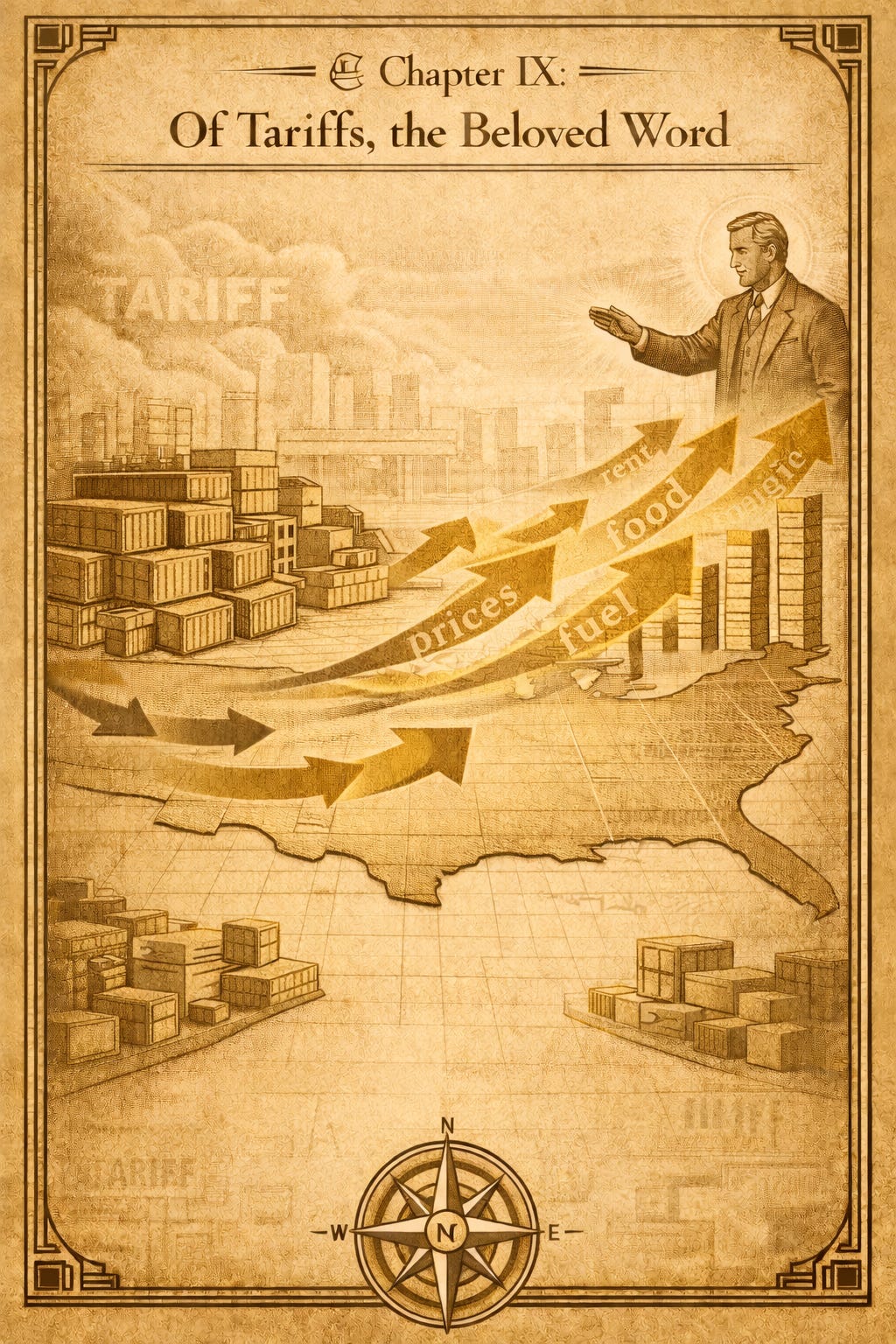
🧾 Chapter IX: Of Tariffs, the Beloved Word
The Gospel
And St. Donald spoke lovingly of tariffs, his favorite word, and tariffs became magic.
Factories, we were told, came rushing home the moment the word was spoken. Trillions of dollars appeared, though no one saw them arrive. Companies repented, packed up, and returned to American soil out of gratitude and fear.
Tariffs were no longer taxes.
They were punishments paid by someone else.
They were free money.
They were proof.
Nothing so complicated as trade was allowed to remain complicated. A single word did all the work.
The Book of Exchange
Tariffs are taxes.
They are paid by the people bringing goods into the country, and those costs usually end up on the price tag you see. Sometimes they help one business. Sometimes they hurt ten others.
Factories do not move because of speeches. They move because of wages, machines, shipping costs, subsidies, and whether the lights stay on.
Tariffs don’t summon industry like prayer.
They rearrange who pays the bill.
Calling that magic doesn’t make it so.
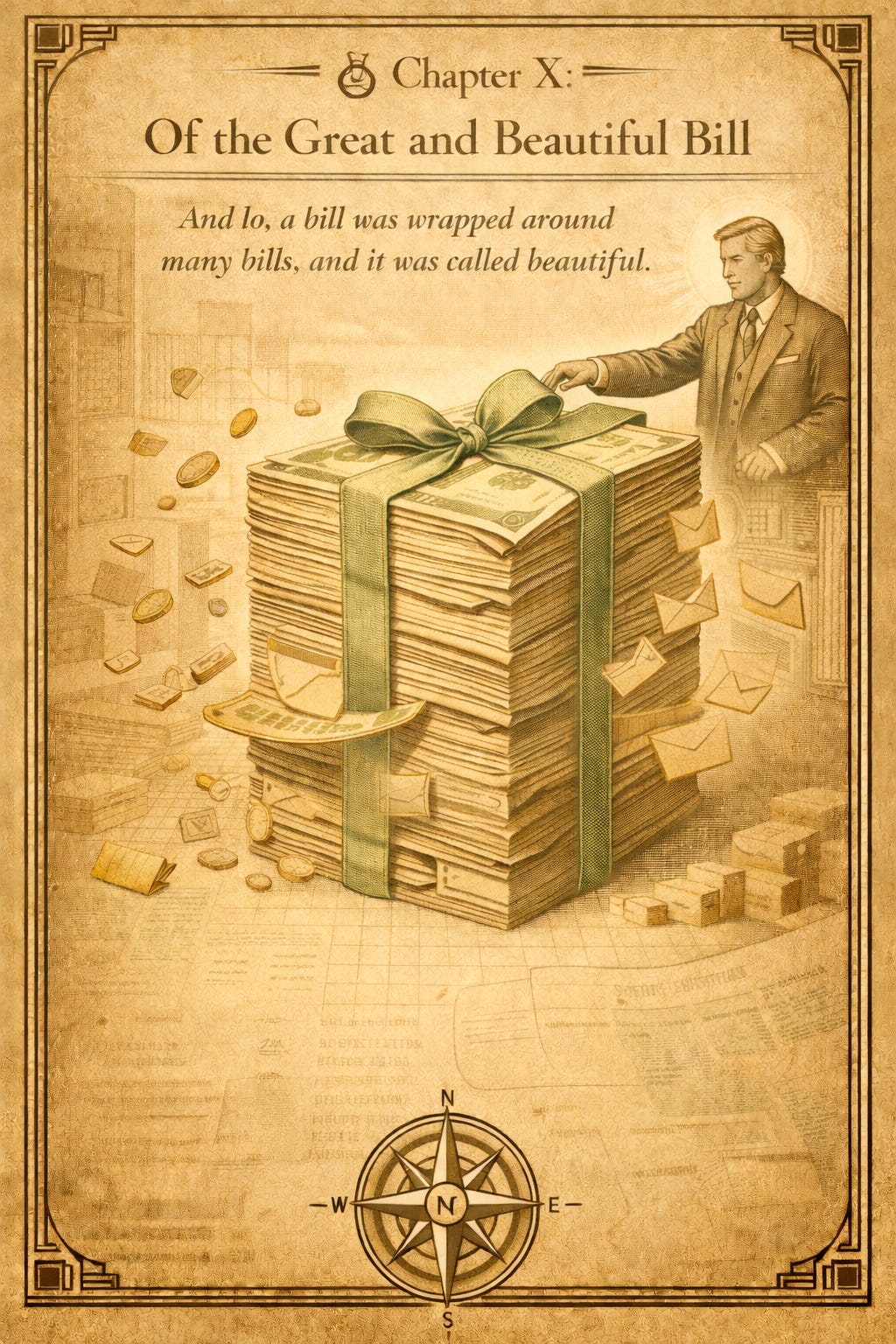
💰 Chapter X: Of the Great and Beautiful Bill
The Gospel
And lo, a bill was wrapped around many bills, and it was called beautiful.
Taxes vanished. Tips were spared. Overtime was blessed. Social Security was relieved of its burdens. Families were promised savings so precise they sounded scientific, and so generous they seemed to apply to everyone at once.
Refunds, we were told, would be enormous. Wallets would swell. Prosperity would arrive in the mail, neatly folded, just after tax season.
It was said with such confidence that no one stopped to ask where the money went, only where it would land.
The Book of Budgets
Money does not appear just because a bill is handsome.
When taxes are cut, someone still pays. And it is almost never the rich people who wrote the law.
The biggest benefits go to those who earn the most, own the most, and hire the accountants who know where all the doors are. They don’t wait for refunds. They don’t worry about overtime. Their money moves quietly, through channels most people never see.
The rest of us pay up front. We pay at the register. We pay in fees, higher prices, and cuts that show up later, when no one is looking.
The rich don’t win because they work harder.
They win because they write the rules.
Calling a bill beautiful does not change who it was built for.
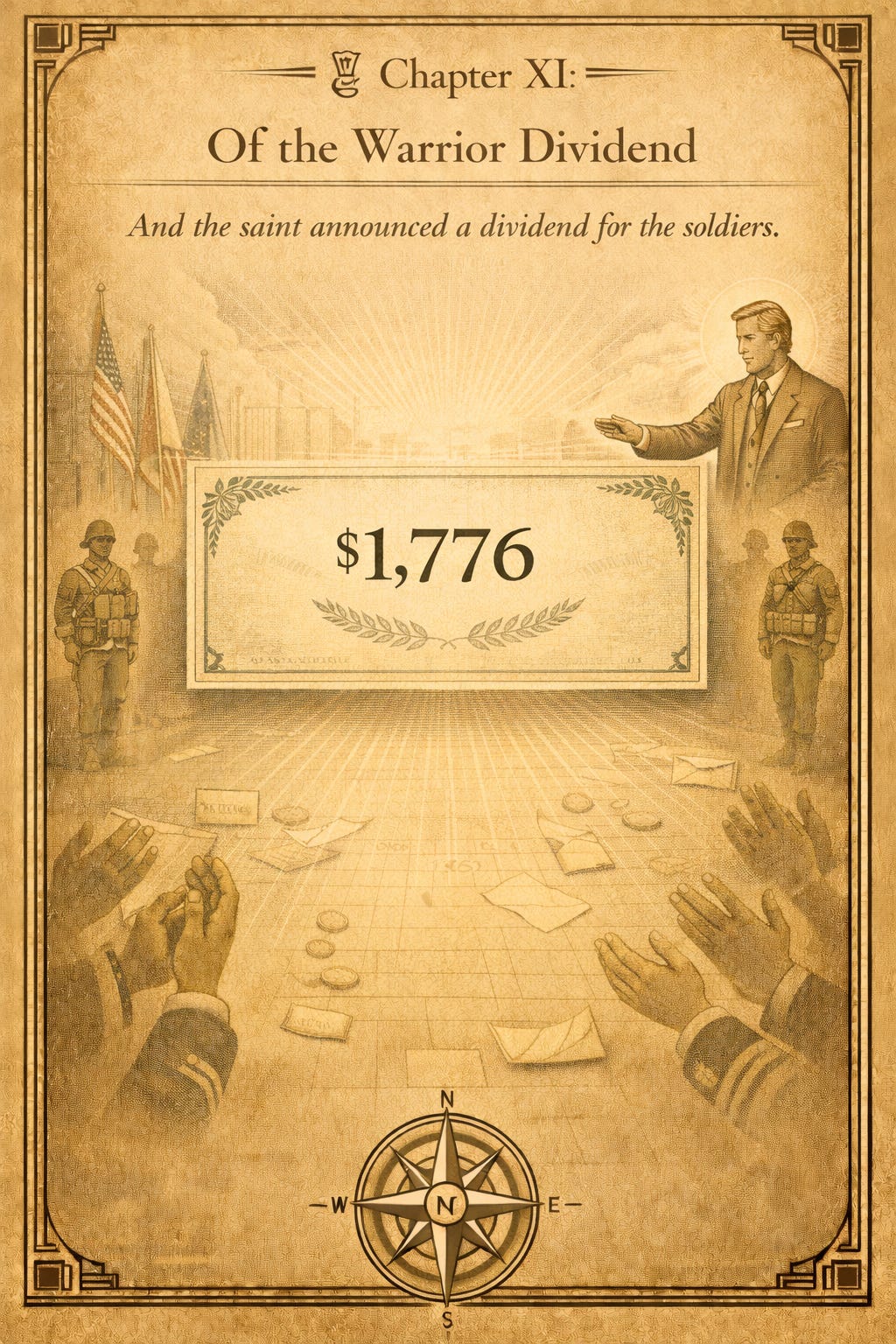
🎖️ Chapter XI: Of the Warrior Dividend
The Gospel
And the saint announced a dividend for the soldiers.
Each would receive $1,776, a number chosen not for math but for mood. The year was patriotic. The check was symbolic. The applause was immediate.
We were told the money was already on the way. That it had appeared because tariffs had worked harder than anyone expected. That this was only fair, because no one deserved it more.
The implication was clear: the nation had prospered so suddenly and so greatly that it could now pass the hat, and the hat came back full.
The Book of Appropriations
Checks do not write themselves.
Money sent to soldiers must be approved, budgeted, and taken from somewhere specific. It does not materialize because a podium hums or a crowd cheers.
Tariffs do not create spare cash lying around in drawers. They shift costs. They collect money from one place and remove it from another, usually long before anyone notices where it went.
Paying service members is a real choice, and sometimes a good one. But calling it a surprise windfall is theater.
Respect is not proven by symbolism alone.
And patriotism does not replace a ledger.
This concludes today’s reading.
Next: The Part Where the Math Is Supposed to Give Up