


Scott Turner entered the December 2 Cabinet meeting holding a metaphor like a championship ring: game film. The film doesn’t lie, he said. The film tells the real story. If the American people would simply watch closely enough, they would see a nation rescued, restored, made safe and beautiful again.
But housing policy has been filmed before.
The reels are long.
And the edits are familiar.
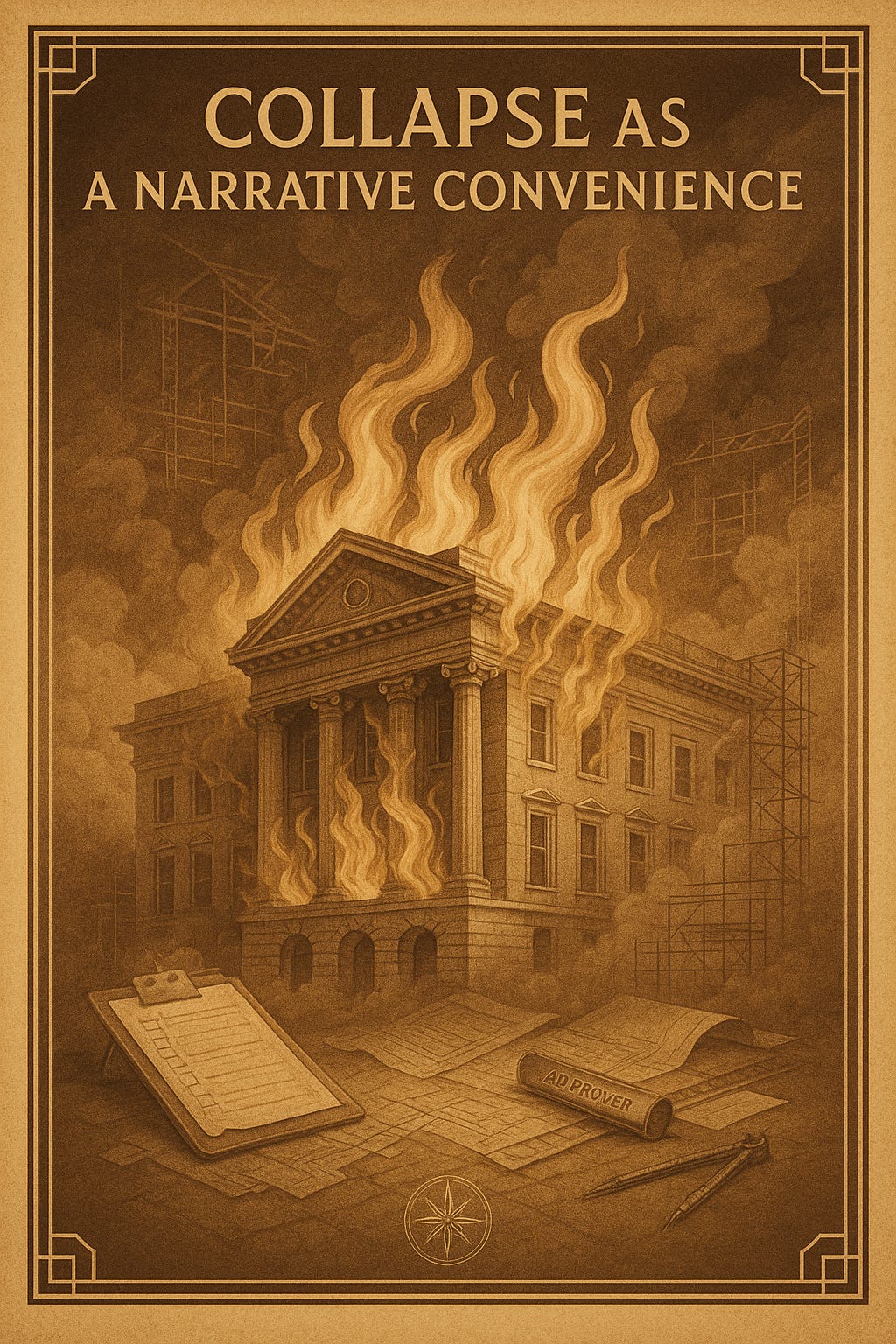
Scene 1: Collapse as a Narrative Convenience
Turner opened with a familiar incantation: America was nearly lost, unrecoverable, saved just in time by executive resolve.
This opening shot is useful. Declaring collapse clears the stage for extraordinary authority. If the house is already burning, no one asks who installed the wiring, who canceled inspections, or why maintenance budgets vanished decades earlier.
Housing crises are rarely sudden.
They are designed slowly.
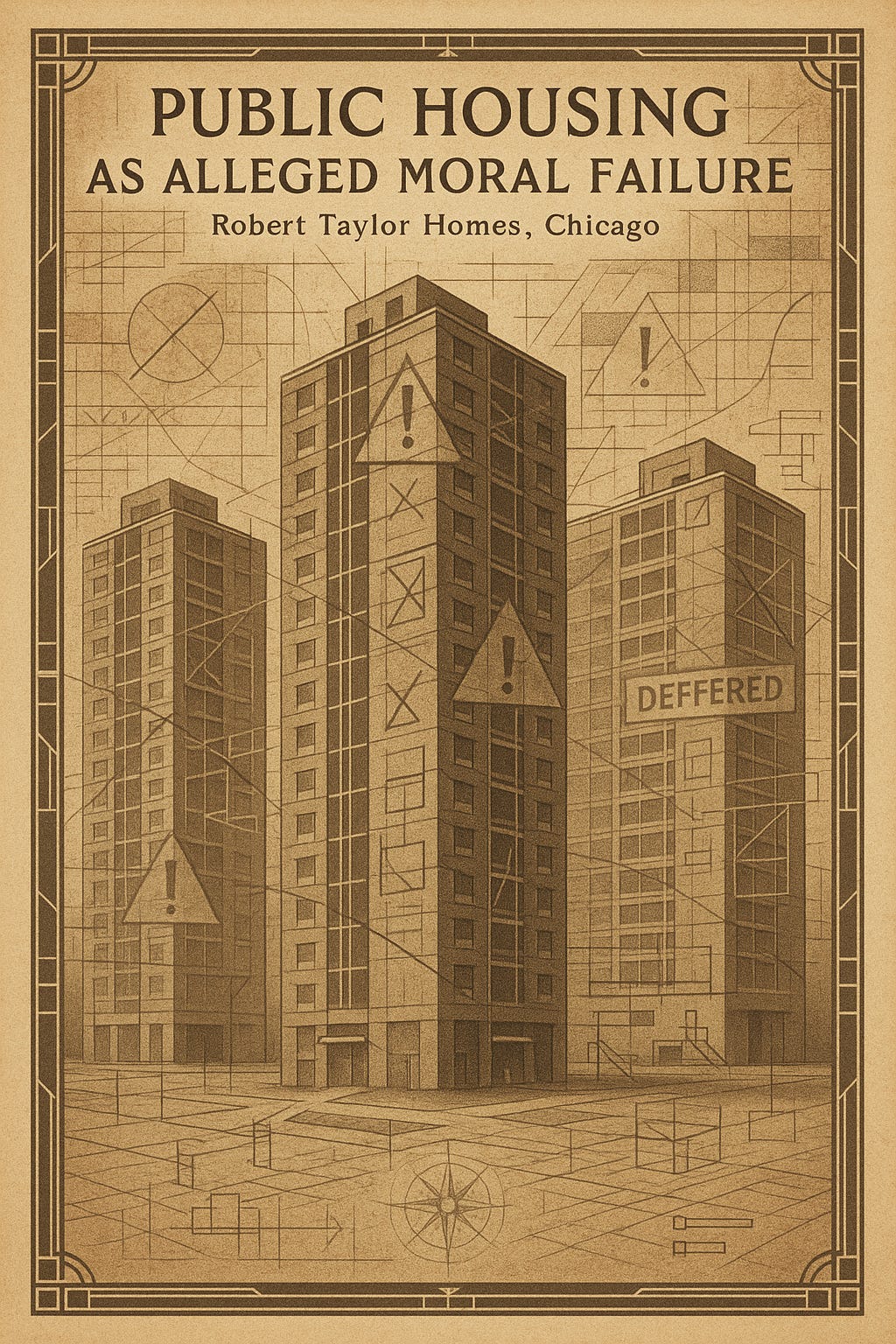
Scene 2: Public Housing as Alleged Moral Failure
Turner described public housing as a national emergency zone: crime, trafficking, illicit activity, unauthorized residents. The implication was unspoken but unmistakable. These places are dangerous because of the people who live there.
Robert Taylor Homes, Chicago
Robert Taylor Homes did not collapse because its residents collapsed. It was built stable, populated by working families, and sustained until policy intervened.
What destroyed it was not culture but design and disinvestment:
Segregation enforced by law
Concentration of poverty through siting
Systematic withdrawal of maintenance funding
Redlining that blocked mobility
Crime followed abandonment.
Surveillance followed crime.
Demolition followed outrage.
Turner’s film begins at the wreckage.
The archive shows the scaffolding removed first.
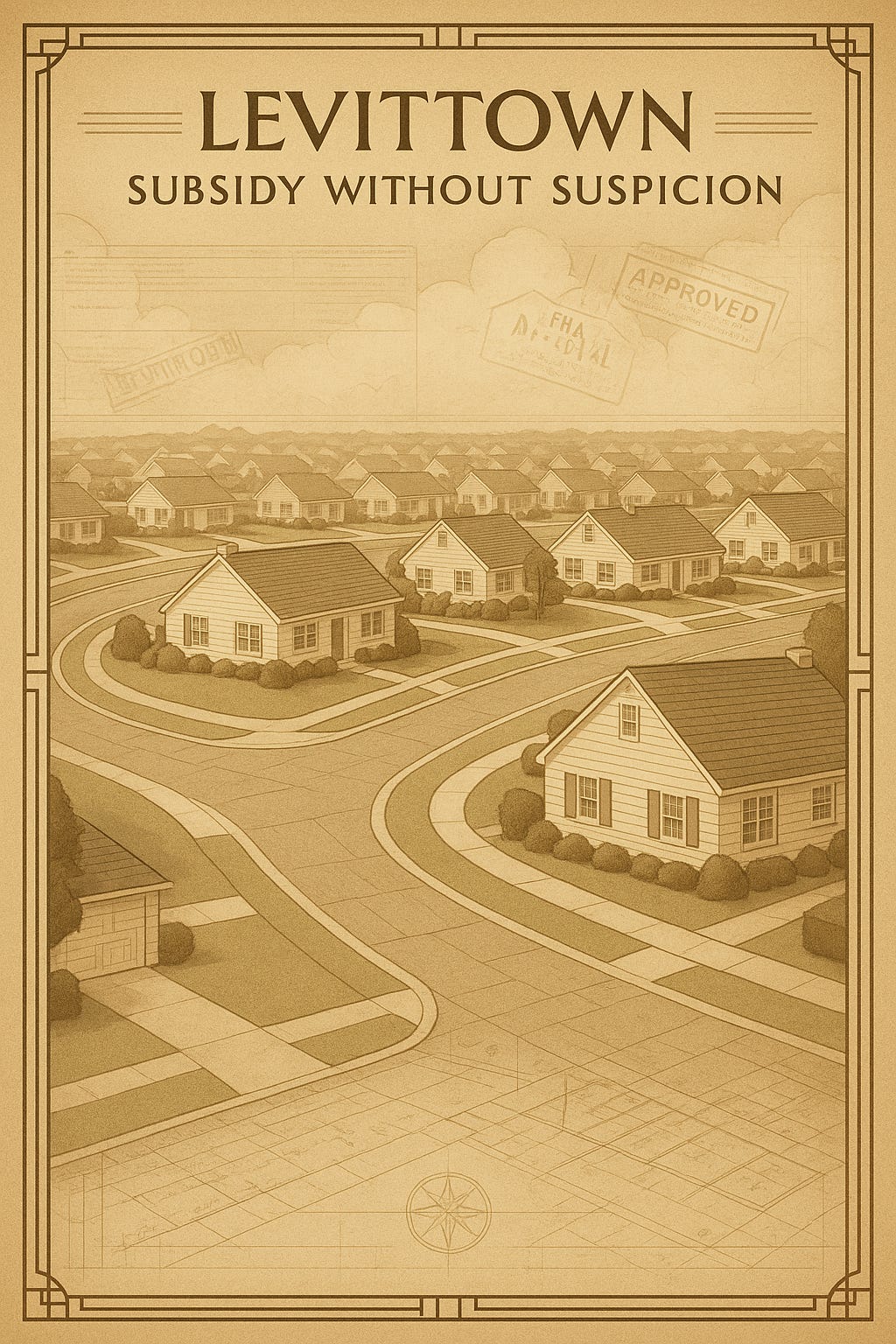
Scene 3: Levittown — Subsidy Without Suspicion
Levittown never appears in Turner’s story. It never does.
Levittown was mass housing.
Levittown was federally subsidized.
Levittown was infrastructure-heavy and mortgage-insured.
And Levittown was explicitly white.
Its residents were not surveilled.
They were subsidized.
They were not questioned.
They were protected by covenant and policy.
Public housing was scrutinized.
Levittown was celebrated.
Same government.
Different definition of “American.”
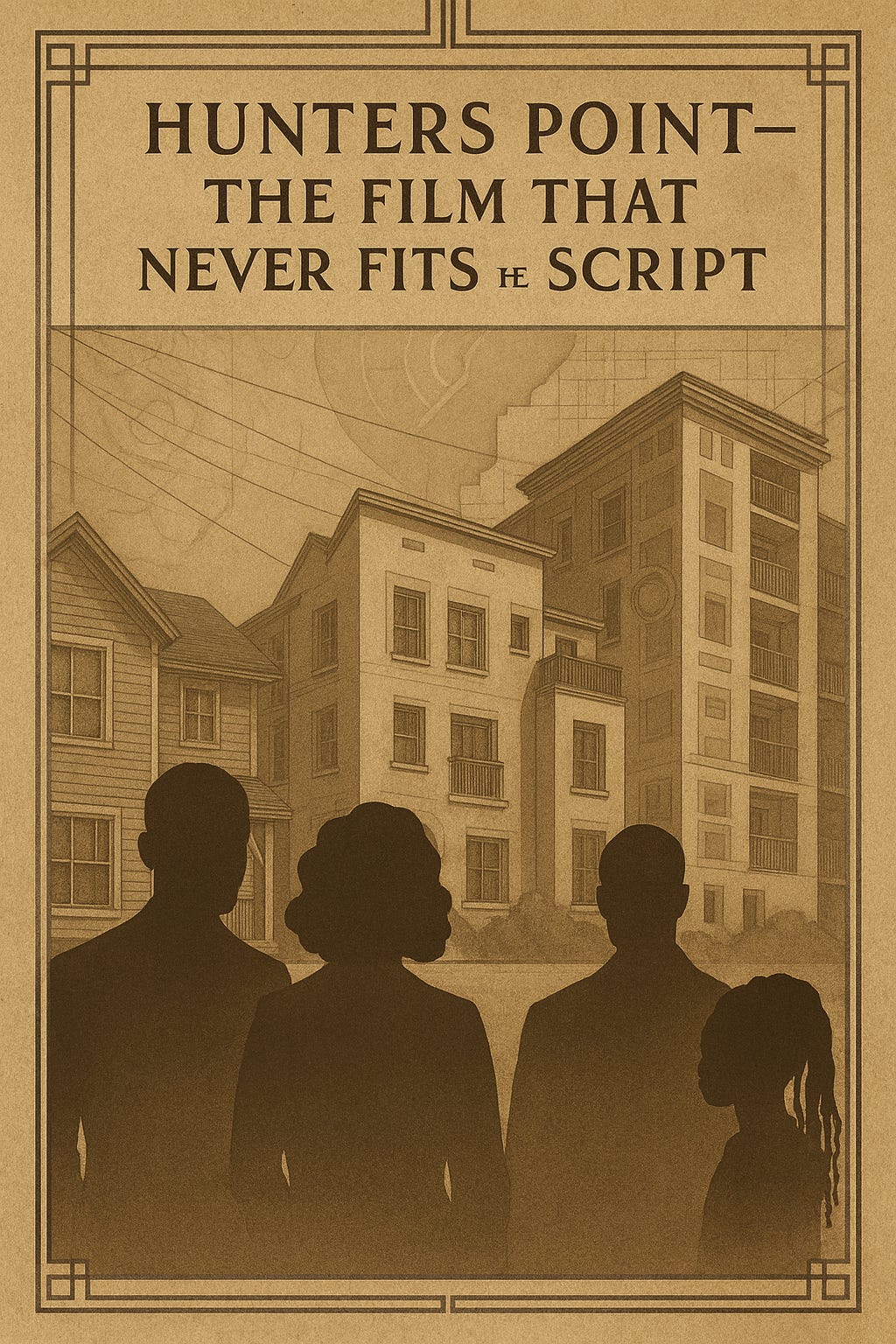
Scene 4: Hunters Point — The Film That Never Fits the Script
And then there is Hunters Point, which never fits the script.
Bayview–Hunters Point was shaped by naval industry, environmental racism, redlining, toxic exposure, and decades of municipal neglect. When conditions deteriorated, the response followed a familiar pattern: blame the place, blame the people.
But Hunters Point did not become another Robert Taylor Homes.
That outcome was not the result of chance or culture.
It was the result of deliberate choices.
The work at Hunters Point was shaped by architects such as Daniel Solomon, FAIA; John G. Ellis, FAIA, RIBA; and Anne Torney, FAIA — practitioners whose careers demonstrate something Turner’s speech cannot accommodate: housing failure is not a moral condition.
What worked at Hunters Point was not enforcement.
It was architecture, planning, and systems thinking.
Solomon brought an understanding of urbanism as civic responsibility rather than discipline.
Ellis brought rigor, historical memory, and an insistence on human-scale dignity.
Torney, who continues to lead the work, brought persistence — the kind required for projects measured in decades rather than news cycles.
I spent my architectural career learning and working directly with them.
They were my mentors.
The standards, judgment, and ethics that shaped this work are the ones they taught.
That professional competence was matched by political will.
In California, sustained attention to public housing has existed at the executive level. Whatever else may be said about Gavin Newsom, housing has remained a persistent concern rather than a rhetorical accessory. His appointments reflect that priority.
One example is Samuel Assefa, appointed to lead California’s housing efforts as Office of Land Use and Climate Innovation Director. Look at his quals:
Director of the City of Seattle Office of Planning and Community Development
Senior Urban Designer for the Department of Community Planning and Sustainability for City of Boulder
Director of Land Use and Planning Policy for the Department of Planning and Development and Deputy Chief of Staff for Economic and Physical Development for the City of Chicago Mayor’s Office
Senior Urban Designer for the SmithGroup JJR
Director of Special Projects for the City and County of San Francisco Department of Planning and Development
Senior Urban Designer for SMWM Architecture and Planning
Master of City Planning degree from the Massachusetts Institute of Technology.
Assefa is a planning director whose work integrates design, policy, and equity, reflecting continuity rather than rupture in housing practice.
This is the kind of person who should be running America’s housing and urban design apparatus. He also happened to be one of my professors. I’m not making a claim — just stating the lineage.
This alignment matters.
Housing improves when expertise and authority are allowed to reinforce one another.
The work itself was not dramatic. It was exacting:
Environmental remediation
Phased redevelopment
Community engagement structured around residents as stakeholders rather than subjects
Hunters Point demonstrates a conclusion the broader narrative resists:
When investment replaces suspicion, stability follows.
No hotline required.
No nightly patrols presented as care.
No mythology of rescue.
The Hunters Point footage shows progress without scapegoats.
That is why it rarely appears in the final cut.
Scene 5: Surveillance Rebranded as Care
Turner celebrated crime hotlines and task forces as proof of concern for “mothers and children.”
This edit is familiar.
Robert Taylor Homes lived under constant police presence. It did not stabilize the community. It replaced maintenance with monitoring and services with suspicion.
Public safety framed as omnipresence does not repair buildings.
It disciplines occupants.
Scene 6: Atlantic City and the Rescue Fantasy
Turner spoke of Atlantic City public housing as something he personally “took” to save.
Federal takeovers are not heroics. They are acknowledgments that oversight failed for years. They arrive late, loudly, and with cameras.
Robert Taylor Homes was once “taken.”
Hunters Point was worked on.
There is a difference between repossession and repair.
Scene 7: The Million-Home Miracle (With History Intact)
Turner’s numbers on HUD-backed homeownership are largely accurate.
But numbers alone do not tell the story.
Levittown reminds us how generational wealth was deliberately built.
Hunters Point reminds us that inclusion is a choice, not an accident.
Eligibility has always been the quiet architecture of inequality.
What the Film Is Really About
Turner’s speech is not about housing conditions.
It is about permission.
Permission to:
Treat disinvestment as destiny
Treat surveillance as care
Treat exclusion as patriotism
Treat history as optional
Robert Taylor Homes shows what abandonment produces.
Levittown shows what subsidy builds when it is allowed to.
Hunters Point shows what happens when professionals are trusted to do their work.
Final Frame: The Film Crops the Fix
“The film don’t lie,” Turner said.
But this one cuts away at the crucial moment:
It omits Levittown’s subsidized whiteness.
It fast-forwards through Robert Taylor Homes’ engineered neglect.
It avoids Hunters Point precisely because it demonstrates repair rather than blame.
The film doesn’t lie.
It edits.
Post-Credits Scene: Who’s Calling the Plays?
This is what happens when the file room clerk is promoted to head of the plan-checking department and begins rejecting drawings they do not know how to read.
This is what happens when a former football player is handed the keys to American housing, asked to call the plays, and responds by blowing the whistle and calling the police.
Not a quarterback.
Not a field general.
Just someone repeating slogans from the sideline.
Housing is architecture, finance, environmental remediation, zoning law, community trust, and time.
It is not a locker-room speech.
It is not a crime blotter.
It is not a hotline.
This is not how housing is saved.
This is how it is miscalled from the booth.
The film doesn’t lie.
But it reveals who never learned to read the plans.
Buy the Editor a Drink
This investigation did not arrive with a press kit.
It arrived with footnotes, floor plans, and an unhealthy relationship to federal archives.
If you found the frame useful,
if the cut became visible,
if the edit line showed itself—
You can buy the editor a drink.
Not as charity.
As underwriting.
Because films get funded.
Narratives get financed.
And truth, inconveniently, still runs on refreshment.

Bravo Kimberly
Thanks for the shout out!
An excellent commentary on our housing crisis.