

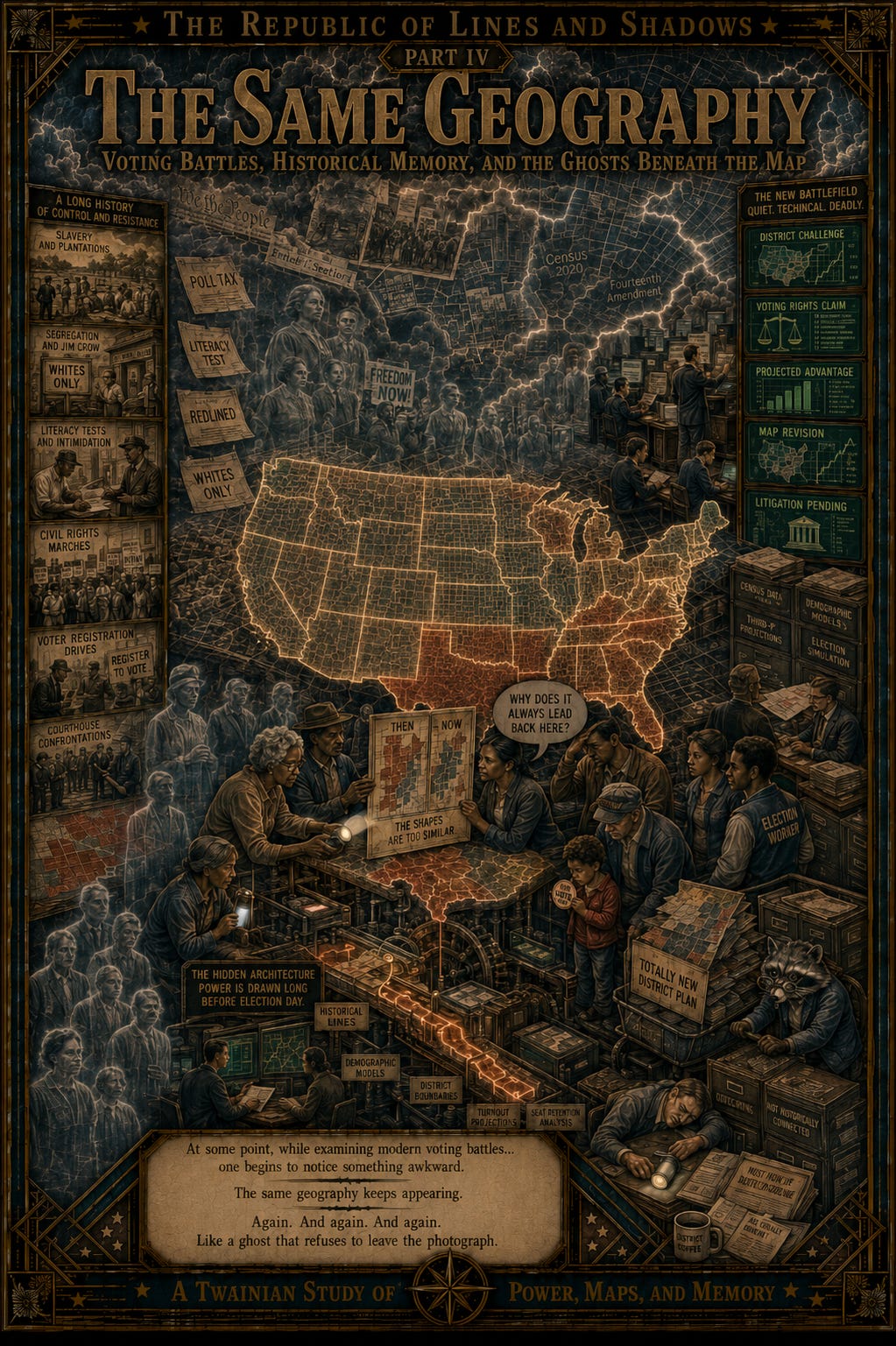
At some point, while examining modern voting battles in:
Texas,
Georgia,
Alabama,
Louisiana,
and North Carolina,
one begins to notice something awkward.
The same geography keeps appearing.
Again.
And again.
And again.
Like a ghost that refuses to leave the photograph.
🗺️
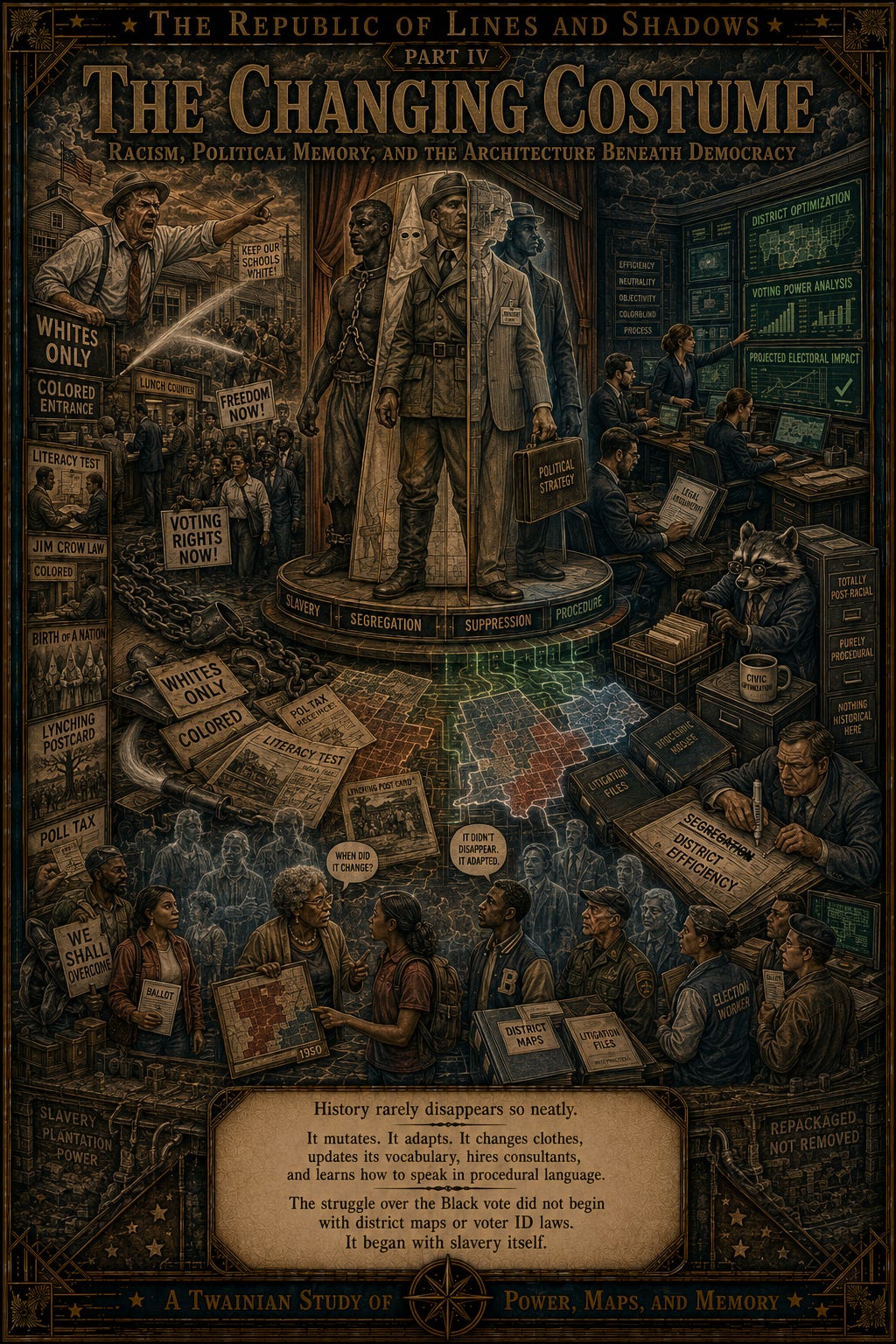
Modern America likes to imagine racism as something safely trapped in black-and-white photographs:
firehoses,
lynching postcards,
segregated lunch counters,
men in suspenders screaming outside schoolhouses while sweating through their shirts like angry boiled hams.
The national story prefers racism dramatic and obvious because obvious villains are emotionally convenient.
The problem is that history rarely disappears so neatly.
It mutates.
It adapts.
It changes clothes, updates its vocabulary, hires consultants, and learns how to speak in procedural language.
Which is why understanding modern voting battles requires understanding the long historical architecture beneath them.
Because the struggle over the Black vote did not begin with district maps or voter ID laws.
It began with slavery itself.
⚖️
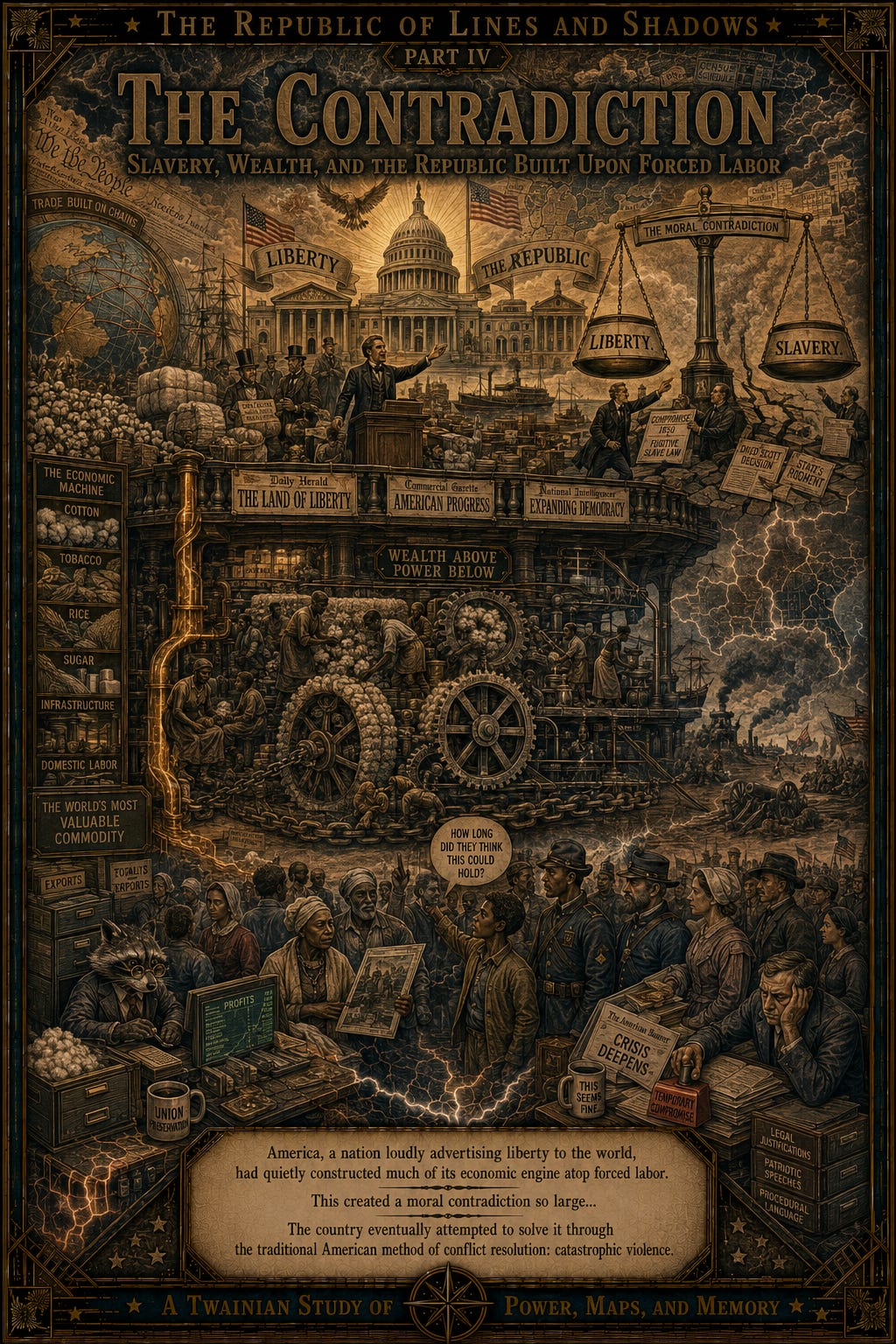
From the earliest days of the republic, the Southern economy depended heavily on enslaved Black labor.
Cotton.
Tobacco.
Rice.
Sugar.
Infrastructure.
Domestic labor.
The wealth generated through slavery became enormous. By the mid-19th century, cotton produced by enslaved labor was one of the most valuable commodities on Earth.
America, a nation loudly advertising liberty to the world, had quietly constructed much of its economic engine atop forced labor.
This created a moral contradiction so large the country eventually attempted to solve it through the traditional American method of conflict resolution:
catastrophic violence.
💥
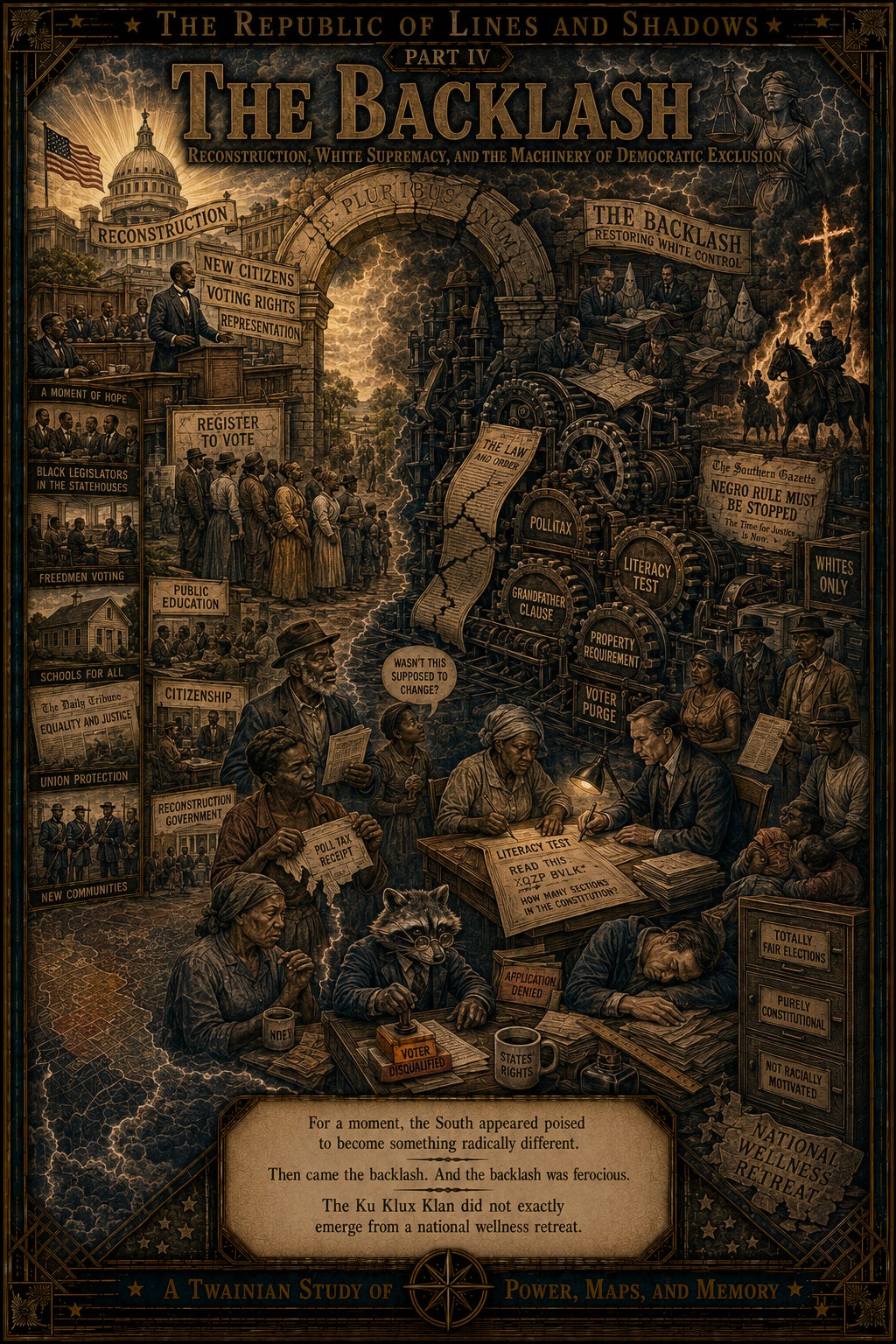
After the American Civil War and the abolition of slavery, formerly enslaved Black Americans briefly experienced a period of expanding political participation during Reconstruction.
Black legislators were elected.
Black voters entered political life.
For a moment, the South appeared poised to become something radically different.
Then came the backlash.
And the backlash was ferocious.
Southern states developed increasingly elaborate systems designed to restore white political control while technically operating within the framework of democracy.
The methods became infamous:
poll taxes,
literacy tests,
grandfather clauses,
property requirements,
intimidation,
economic retaliation,
violence,
and outright terrorism.
The Ku Klux Klan did not exactly emerge from a national wellness retreat.
🕯️
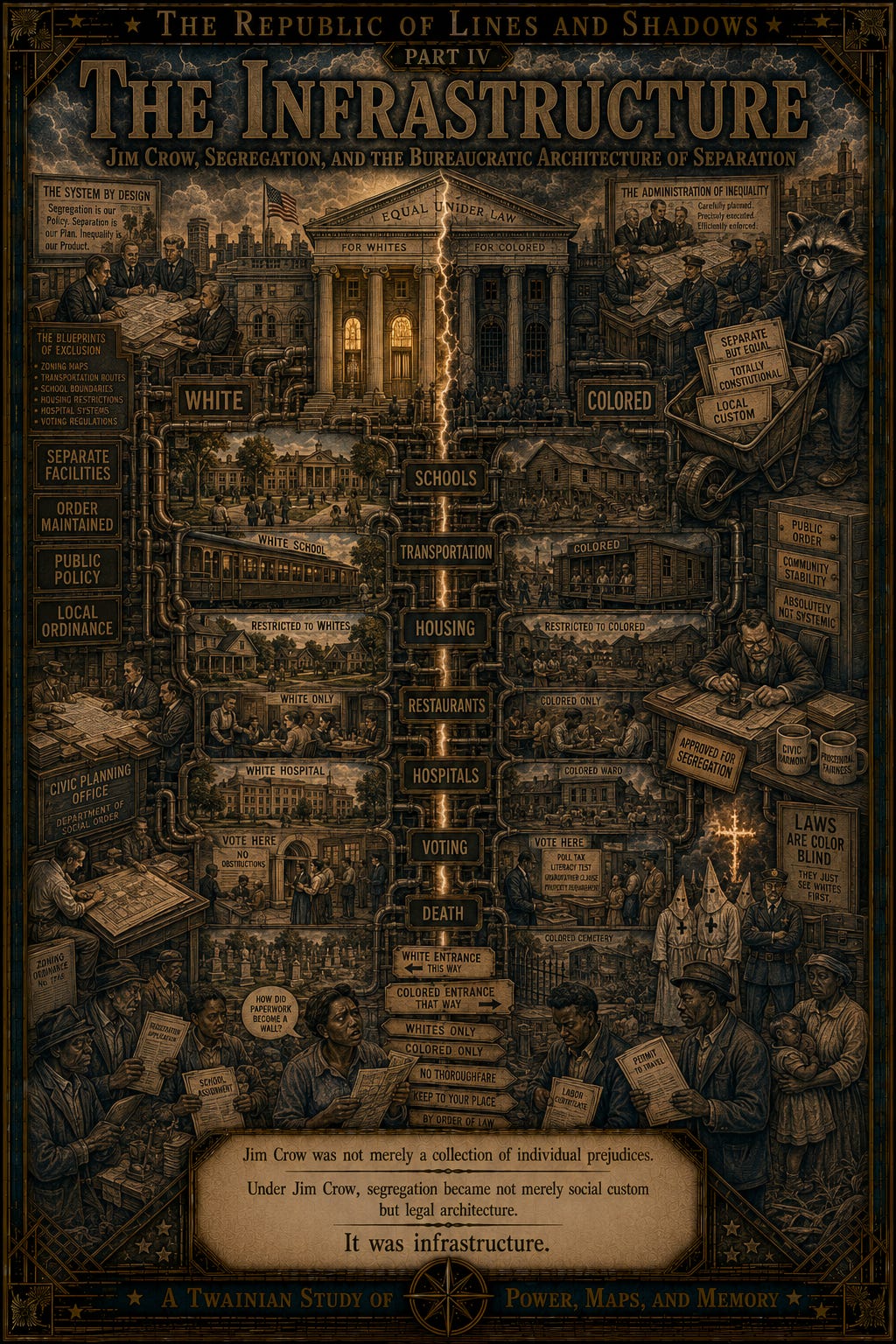
This period eventually hardened into what became known as Jim Crow laws.
Under Jim Crow, segregation became not merely social custom but legal architecture.
Schools.
Transportation.
Housing.
Restaurants.
Hospitals.
Voting.
Even death itself became segregated in some cemeteries.
The system was vast, bureaucratic, and astonishingly thorough.
Which is one reason modern Americans sometimes misunderstand it.
Jim Crow was not merely a collection of individual prejudices.
It was infrastructure.
🏛️
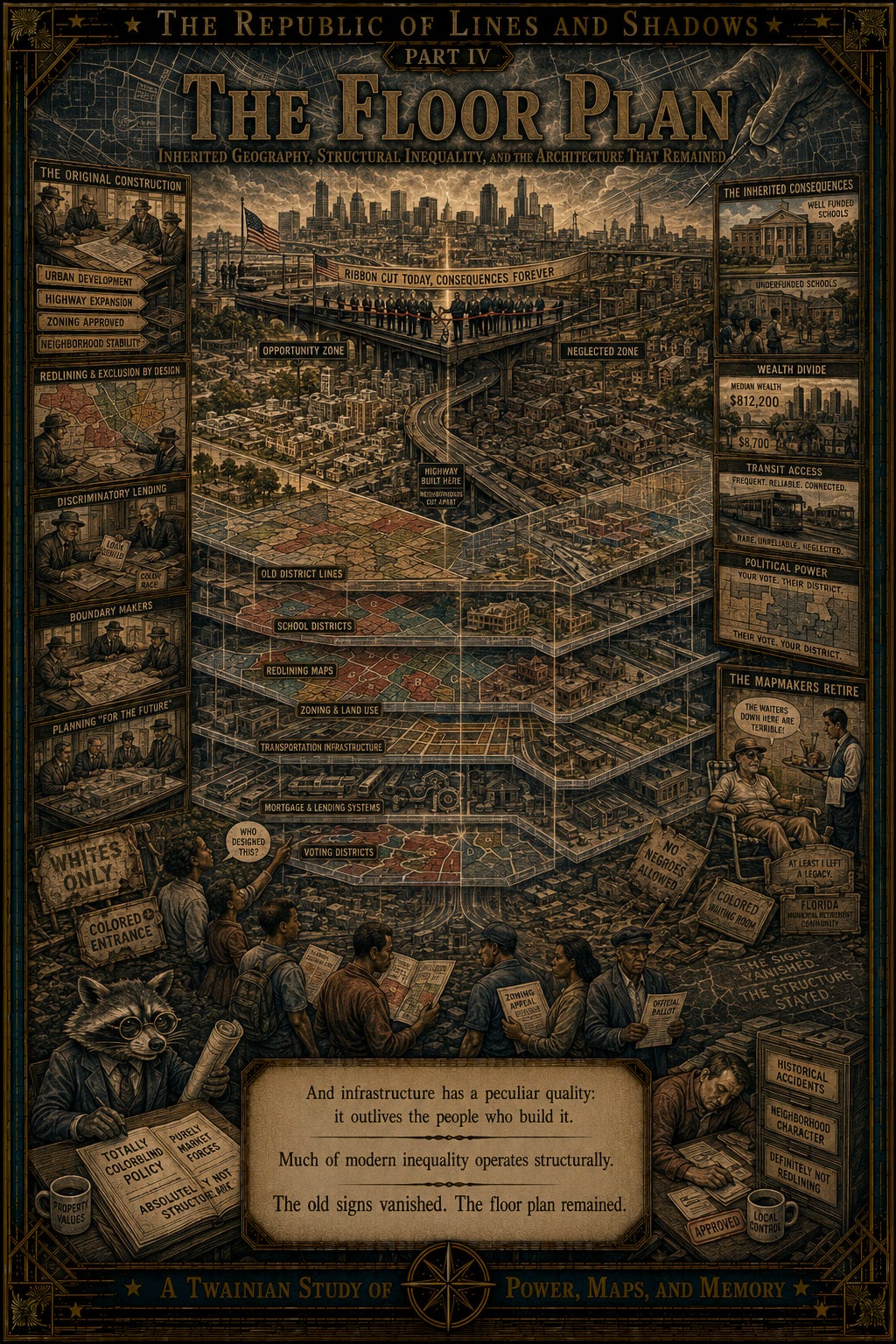
And infrastructure has a peculiar quality:
it outlives the people who build it.
A highway continues shaping traffic patterns long after the ribbon-cutting ceremony ends.
A district boundary continues shaping elections long after the original mapmakers retire to Florida to complain about waiter service.
Likewise, racial systems continue influencing geography, wealth, education, housing, and political power long after the original laws themselves disappear.
This is one reason debates about racism in America often feel so confusing and emotionally explosive.
Many Americans hear the word “racism” and imagine only individual hatred:
slurs,
cross burnings,
neo-Nazis collecting Confederate teaspoons somewhere in a swamp.
But much of modern inequality operates structurally.
Through accumulated geography.
Through inherited advantage.
Through school districts, property values, zoning laws, transportation systems, lending patterns, and political representation.
The old signs vanished.
The floor plan remained.
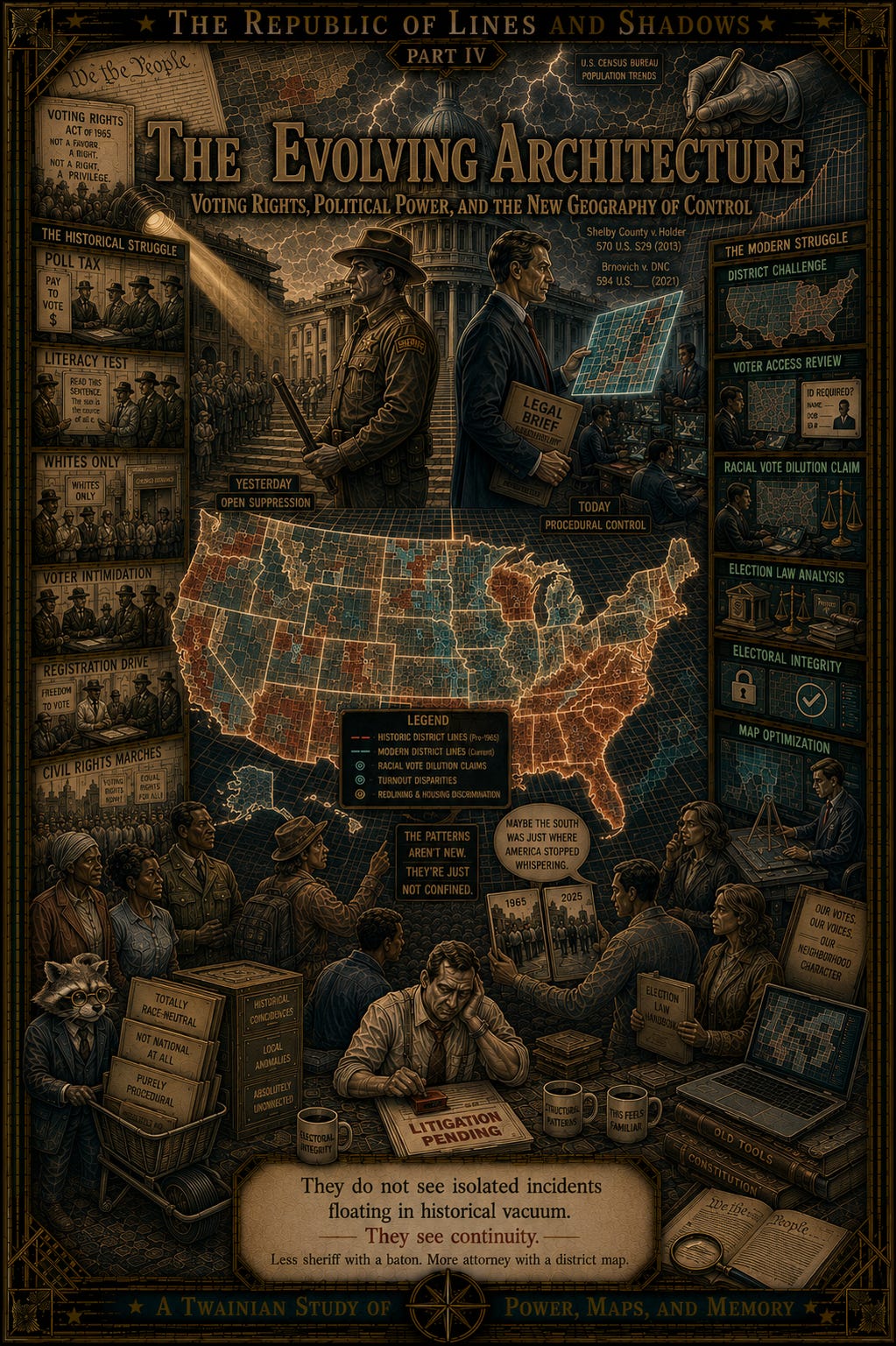
This helps explain why the geography of modern voting battles matters so much.
When critics look at states repeatedly involved in disputes over:
voting access,
district maps,
racial vote dilution,
and election law,
they do not see isolated incidents floating in historical vacuum.
They see continuity.
Not identical systems.
Not the same era.
But connected architecture.
Supporters of modern voting restrictions often reject these comparisons entirely. They argue contemporary election laws are race-neutral and designed to protect electoral integrity.
And to be fair, modern America is not 1957 Alabama.
Black Americans vote, hold office, lead corporations, shape culture, and occupy positions of power unimaginable during the segregation era.
The country genuinely changed.
But critics argue the underlying struggle over political power never fully disappeared.
It evolved.
Less sheriff with a baton.
More attorney with a district map.
⚖️
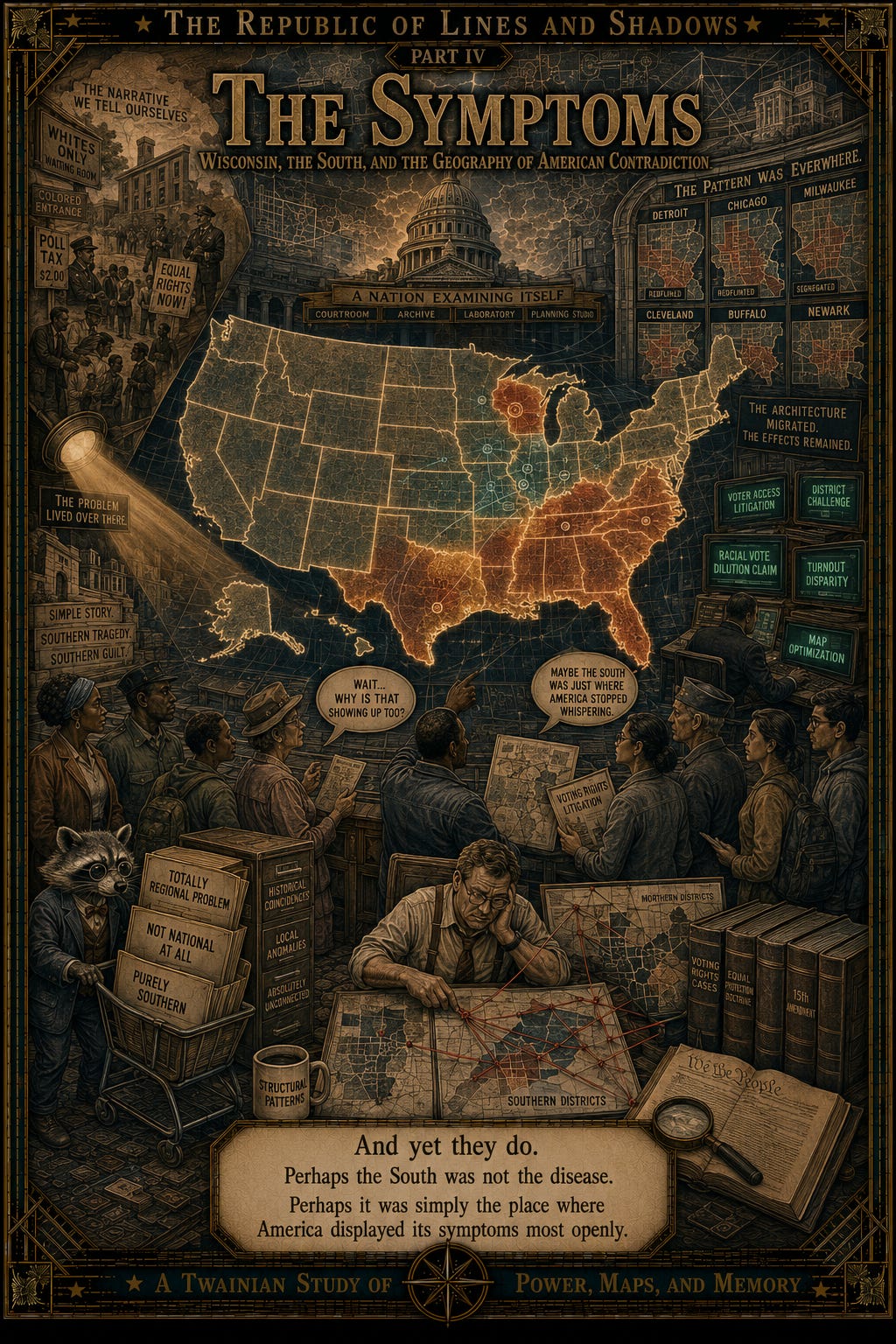
And yet there is another complication lurking beneath this story.
Because if racism were only Southern, then states like Wisconsin should not fit the pattern at all.
And yet they do.
Which raises an uncomfortable possibility:
Perhaps the South was not the disease.
Perhaps it was simply the place where America displayed its symptoms most openly.
❄️