The political climate feels so broken lately that it’s hard to stay hopeful. Every morning the headlines hit like a pie fight in slow motion—Fox says one thing, CNN says another, and the Donald Channel is busy carving a new Mount Rushmore in his own image.
Even The Atlantic’s “War and Peace Report”—which I used to love, and still do—feels different now. Everything sounds confusing, biased, cold. The warmth of journalism has gone missing somewhere between the clickbait and the corporate boardroom.
When I was in college, my journalism professor handed us a simple creed—an oath of the journalist: Thou shalt not be biased. Thou shalt tell the facts as thou seest them. And above all, thou shalt verify them before passing them along.
But of course, we’re human. We all add our own spin. The trick, my professor said, is to make sure it’s your spin, not Rupert Murdoch’s—or whoever owns The New York Times this week.
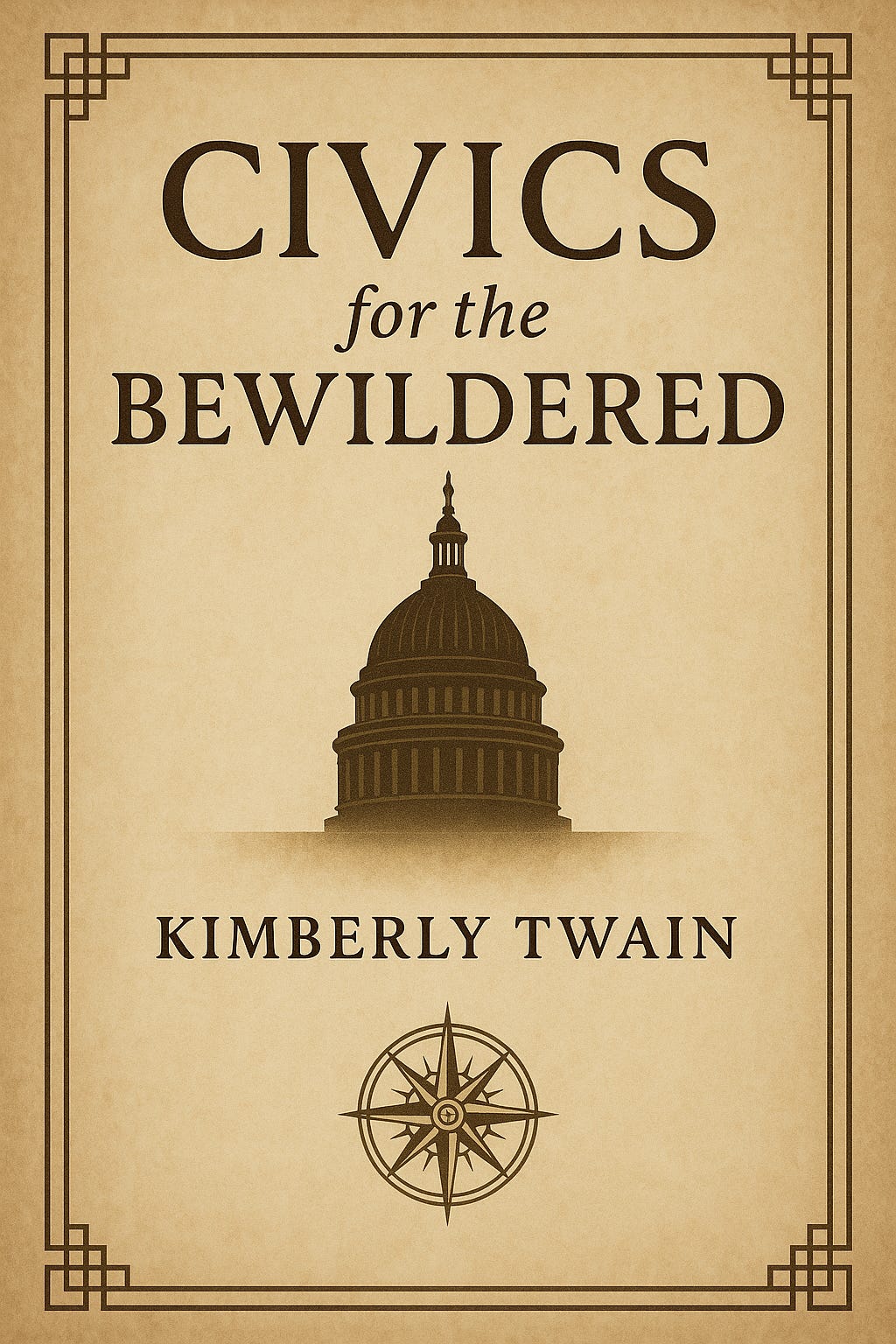
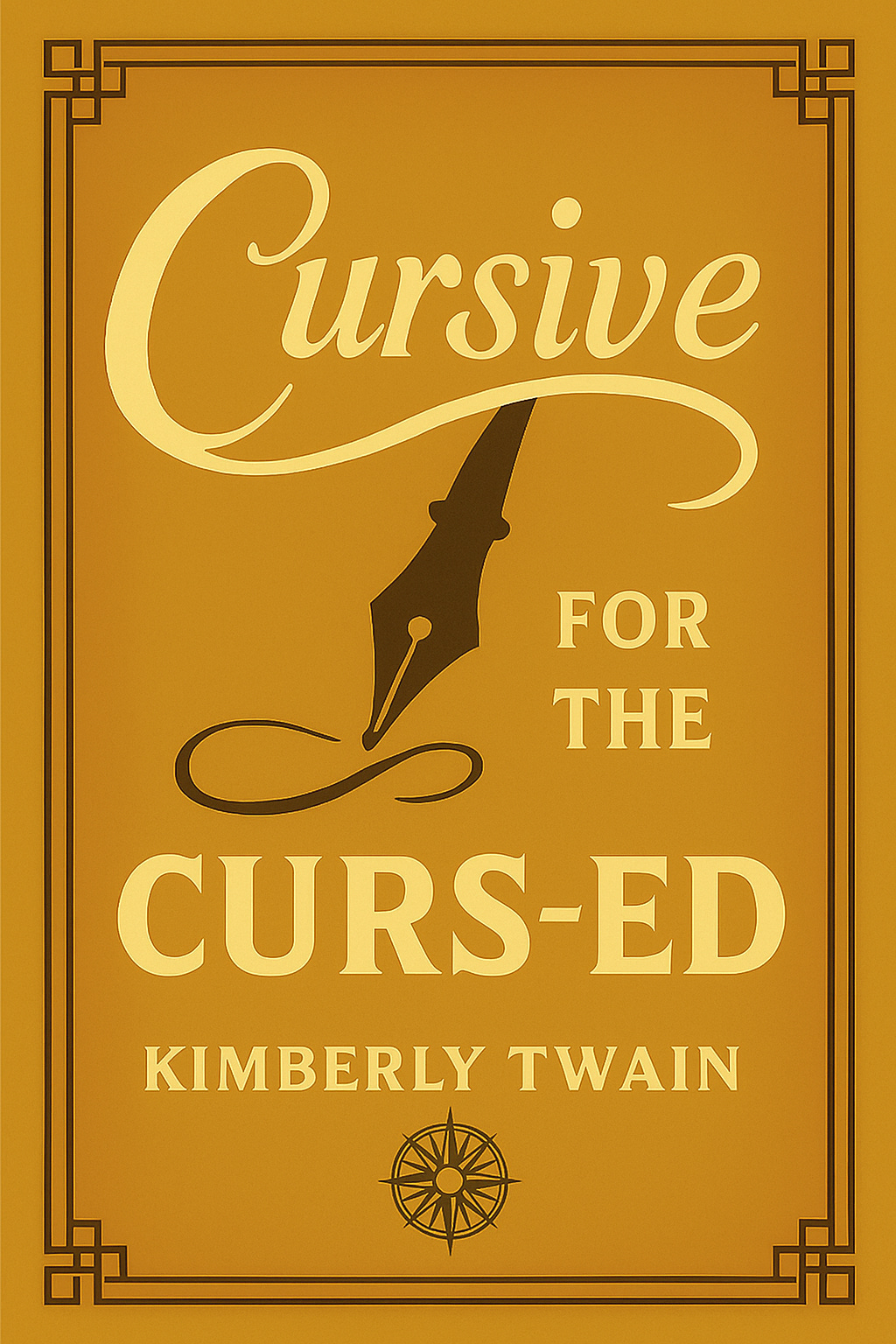
And that’s where today’s reflection begins: slowing down, finding our own strokes, and rediscovering what it means to write—and think—by hand. Below is an except for the third book of the Civics for the Bewildered series. The third book is called Cursive for the Curs-ed.
Excerpt from Chapter One: “Cursive for the Curs-ed”
She sat at the desk, tracing the loops of a forgotten alphabet…
📜 Chapter 1: The Lost Art of Drawing Words
Everything is an art form for me. It takes a while for my thoughts to line up in the morning, like schoolchildren fidgeting before the bell. My therapist gave me the most exquisite advice the other day: Start journaling again.
I’d nearly forgotten the fountain pen I bought in Paris—a graceful, old-fashioned one that requires a proper dip every five or six letters. I also bought a handful of beautiful inks, thinking I’d write the way the old writers must have written: slowly, deliberately, every word a small performance.
It’s a different kind of technology. Each stroke becomes a decision. Each letter, a line drawing. No backspace key—only patience.
🖋️ (Note to the modern writer: do not forget the blotter, lest your words bleed rebelliously across the page or onto the next chapter.)
As I progress, I notice that the nib—the “head” of the pen—can hold more ink if I insert it softly, almost tenderly, into the bottle. A gentle dip, not a plunge. Writing this way is less like typing and more like painting. You begin to slow down. You draw each word one at a time, and then you begin to flourish.
🌿 The loops become architectural. The letters start to breathe. You learn how to hold the pen so the ink flows evenly. And just like that, your handwriting clears, your thinking evens, and before you know it—you’re drawing your thoughts.
💡 Fun Fact: Steve Jobs studied calligraphy in college, which is why Apple’s type design is so elegant.
🕯️ Fun Thought: Imagine Thomas Jefferson, by lamplight, drafting the Declaration of Independence with quill and ink—each flourish of liberty written one stroke at a time.
➡️ Next Excerpt: How to Use a Quill.