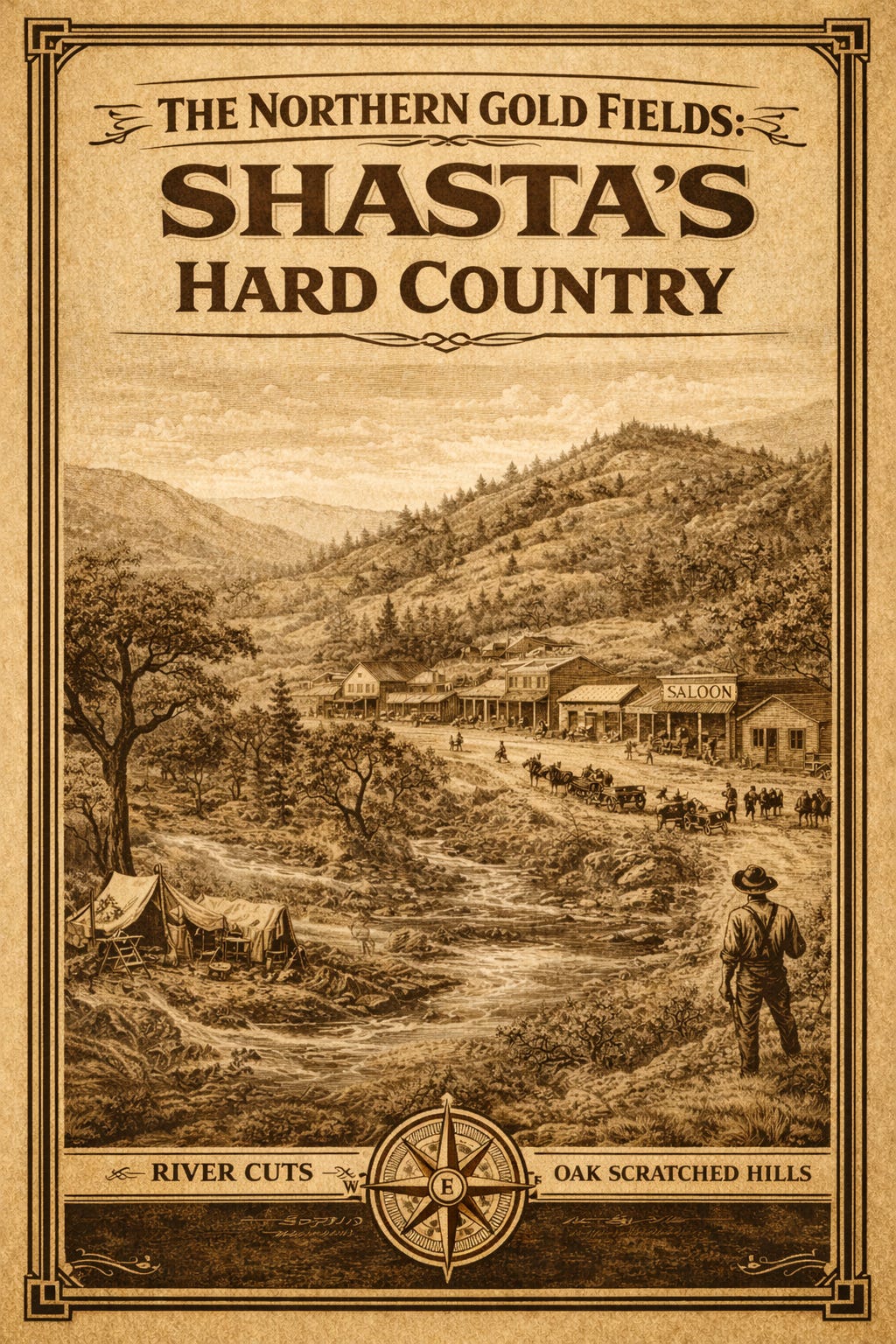
By the early 1850s, while San Francisco was busy turning gold into chandeliers and oysters, the rush pressed north into the river cuts and oak-scraped hills around Shasta.
This was not flashy country. It did not glitter on command. The gold here preferred to sulk. It buried itself in gravels, slipped into deep channels, and lodged inside bends of water that required persuasion, profanity, and occasionally explosives.
If San Francisco sold the dream, Shasta unpacked it in mud.
Shasta was less a boomtown than a supply nerve, sitting inland from the Sacramento River like a clenched fist. Freight wagons arrived groaning. Mule trains departed hopeful. Somewhere in between, whiskey was poured, contracts were murmured, and expectations were quietly revised.
Water as Destiny
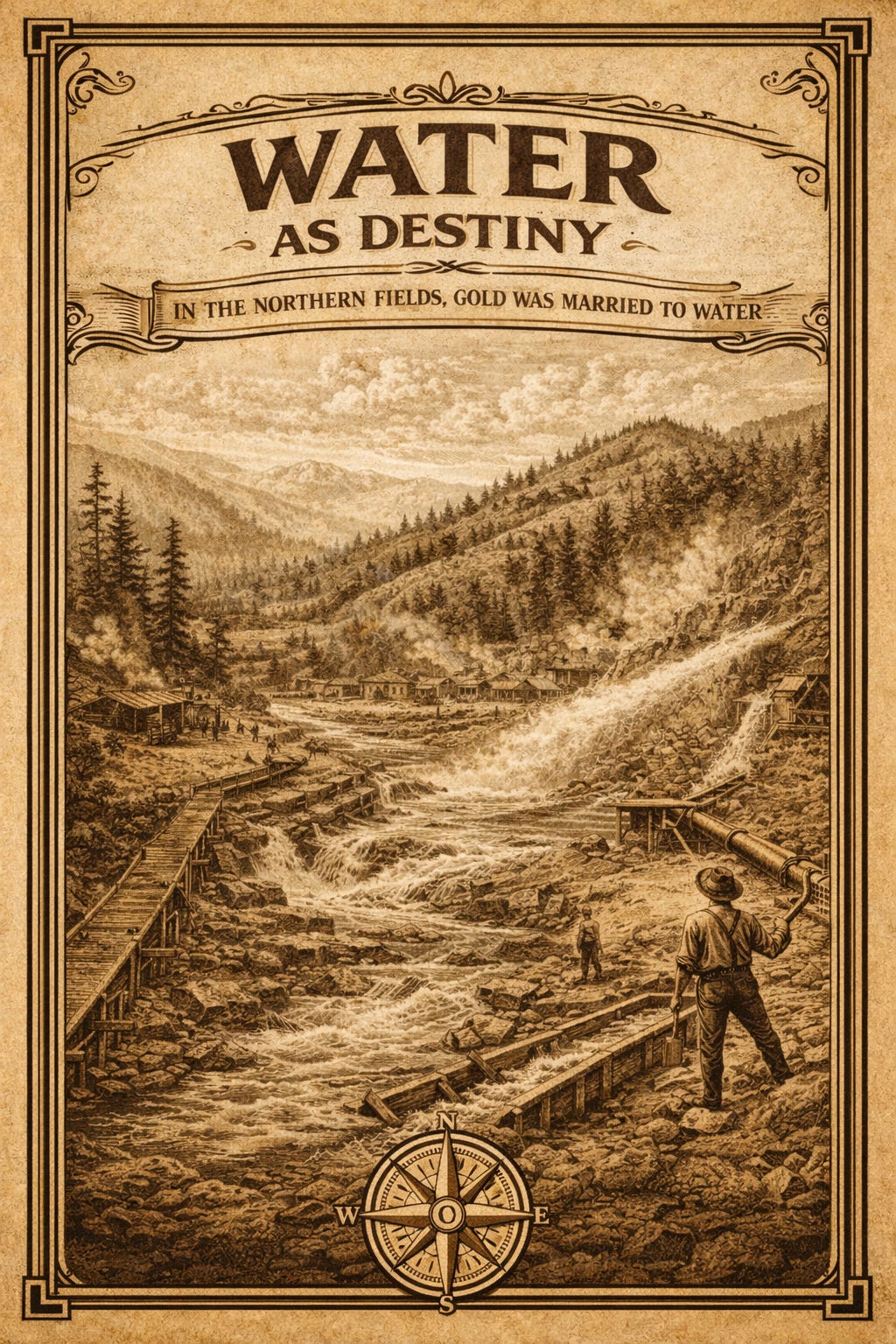
In the northern fields, gold was married to water, and the marriage was practical, not affectionate.
Creeks like Clear Creek and the upper Sacramento decided everything: where men stood, when they stood there, and whether they would still be standing by winter. Water was boss, calendar, and executioner.
Placer mining came first, all pans and optimism. Then sluices. Then long toms. Then the hydraulic cannon, which announced that subtlety had officially retired.
Hillsides were peeled back like stubborn envelopes. Ditches ran for miles. Flumes stitched ravines together in improbable wooden lines that looked less like engineering and more like arguments with gravity. Gravity, for its part, showed up every morning and clocked in as foreman.
The north did not reward patience. It rewarded leverage.
And the Culture Came With It
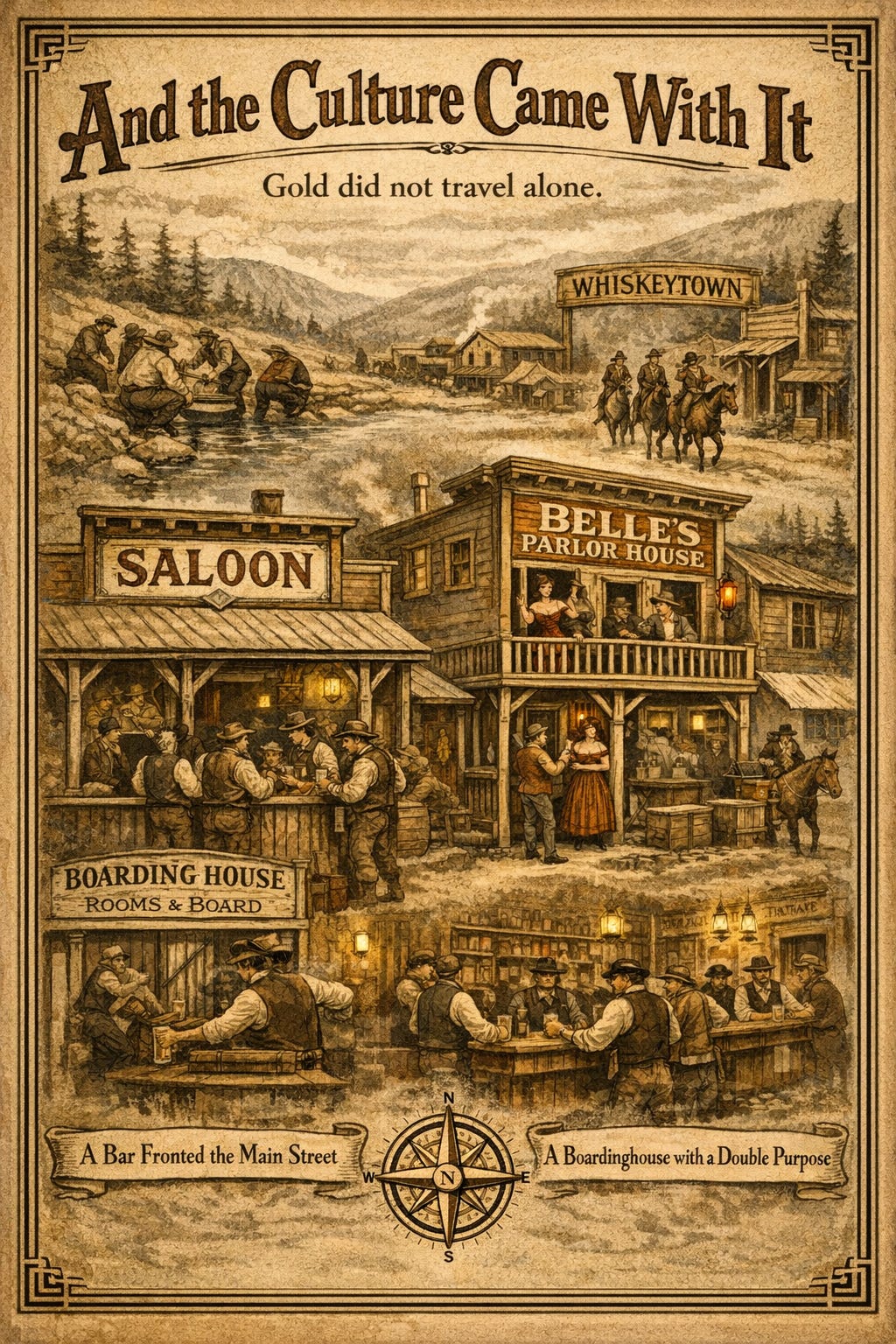
Gold did not travel alone.
Where miners went, bars followed. Where bars settled, brothels took a room nearby and improved it.
By the time the diggings pushed north toward Whiskeytown and beyond, the social architecture of the Gold Rush had already formed its habits. A town might begin with tents and pans, but it did not feel complete until:
a bar fronted the main street
a boardinghouse doubled as a discreet enterprise
lace appeared in a window one block off the dust
Bars were loud, horizontal, and visible. They declared themselves to the street.
Brothels were quieter, layered, and deliberate. They declared themselves by invitation.
In this hard country of gravel and hydraulic force, something softer but no less powerful took root: a culture of quiet feminine authority.
Women did not dominate the street. They did not need to. They controlled the interiors.
Inside those houses:
time slowed
rules were enforced
money was counted carefully
information was gathered without fanfare
A miner might pound a hillside all day and lose himself at a bar by dusk. But when he crossed a threshold and climbed a staircase, the terms shifted. The noise fell away. Negotiation replaced bravado.
In a land obsessed with extraction, women practiced calibration.
It was not theatrical power. It was not shouted. It was measured in:
rent paid on time
fines settled promptly
rooms kept orderly
accounts balanced
If the hills were being dismantled by hydraulic force, the interiors of northern towns were being organized by women who understood that stability, not spectacle, outlasts the strike.
Whiskeytown and the Aftertaste of Gold
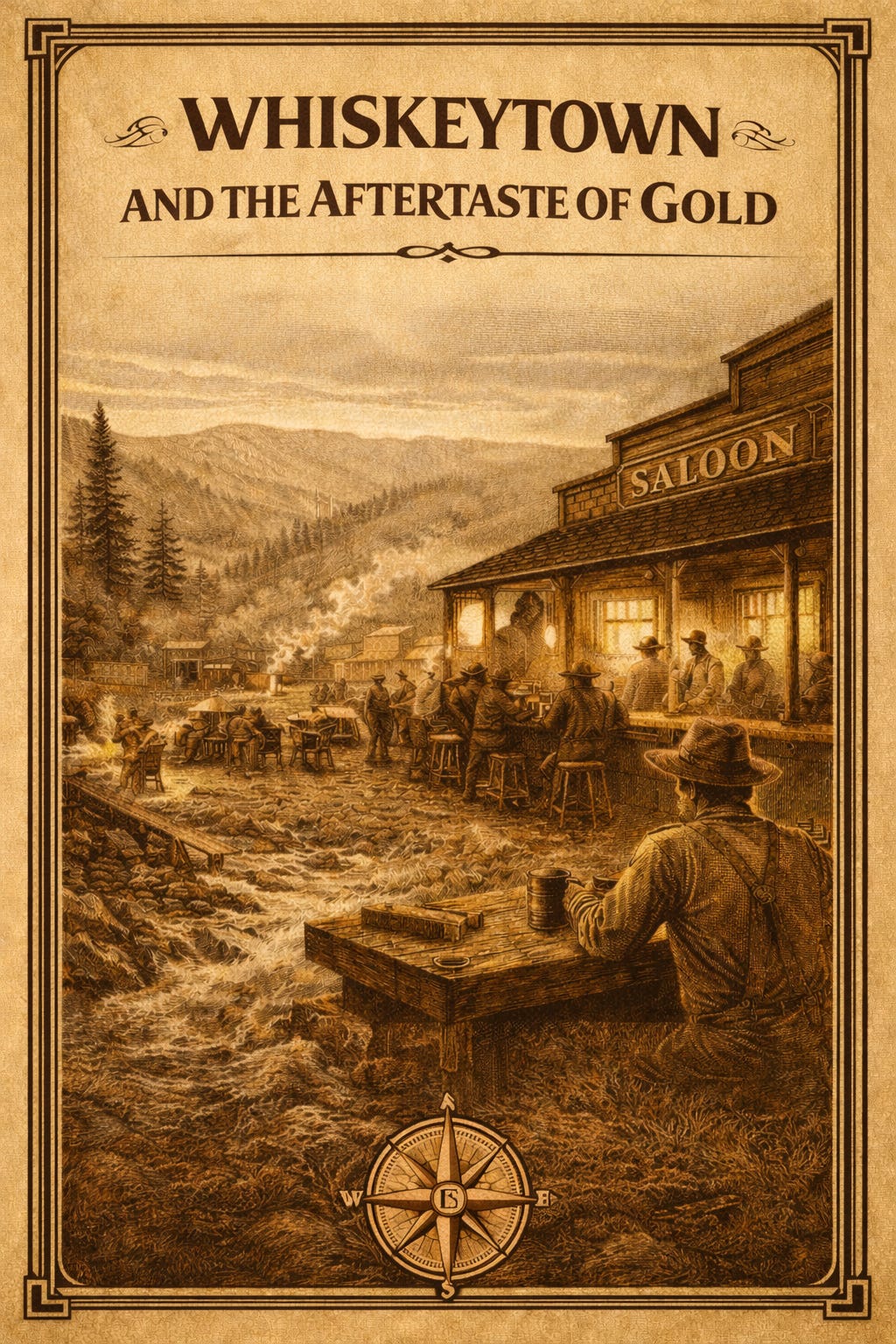
The name does not mislead. Whiskeytown was loud, combustible, and allergic to permanence. A good strike could make a man eloquent by dusk and bankrupt by dawn. A bad winter could finish what exhaustion had already drafted.
Bars were not diversions. They were climate control. Warmth, rumor, negotiation, and temporary courage were all dispensed over scarred counters. News traveled faster across a bar than across a claim. A miner might spend three weeks moving gravel and three minutes losing the proceeds.
Many left poorer than they arrived, carrying less gold than regret, and sometimes more stories than either.
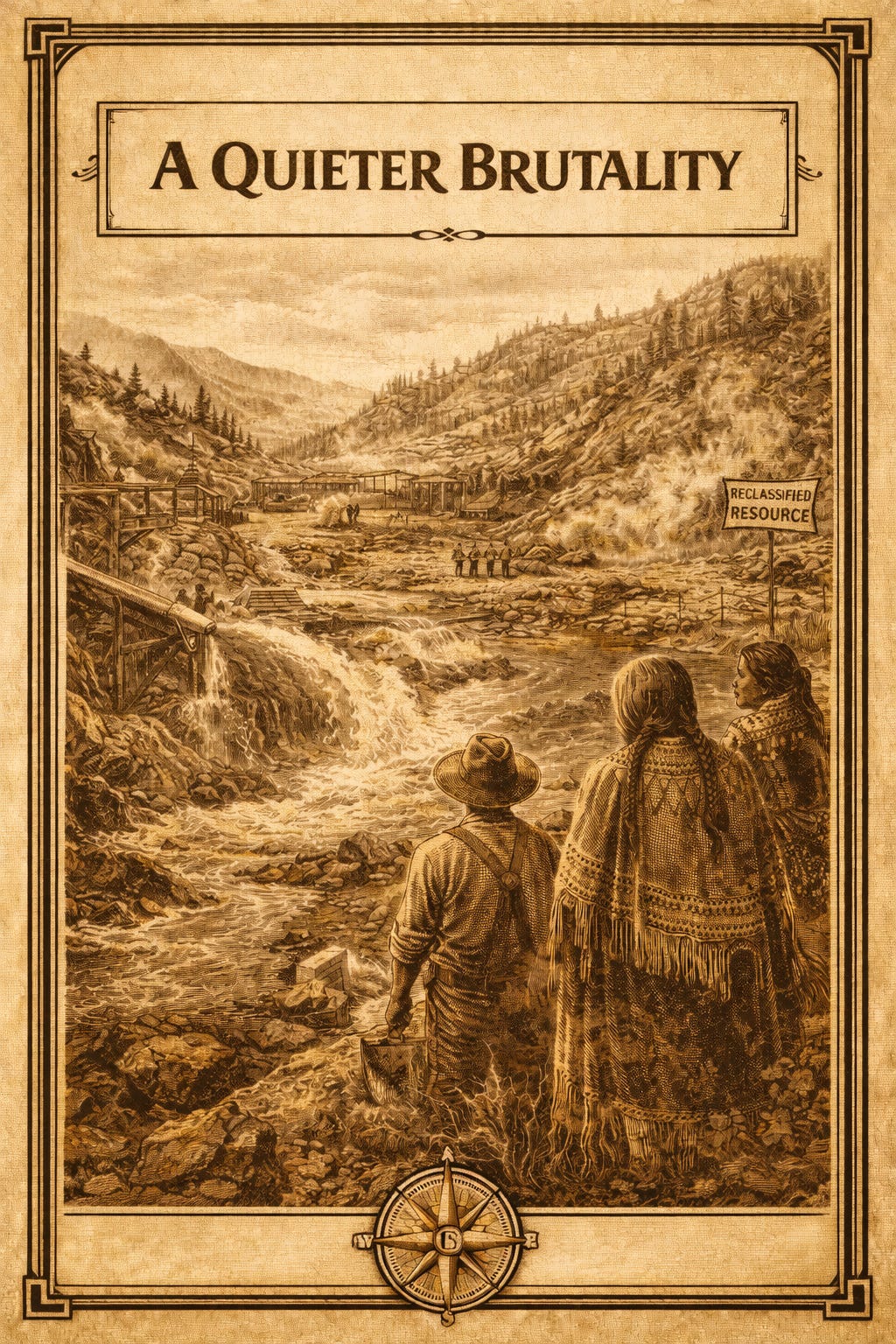
A Quieter Brutality
The northern fields rarely posed for romance. This was arithmetic country.
How much gravel.
How much water.
How many trees.
How many bodies.
Indigenous communities paid first and longest. Rivers clouded. Fisheries collapsed. Homeland became “resource” with brisk administrative confidence. The violence was not always dramatic, but it was thorough.
And yet within that upheaval, there were interiors where some measure of order was imposed. Not justice, perhaps. But structure.
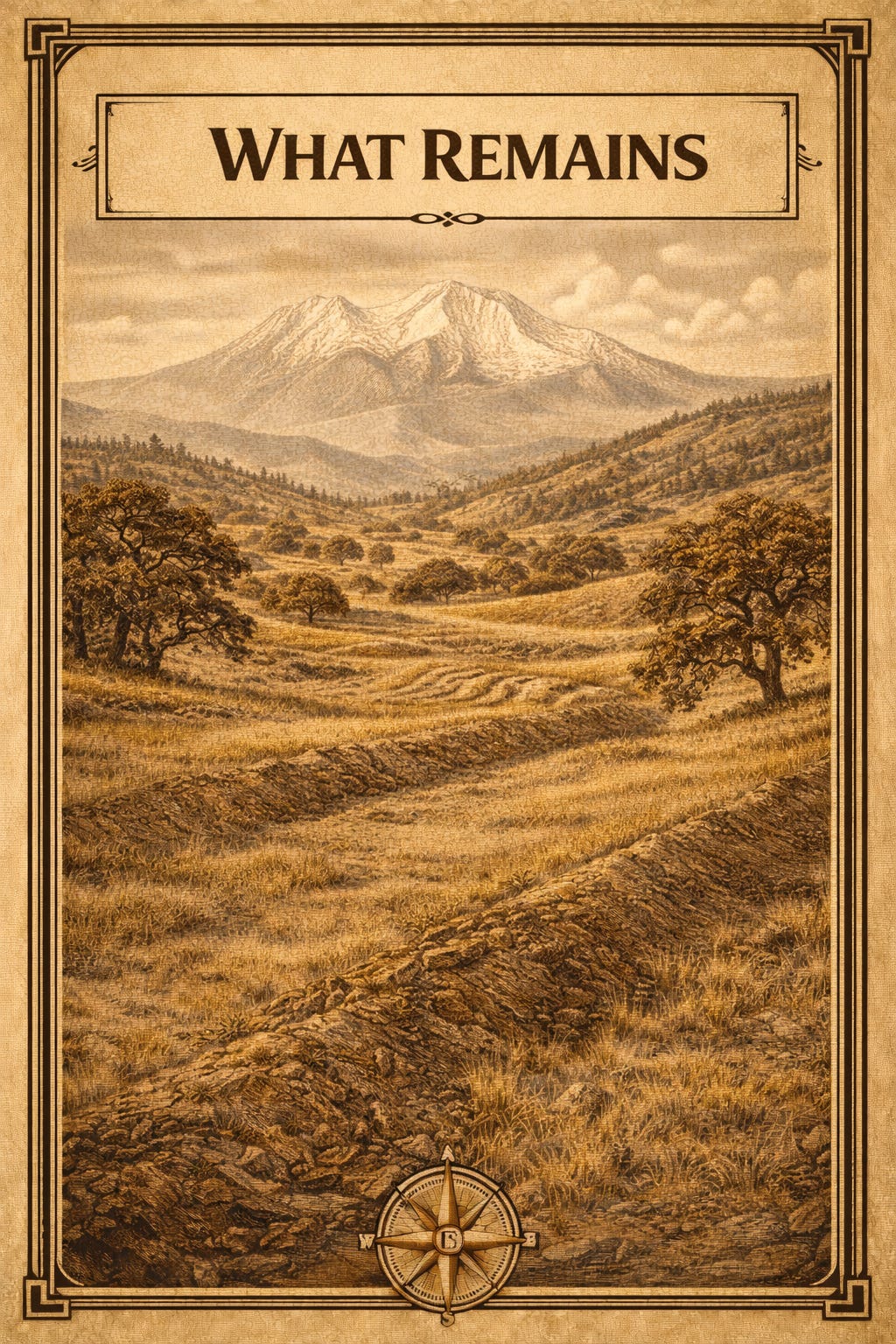
What Remains
Today the hills around Shasta look composed. Oaks scatter politely across golden slopes. The air carries birdsong instead of blasting powder.
But dry ditches still score the earth in straight, stubborn lines. Tailings sit like low punctuation marks across the land. The rearrangement remains visible to anyone willing to read it.
So does the quieter legacy.
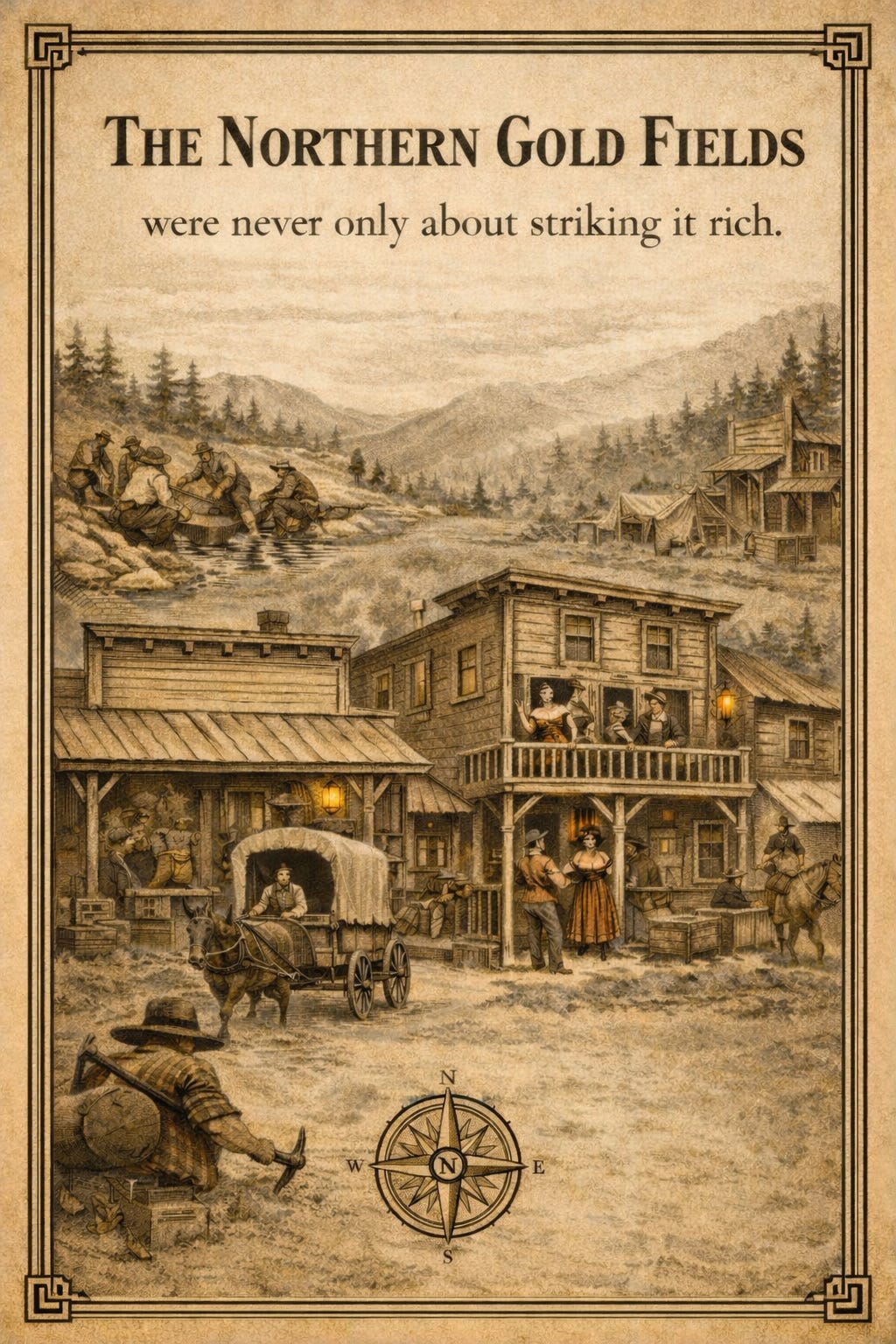
The Northern Gold Fields were never only about striking it rich. They were about discovering how much force a landscape could endure, and how much instability a town could survive.
The men moved earth.
The women, more often than not, steadied what was built upon it.