

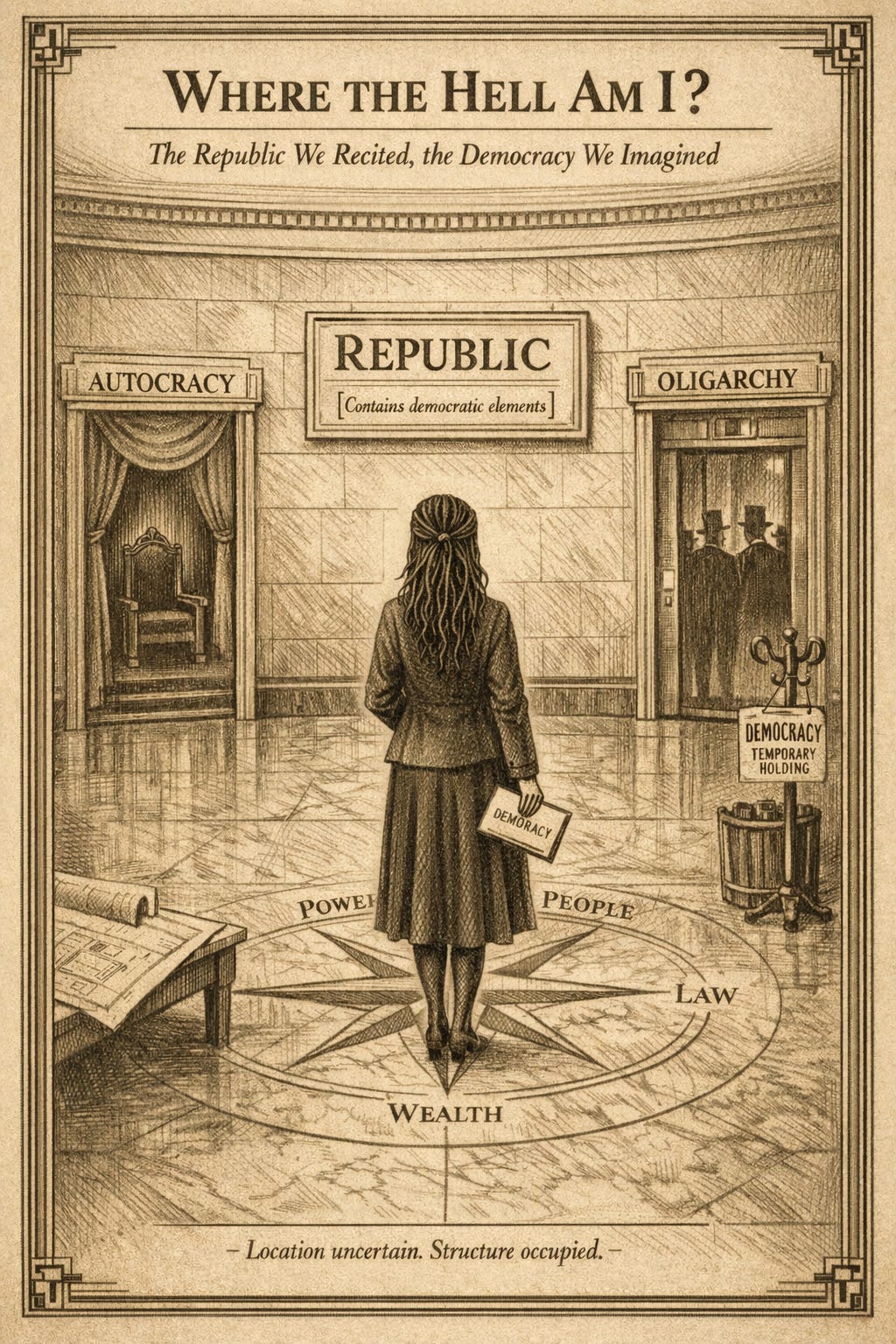
I have been trying to locate democracy.
Not on a map.
On the premises.
Because if I am living somewhere between autocracy’s velvet rope and oligarchy’s private elevator, I would like to know where democracy parked itself and whether it ever had a lease.
This inquiry began in first grade.
Hand over heart. Morning light through classroom windows. Thirty small citizens in formation. We recited the Pledge of Allegiance with the ceremonial gravity of people still learning to tie their shoes.
“And to the republic for which it stands…”
Even then, a small internal auditor woke up.
Republic?
Not democracy?
And here’s the part that made the words stick in my throat like chalk dust.
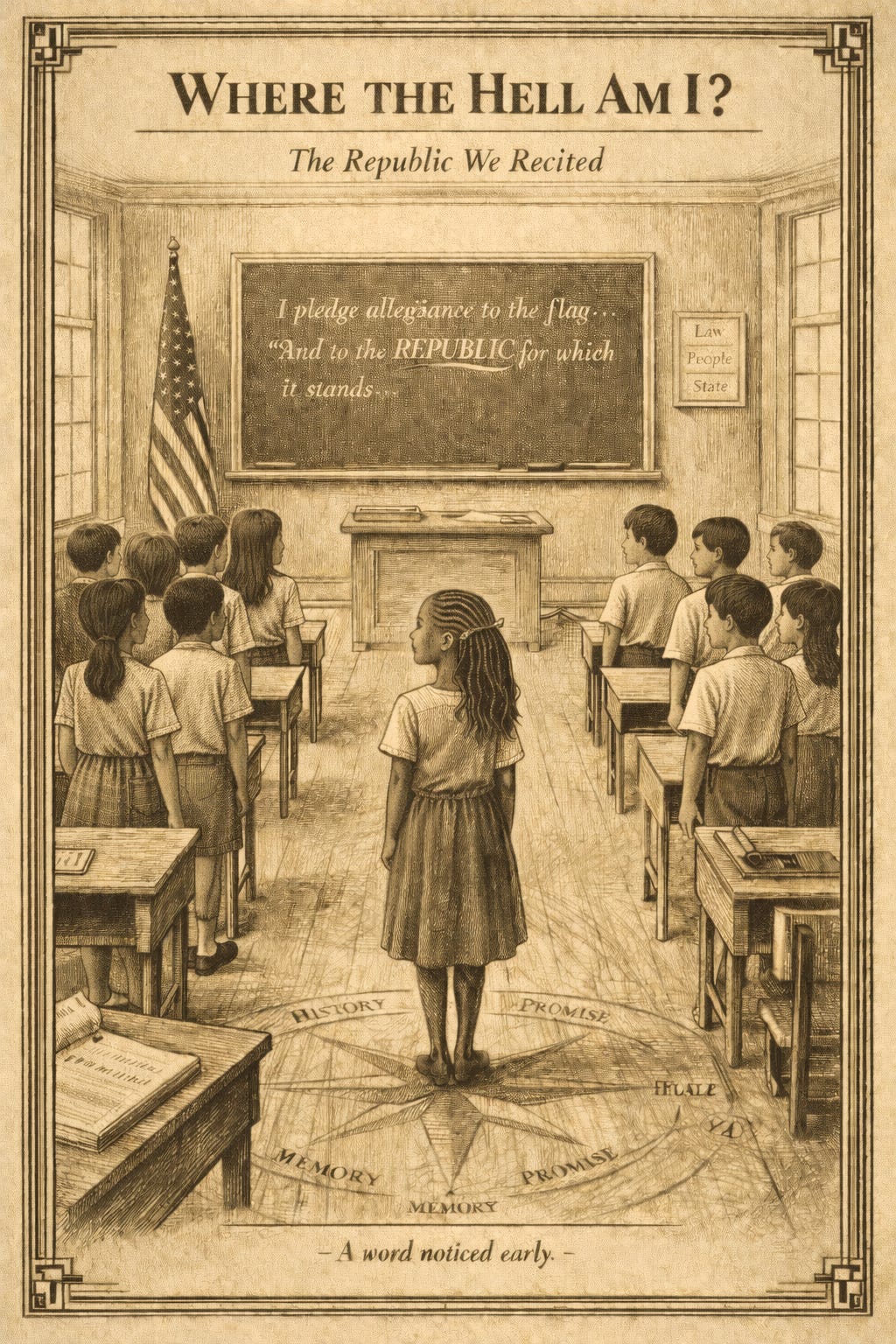
The child reciting them was a descendant of enslaved people.
Which meant that even at seven years old, without footnotes or archival training, there was a question hovering in the air like a ceiling fan: how do you pledge allegiance to a republic that once classified your ancestors as property? How do you say democracy with a straight face in a nation that began with chattel slavery written into its economic foundation?
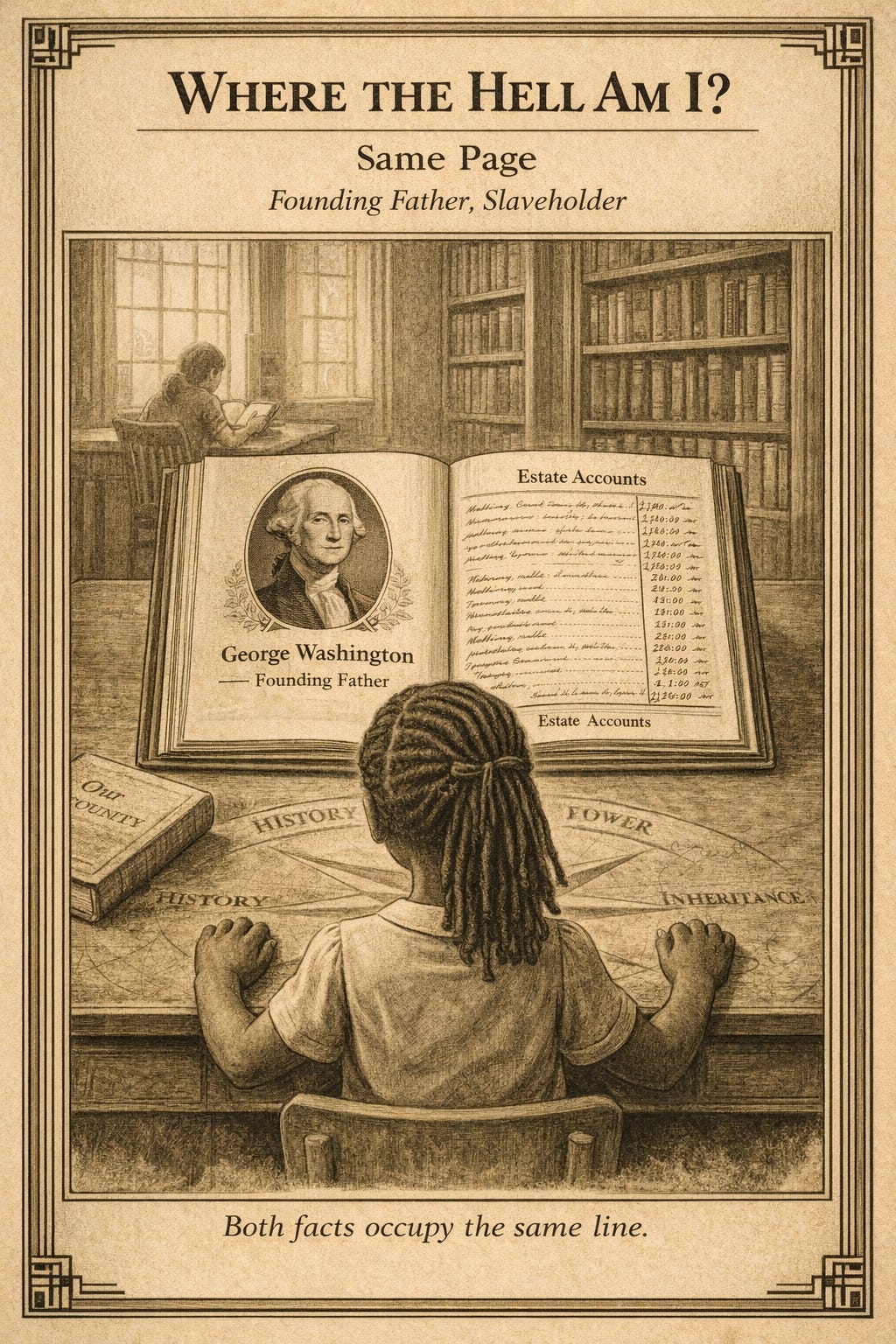
George Washington appears in textbooks as a founding father. He also appears in ledgers as a slaveholder. Both facts occupy the same page, though not always with equal font size.
Try explaining that to a child whose family history sits on the other side of the transaction.
The words didn’t quite fit.
They were tailored for someone else.
They were ceremonial clothing handed down through a family that had not always been invited inside the house.
It wasn’t quite skippy.
🏛️ The Fine Print Under the Flag
The United States was designed as a republic. A representative system. A structure meant to temper direct rule by the crowd. The founders, wary of mob passions, installed layers between the public and power. Filters. Mechanisms. Distance.
But those layers also protected inequities baked into the original build.
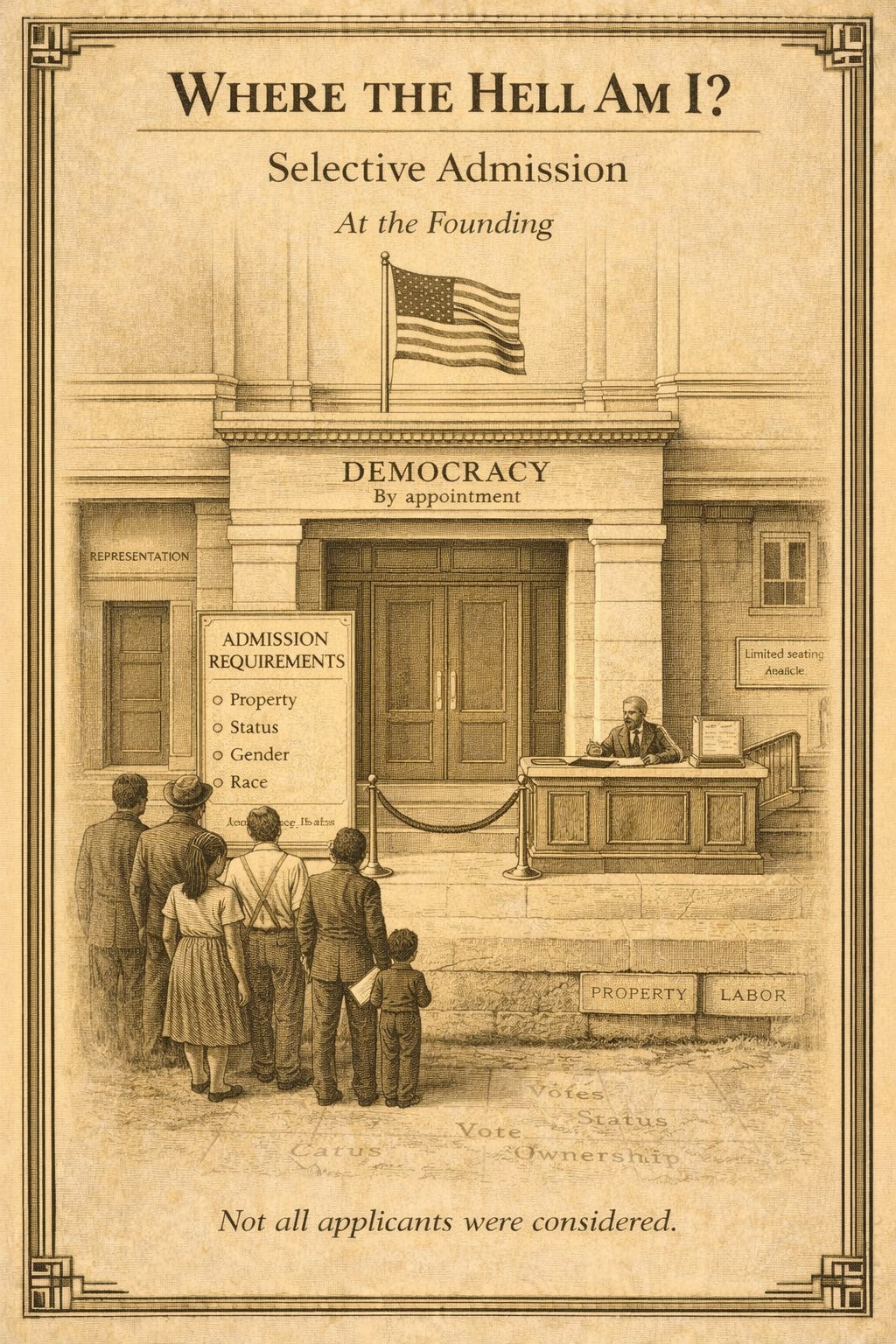
At the founding, democracy was selective.
Voting was limited.
Citizenship was uneven.
Human beings were bought and sold.
So when we ask whether the United States was ever a democracy, the answer depends heavily on who is doing the asking and from which side of history’s ledger.
For some, the system worked from the start.
For others, the system worked on them.
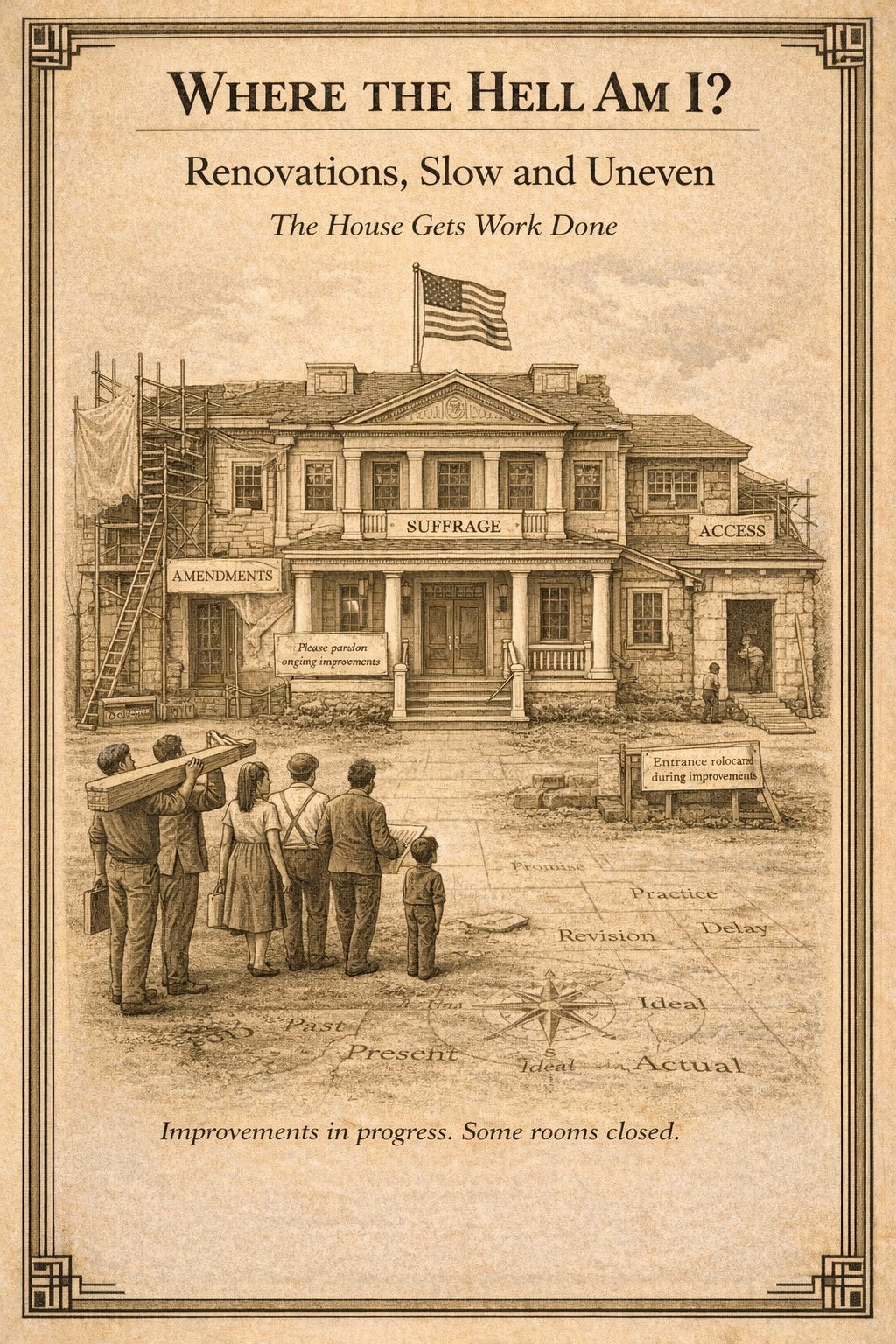
🪑 Renovations, Slow and Uneven
Over time, democracy expanded like a house under perpetual renovation. Amendments were added. Rights extended. Barriers challenged. Each generation pushed the structure closer to its stated ideals.
But progress came in installments.
And installments sometimes defaulted.
The descendants of enslaved people did not enter the democratic promise all at once. They were ushered in gradually, often through struggle, often through blood, often through the stubborn insistence that the words on paper apply to everyone whose hands helped build the place.
So that first-grade moment wasn’t just semantic curiosity. It was historical dissonance.
A child saying “republic” while standing inside a lineage that had once been excluded from both republic and democracy entirely.
🪙 Meanwhile, Upstairs
While rights expanded outward, wealth consolidated upward. This has always been part of the American architecture. Landowners, industrialists, financiers, tech magnates. Different centuries, same gravitational pull.
Democracy widened.
Oligarchy deepened.
The result is a system that has always been a hybrid. A republic with democratic ambitions. A democracy with oligarchic tendencies. A nation capable of extraordinary civic ideals and equally extraordinary contradictions.
Add in moments when strongman leadership flirts with centralizing power, and you get the current atmosphere: not full autocracy, not pure oligarchy, not fully realized democracy. A layered structure with competing blueprints.
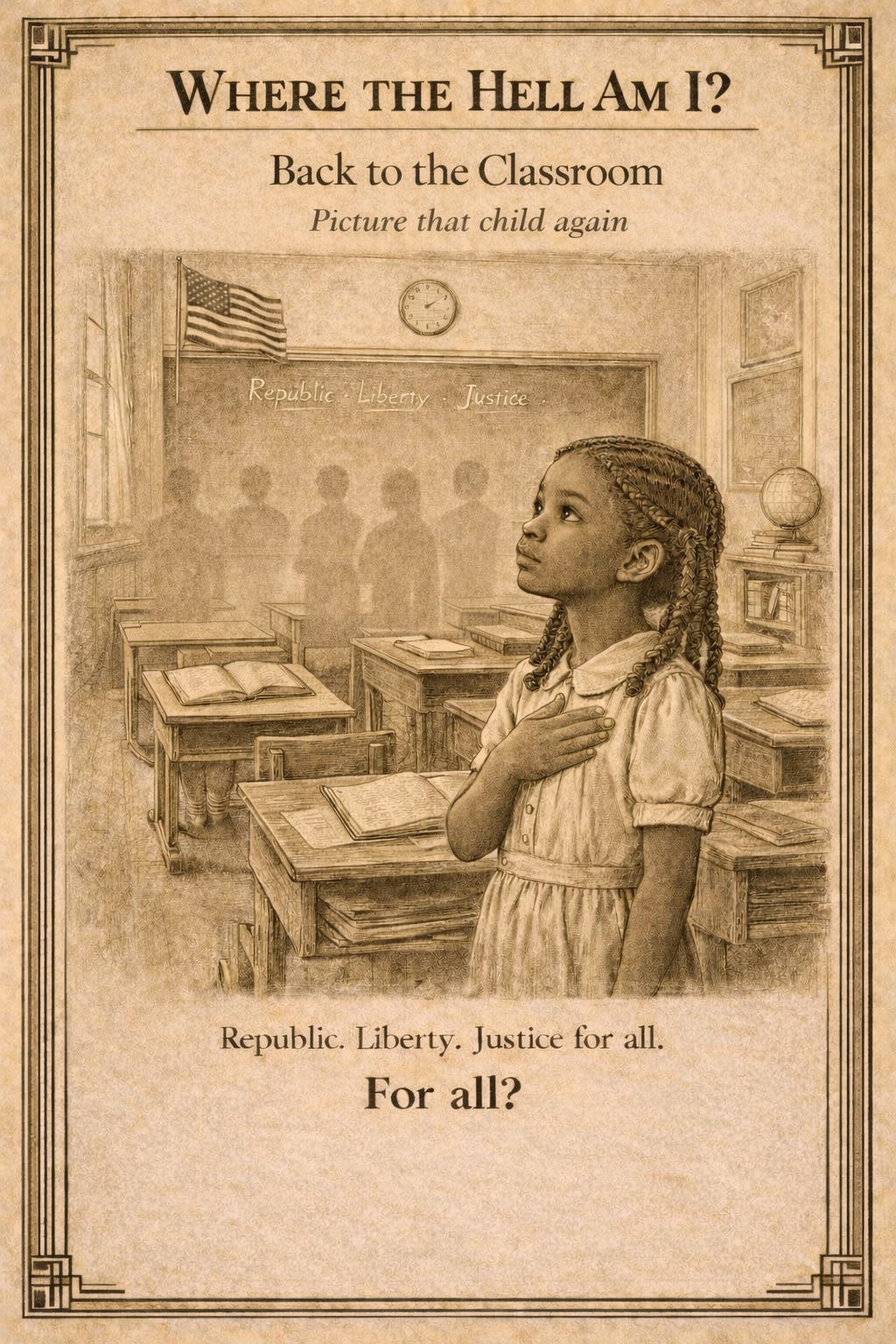
🧭 Back to the Classroom
Picture that child again.
Hand over heart. Saying words that felt slightly misaligned with inherited reality. Not yet equipped with historical vocabulary, but already aware that the promise and the practice did not match perfectly.
Children notice when language and lived experience diverge. They feel it in the rhythm of the sentence. In the pause between words.
Republic.
Liberty.
Justice for all.
For all?
The question hung there, quiet but persistent, like a loose floorboard in a house everyone pretends is finished.
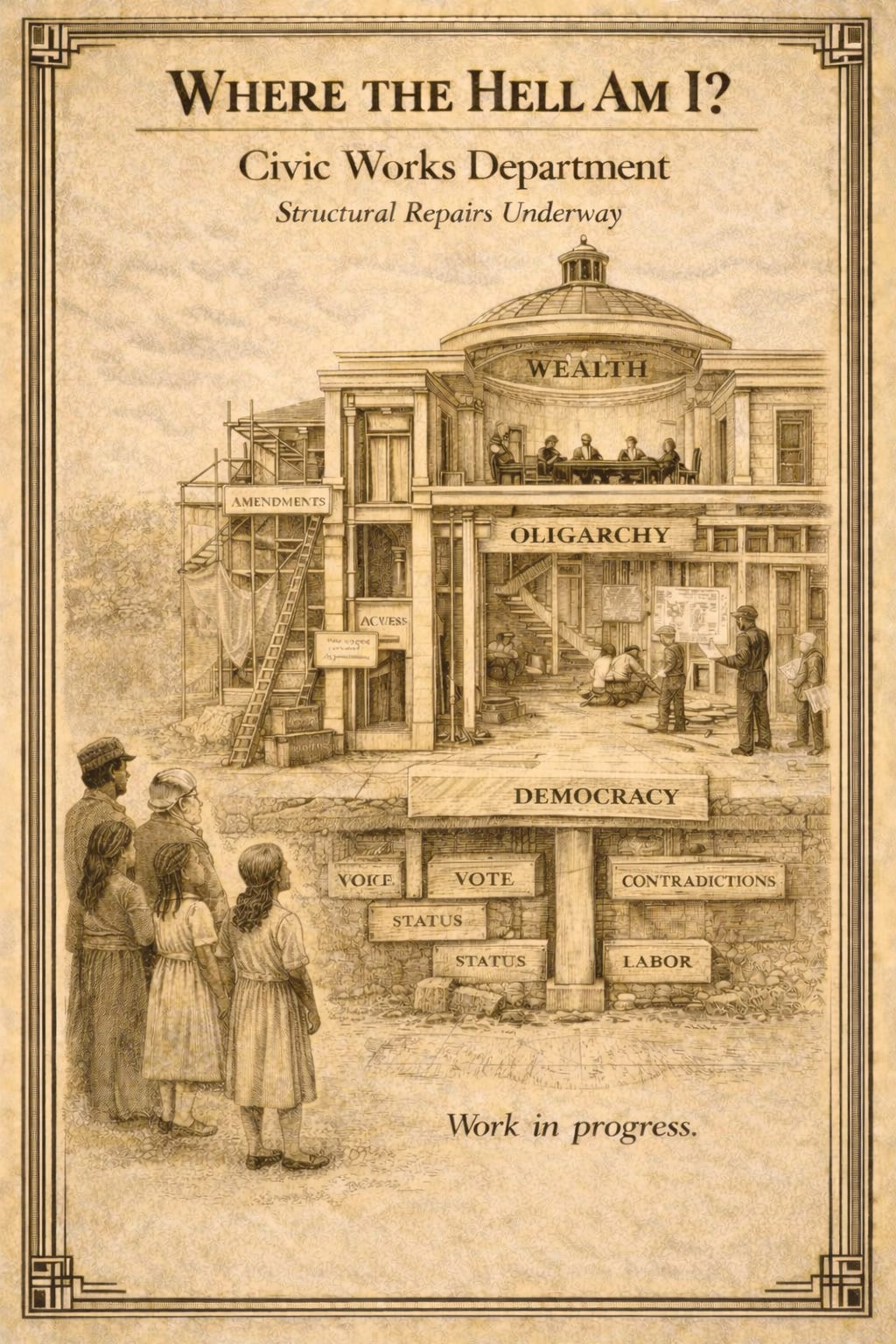
🪟 So Where Did Democracy Go?
Perhaps it didn’t go anywhere.
Perhaps it has always been an aspiration under construction.
A system that functions only when people insist on expanding it. Maintaining it. Repairing it.
For descendants of enslaved people, democracy has often been less a birthright than a reclamation project. Something pursued, defended, demanded, and renegotiated across generations.
Which brings us back to the present.
If I am standing in a republic that has never fully resolved its founding contradictions, and if oligarchic wealth and centralized authority are both testing the load-bearing walls…
Then the question is not just where democracy went.
The question is whether it has ever been fully installed, or whether it remains a room still being built by people who were not included in the original blueprint.
So I ask again, with hand still metaphorically over heart:
Where the hell am I standing?
And who, exactly, is allowed to call this place a democracy without irony?

An excellent piece of writing.
Well said.
We can learn so much from the civil rights movement about how to change society through non violent means and by appealing to our better angels.
Good one this week.