

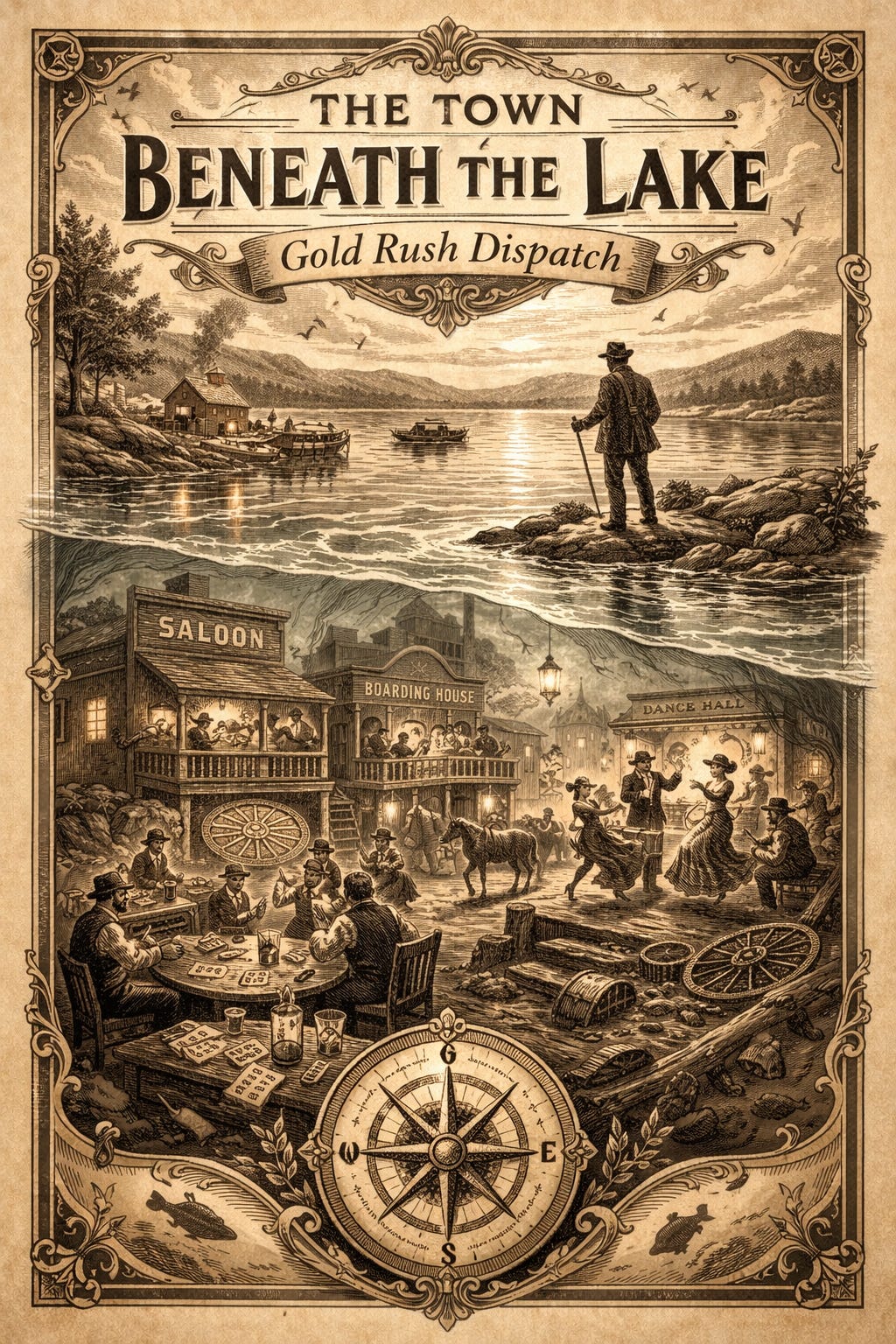
There is a town in California that still exists.
You simply can’t see it anymore.
Stand on the shore of Folsom Lake on a quiet morning and look across the water. Beneath that calm blue surface once stood a small, noisy Gold Rush town where miners argued over cards, fiddles played in dance halls, and whiskey glasses clinked long after sunset.
The town was called Negro Hill.
Like many places born during the California Gold Rush, it appeared almost overnight and disappeared almost as quickly.
Only in this case, the disappearance was literal.
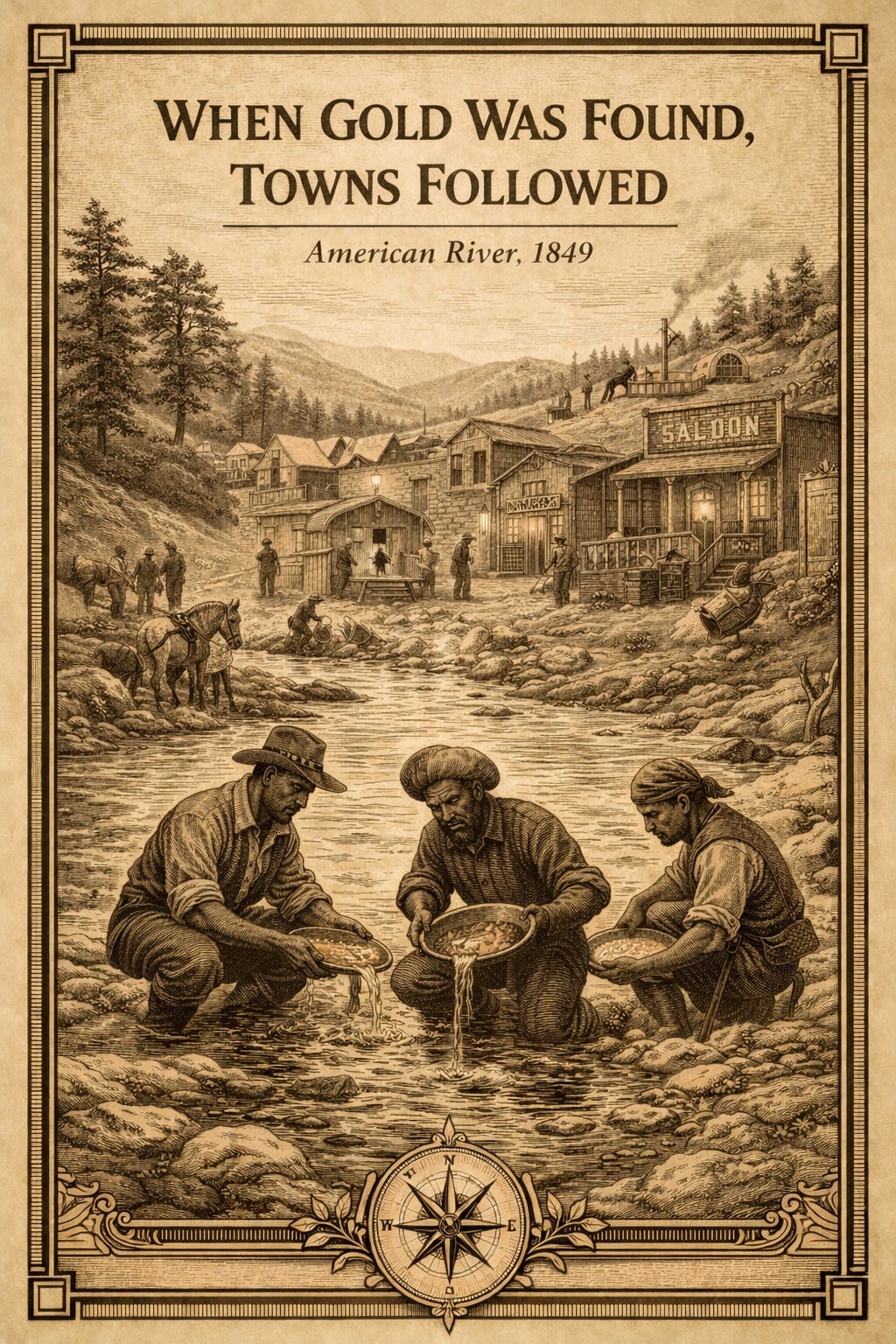
⛏️ When Gold Was Found, Towns Followed
In 1849, prospectors spread like ants along the banks of the American River, scratching through gravel for the metal that had sent half the world racing toward California.
Among those miners were Black men from the eastern United States. Some were free. Others were formerly enslaved men who had come west hoping that a gold pan might buy them something the law had not yet guaranteed.
Somewhere along a bluff above the river, a group of these miners found promising ground.
Gold Rush towns did not require permission to exist. They simply appeared wherever a few lucky pans convinced people to stay.
Tents went up first. Then wooden shacks. Then stores.
Soon there were boarding houses, saloons, and gambling rooms.
Within a few years, more than a thousand people were living there.
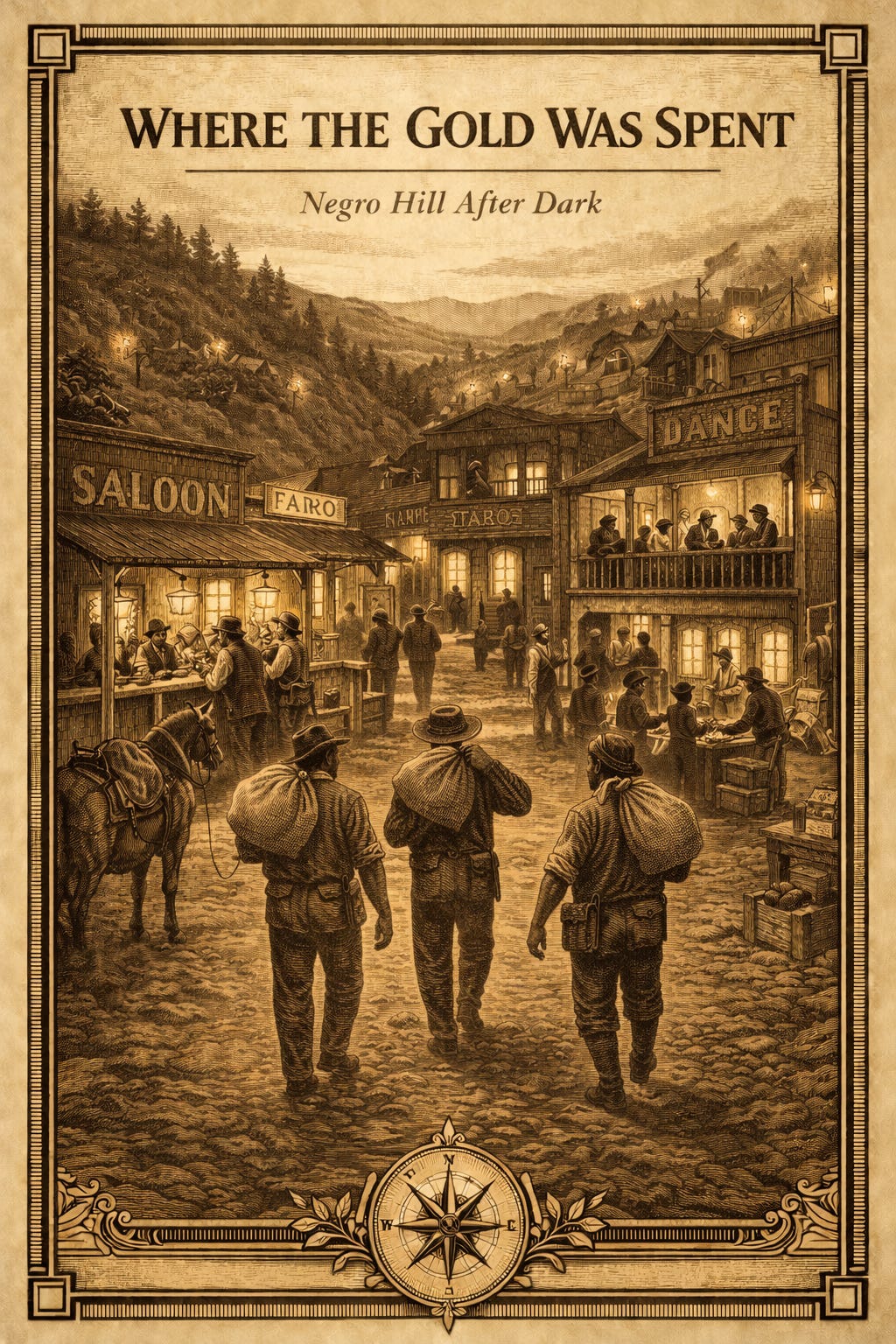
🎲 Where the Gold Was Spent
Mining towns were places where wealth moved quickly.
The miner’s day was spent knee-deep in cold river water.
The miner’s evening was spent somewhere warmer.
Negro Hill had the usual institutions of Gold Rush civilization:
• saloons
• gambling tables
• boarding houses
• dance halls
• supply stores
Gold dust changed hands across faro tables. Fiddlers played until the candles burned low. Lamps flickered along the bluff above the river.
In towns like this, the gold discovered during the day often returned to circulation before midnight.
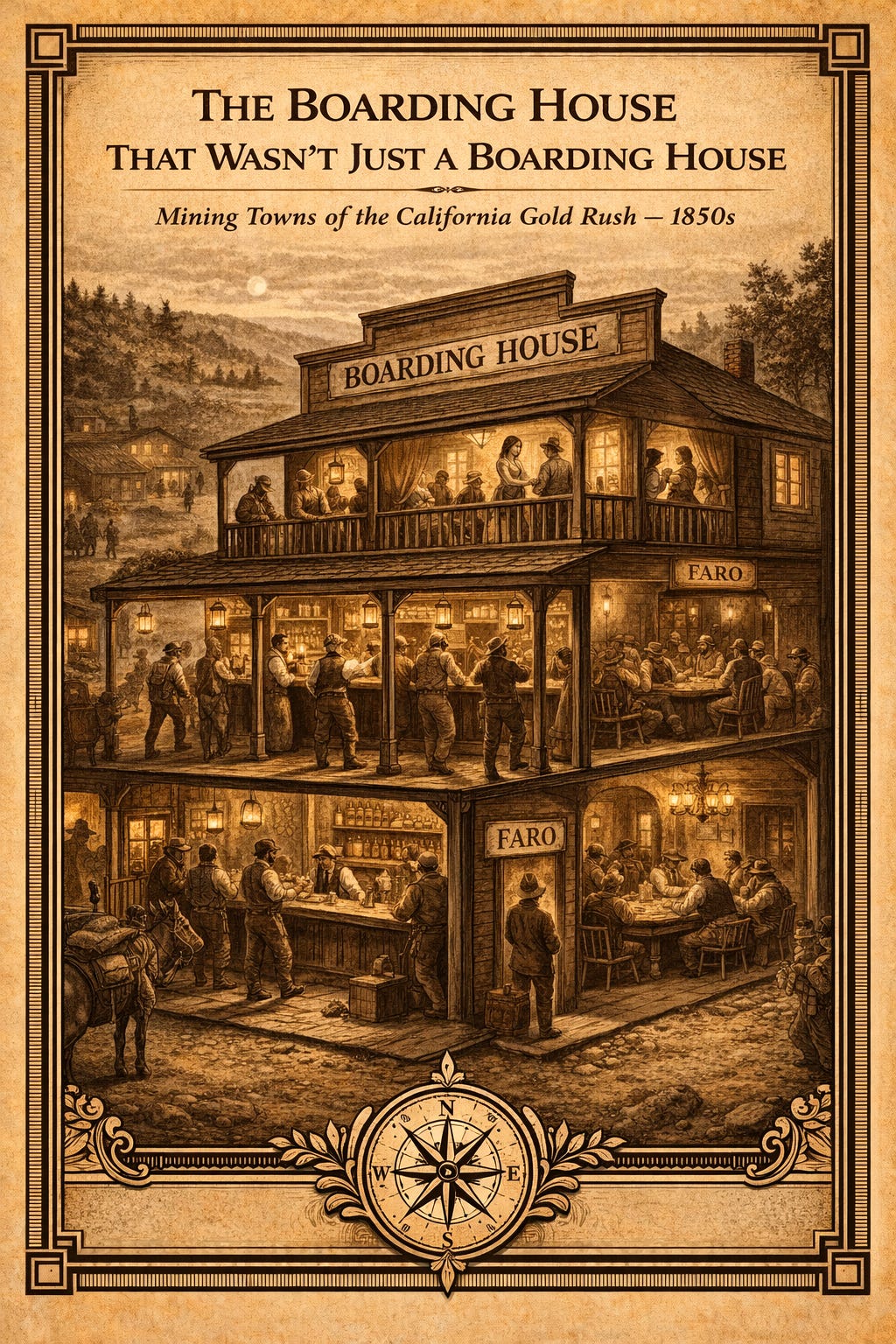
🏠 The Boarding House That Wasn’t Just a Boarding House
Now we should pause for a moment and translate a bit of nineteenth-century frontier vocabulary.
When Gold Rush records mention a “boarding house,” they are not always describing the polite establishment one might imagine from Victorian novels.
In many mining towns, the term was a social umbrella.
A boarding house might indeed rent beds to traveling miners. But very often it also functioned as:
• a saloon downstairs
• a gambling room in the back
• and rooms upstairs rented by women who were not there to serve breakfast.
In other words, many boarding houses were brothels by another name.
The arrangement was practical. Mining camps were overwhelmingly male. Thousands of miners flooded through these river towns with pockets of gold dust and very little domestic life.
Hospitality, gambling, alcohol, and sex tended to gather under the same roof.
The language of the time preferred softer words.
But the business model was perfectly clear.
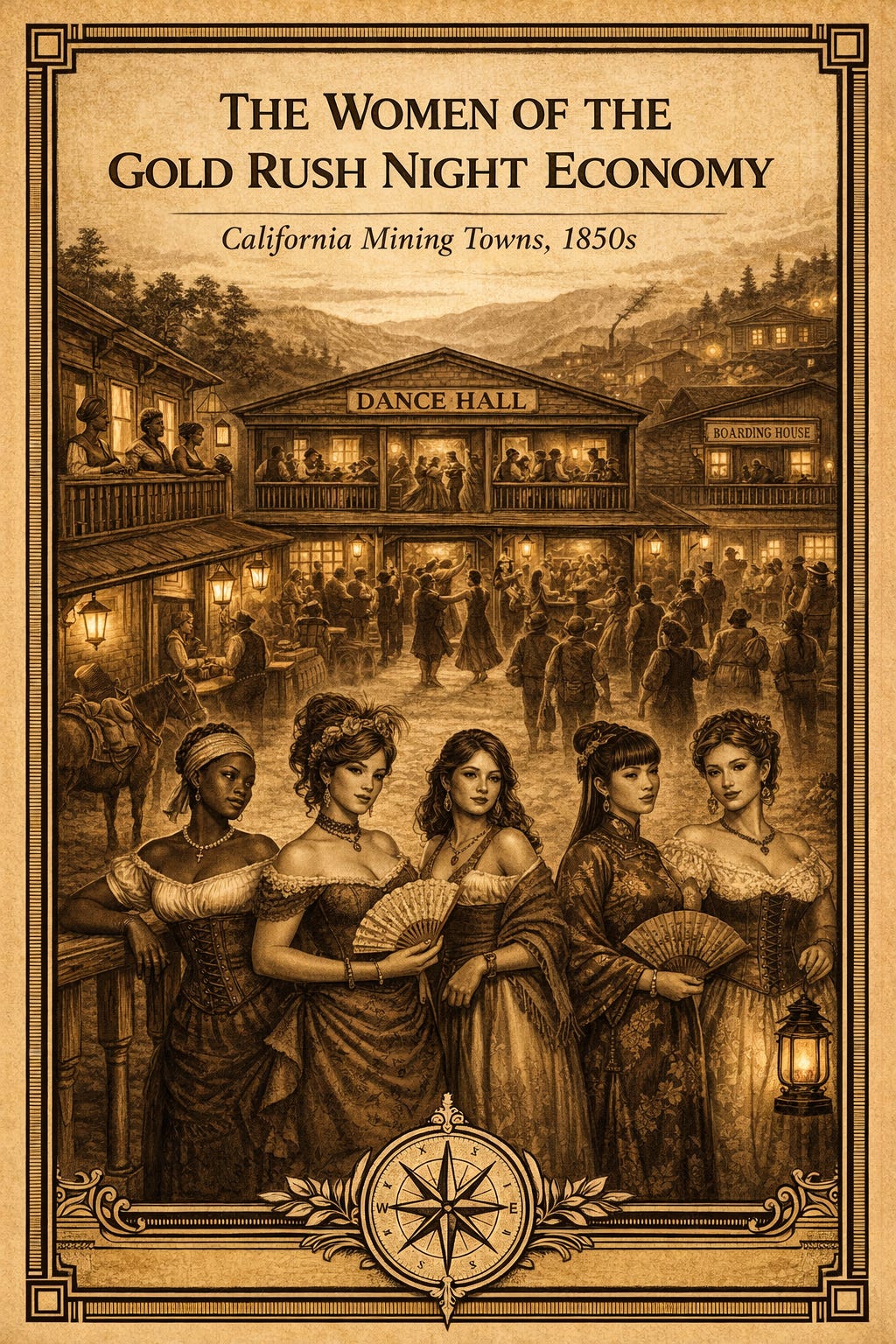
💃 The Women of the Gold Rush Night Economy
The women who worked in these establishments came from many places.
Gold Rush prostitution was surprisingly international.
In towns across California you could find:
• Black women running or working in boarding houses and dance halls
• French women, often referred to in newspapers as “French ladies,” who operated some of the most famous brothels in the mining districts
• Mexican and Chilean women connected to earlier Pacific mining cultures
• Chinese women, many of whom were trafficked into prostitution in later decades
• and women from the eastern United States who followed the boom westward
These women formed a crucial part of the night economy of the mining frontier.
Miners might dig gold during the day, but by evening the money flowed through a different set of businesses: saloons, gambling halls, dance houses, and boarding houses whose upstairs rooms quietly supported the oldest profession in human history.
The Gold Rush frontier was not tidy.
It was an ecosystem.
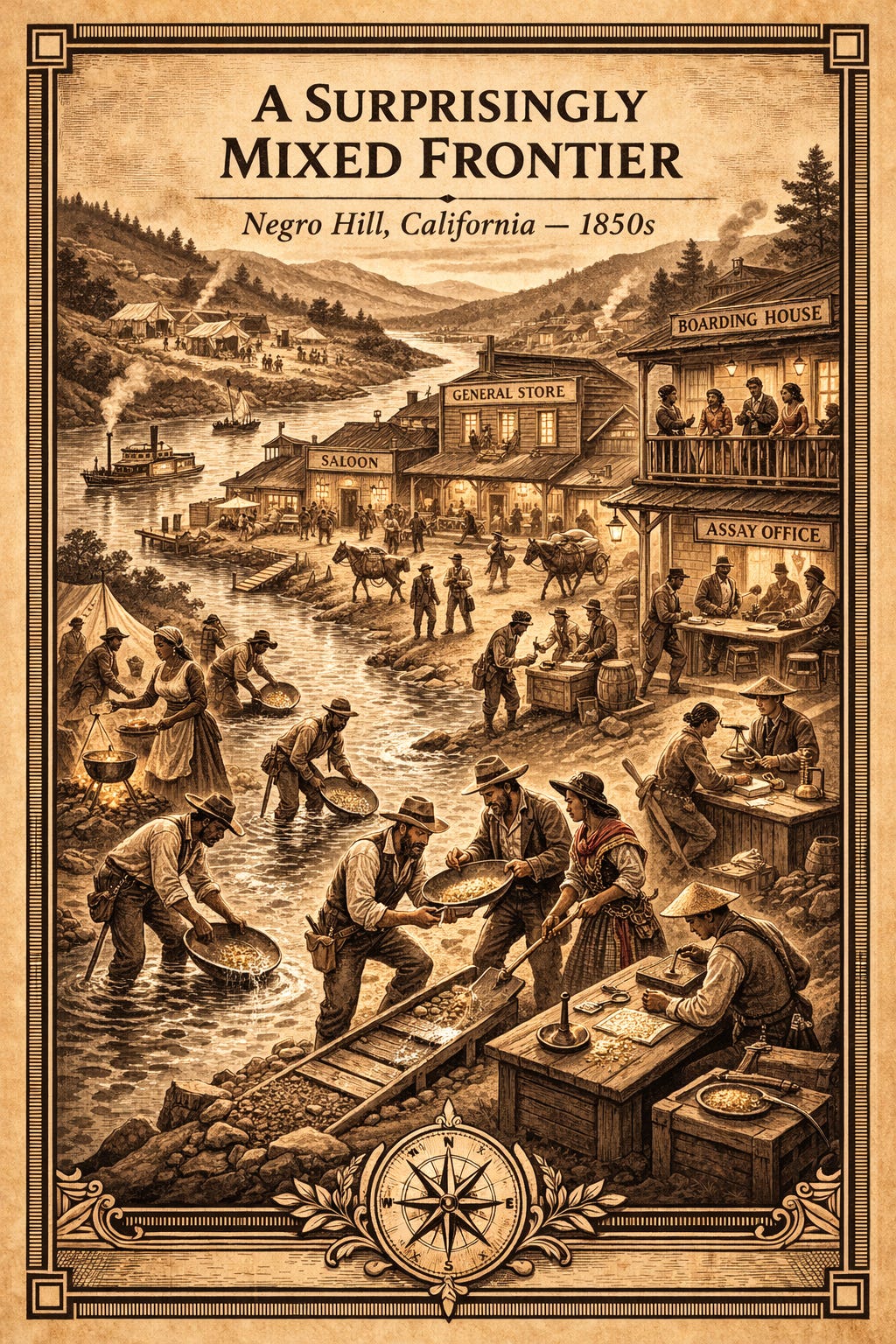
🌍 A Surprisingly Mixed Frontier
One of the striking features of early Gold Rush California was how fluid communities could be before later racial boundaries hardened.
Negro Hill appears to have included:
Black miners
white prospectors
Mexican and Chilean miners
Chinese laborers
merchants and travelers moving along the river
It was less a tidy town than a collision of people drawn together by geology and luck.
For a brief moment, opportunity scrambled the social hierarchy that governed the rest of the country.
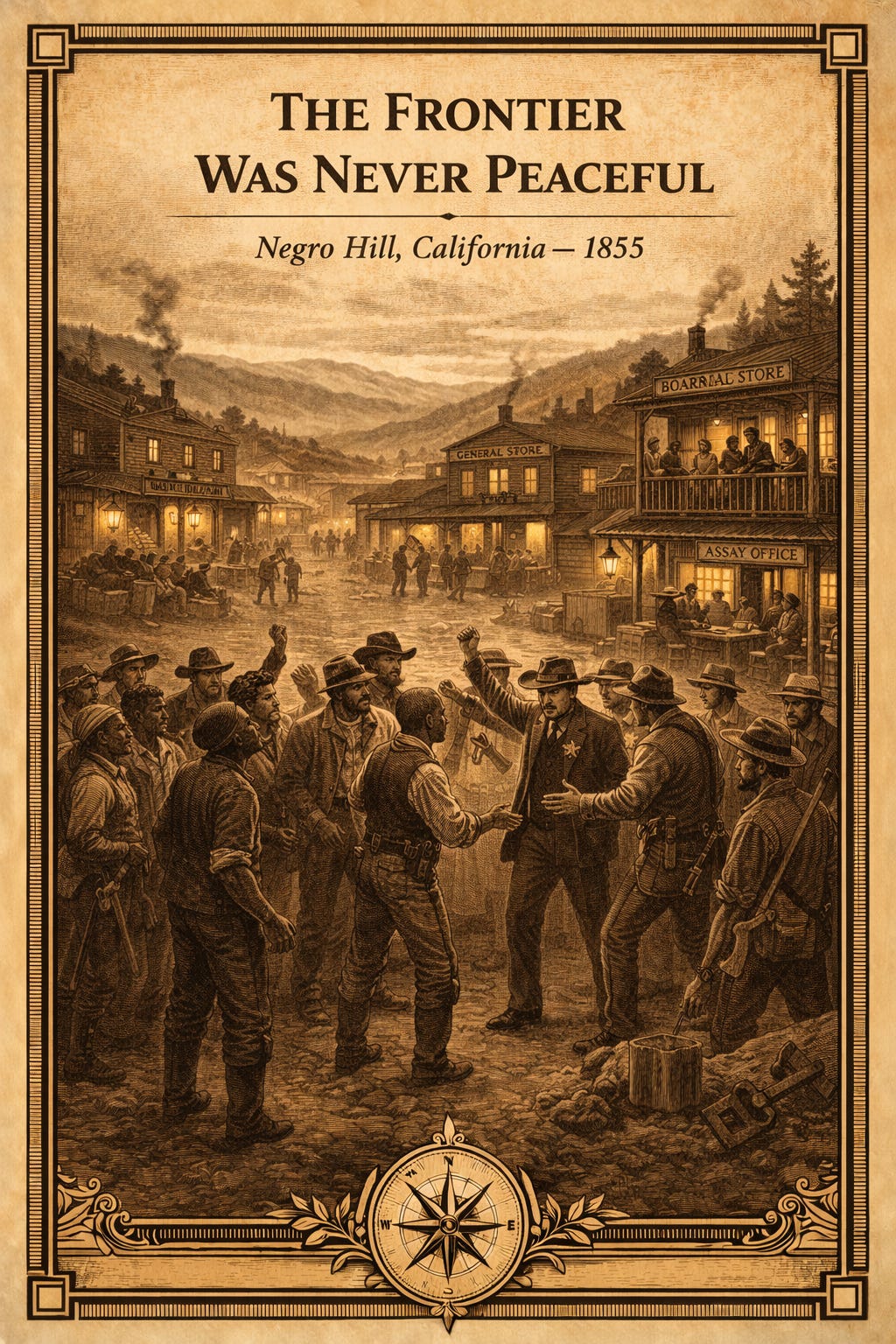
⚖️ The Frontier Was Never Peaceful
Gold Rush towns could feel like democracies when the gold was flowing.
But the same volatility that created opportunity also created violence.
In 1855 the town witnessed a grim episode when a Black resident named William Hardy was lynched after being accused of killing a white miner.
Mob justice was a familiar feature of mining life.
As the richest placer deposits dwindled, many miners moved on.
Negro Hill began to fade.
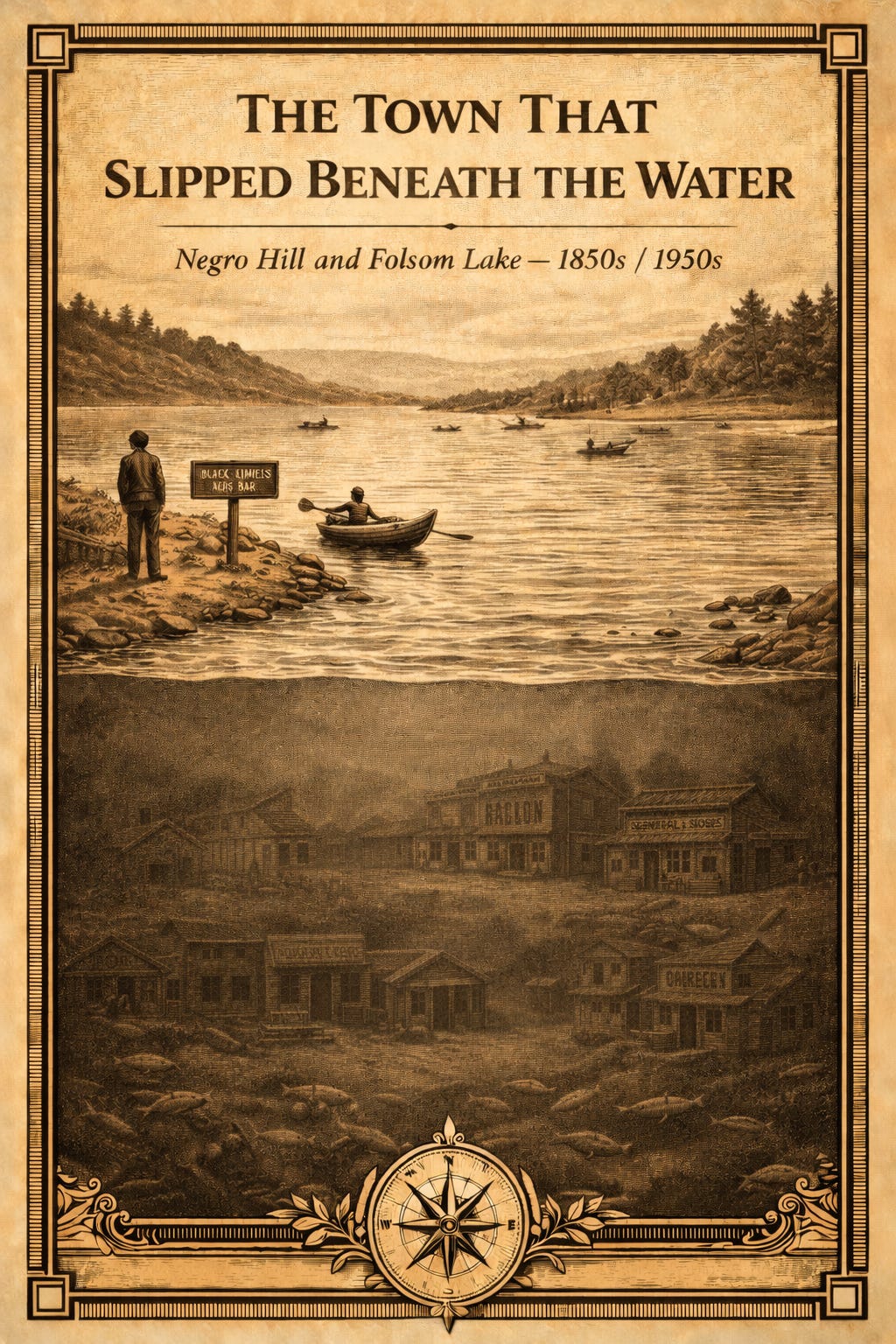
🌊 The Town That Slipped Beneath the Water
Most Gold Rush towns simply withered.
Negro Hill had a more dramatic ending.
In the 1950s the construction of Folsom Dam flooded the American River valley to create Folsom Lake.
The mining settlement disappeared beneath the rising water.
Today the nearest landmark is a recreation site called Black Miners Bar, named in memory of the community that once stood there.
Most visitors launching kayaks or walking along the shoreline have no idea that beneath the lake lie the remains of a lively frontier town.
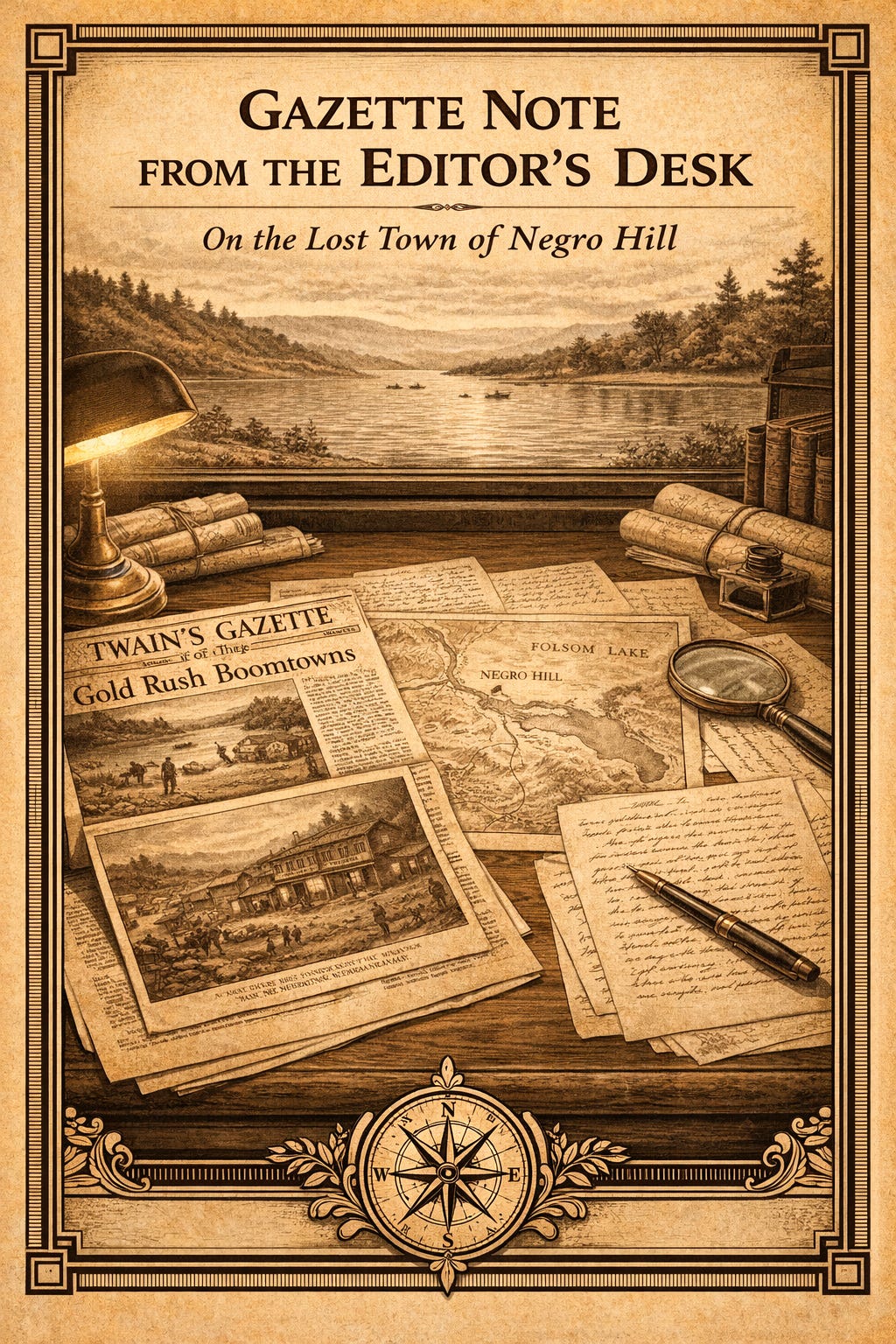
🖋️ Gazette Note from the Editor’s Desk
History has a habit of burying its most interesting stories.
Sometimes the burial is metaphorical.
Sometimes, as in this case, the water literally closes over the rooftops.
The California Gold Rush was never just a tale of solitary prospectors chasing nuggets in the river. It was a world of crowded towns, restless gamblers, multilingual dance halls, and boarding houses whose upstairs rooms kept the entire frontier economy humming.
Negro Hill reminds us that the Gold Rush was built not only by miners, but by the cooks, musicians, merchants, gamblers, and women of many nations who ran the establishments where the miners spent their gold.
Today the lake is quiet.
But beneath the water, the town is still there.
Very cool!
Thanks Kimberly!