

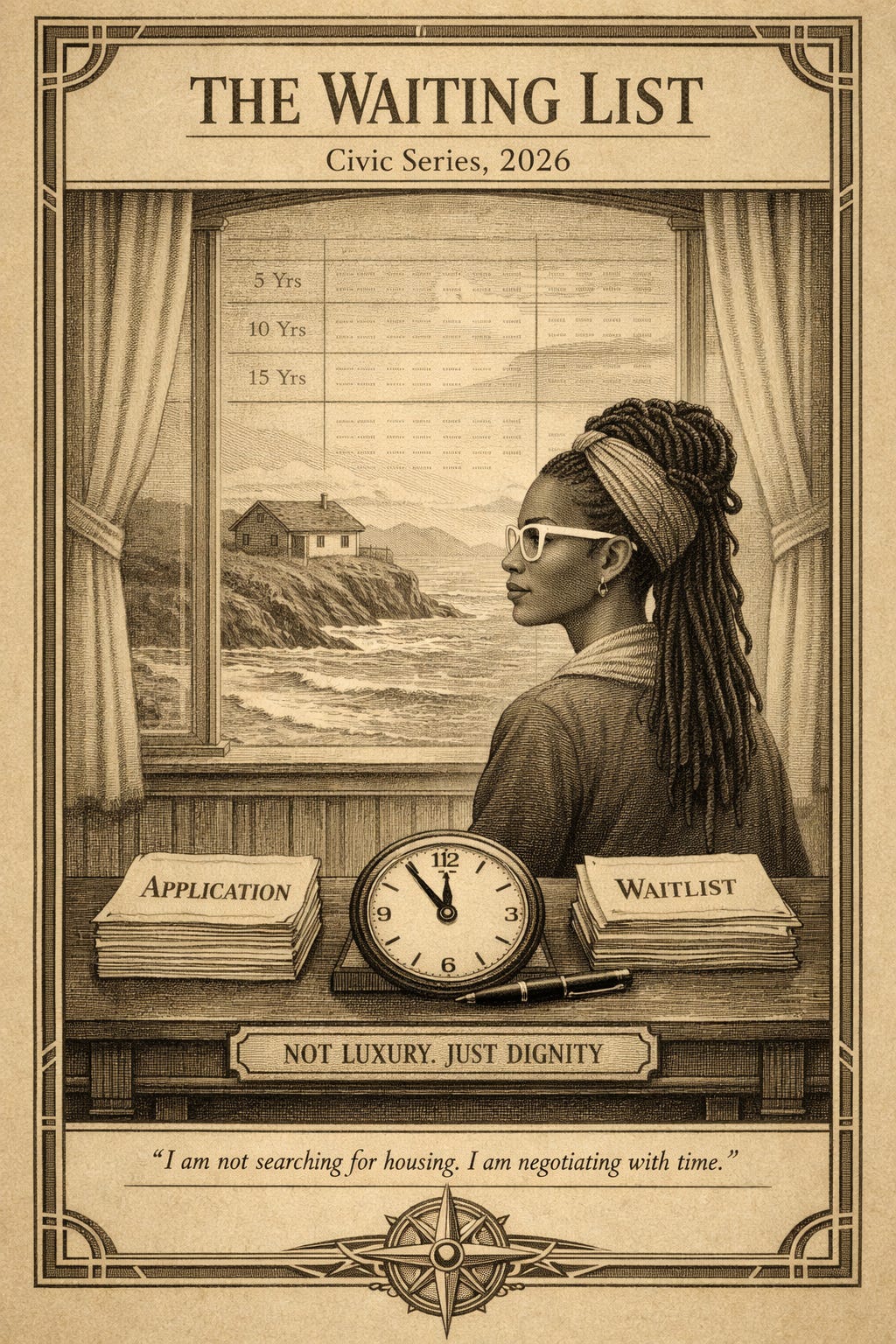
I am looking for a place to grow old.
Not much.
A small place.
Near the ocean. That part is not negotiable.
Light, air, a desk for writing.
Something like a bungalow in Big Sur, or Pacific Grove, or Mendocino.
Not luxury. Just dignity with a view.
A place in the spirit of Henry Miller or Jack Kerouac in Big Sur. The kind of place where the work matters more than the square footage.
They were successful, yes. But they were no Mark Zuckerberg.
In fact, Kerouac was famously broke when he lived there, writing against the edge of the continent with more conviction than cash.
That’s the tradition I thought I was entering.
Somewhere along the way, the artist’s cottage became a luxury listing.
Instead, I find myself staring at waiting lists.
Five years. Ten years.
Income caps that almost fit, but not quite.
Rents that assume a retirement cushion I do not have.
It occurs to me, gently now, like a truth that doesn’t want to startle:
I am not searching for housing.
I am negotiating with time.
The life of a retired artist.
A curious thing to plan for, especially if no one ever told you how.
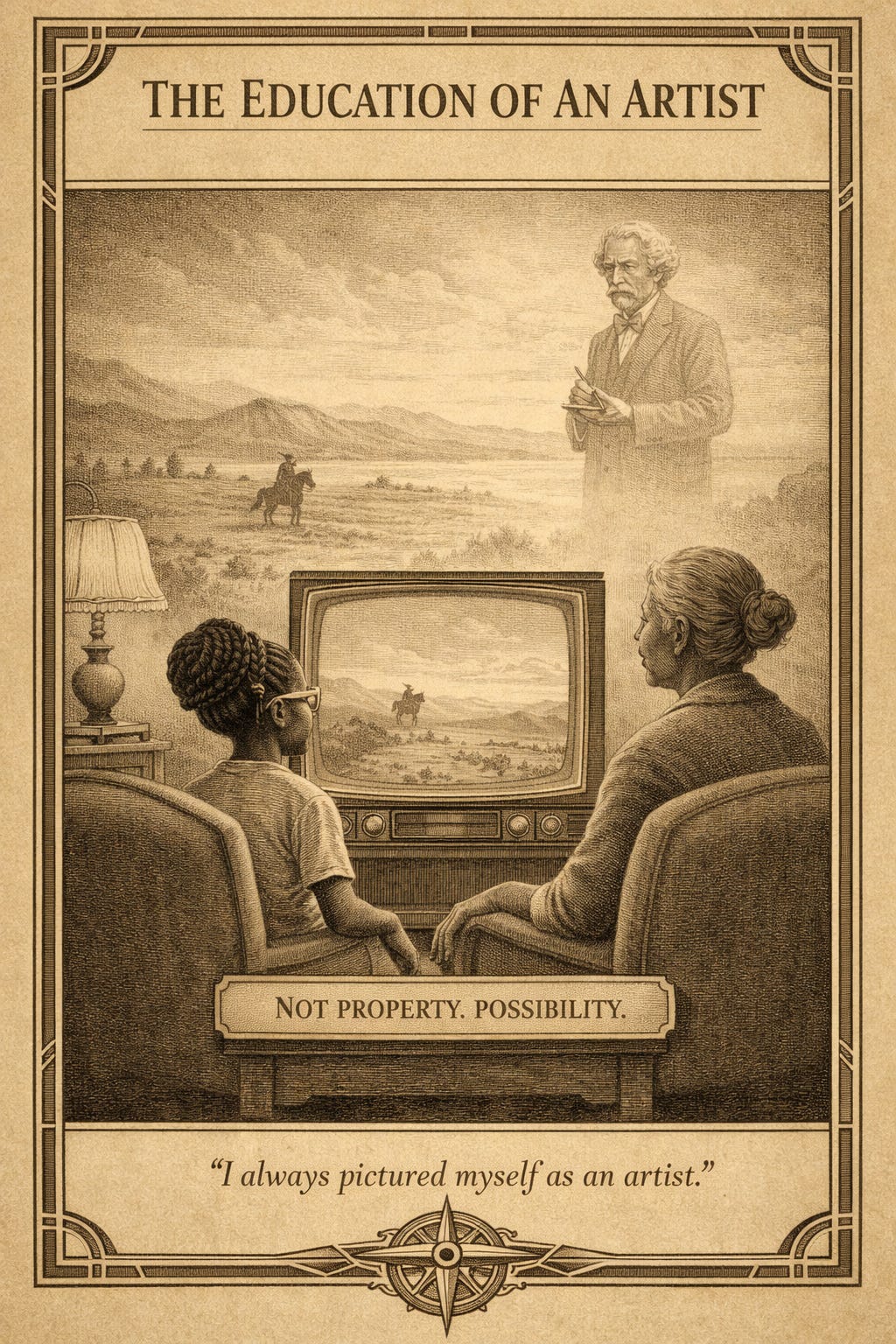
I always pictured myself as an artist.
As a little girl in Louisiana, I sat beside my grandmother watching black-and-white films flicker across the screen like polite ghosts. I loved old movies then and I love them still.
My idea of the West did not come from maps. It came from television.
Gunsmoke.
Wagon Train.
The Rifleman with the beautiful Chuck Connors.
That was my introduction to landscape. Not land as property, but land as possibility. It led me, eventually, to Mark Twain, and I figured if a person could make a life out of wandering and observing, well, that sounded like a fine profession to me.
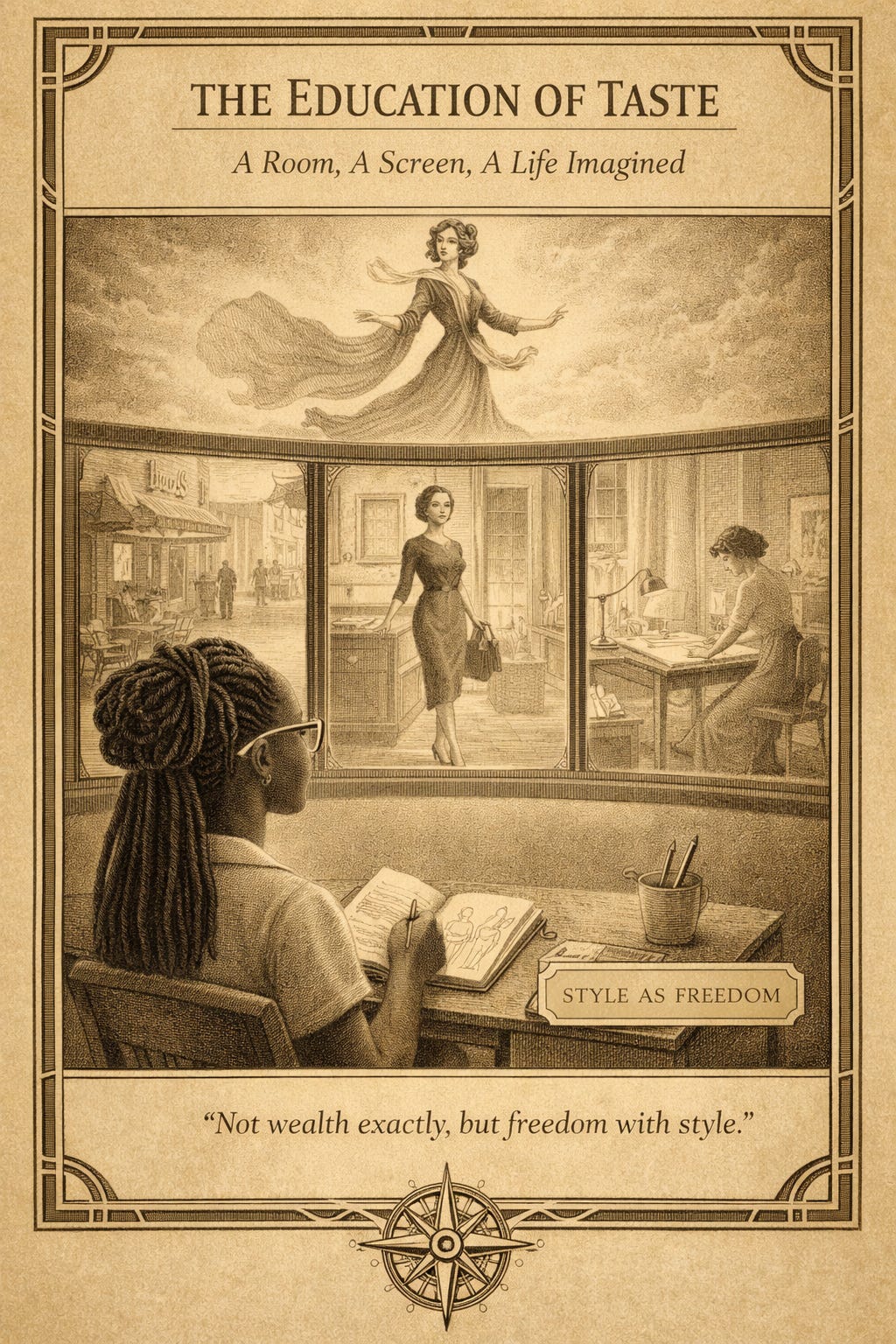
Europe arrived the same way, by screen and imagination.
I watched An American in Paris and made a quiet promise to myself.
I watched Rear Window and took careful notes on Grace Kelly, who seemed to understand that a well-chosen outfit and a well-timed entrance could solve half of life’s problems.
Midge, from Hitchcock’s Vertigo, was a lingerie designer on Nob Hill, working at her drafting table in a perfectly good apartment, suggested something even more radical:
That an artist might sit at a desk, make things all day, and still afford the rent.
Imagine that.
Then came Auntie Mame, with Rosalind Russell sweeping through life like a well-dressed weather system.
That was the model.
Not wealth exactly, but freedom with style.
Yes, I always saw myself as an artist.
First a pianist.
Then an architect.
Now a historian and writer.
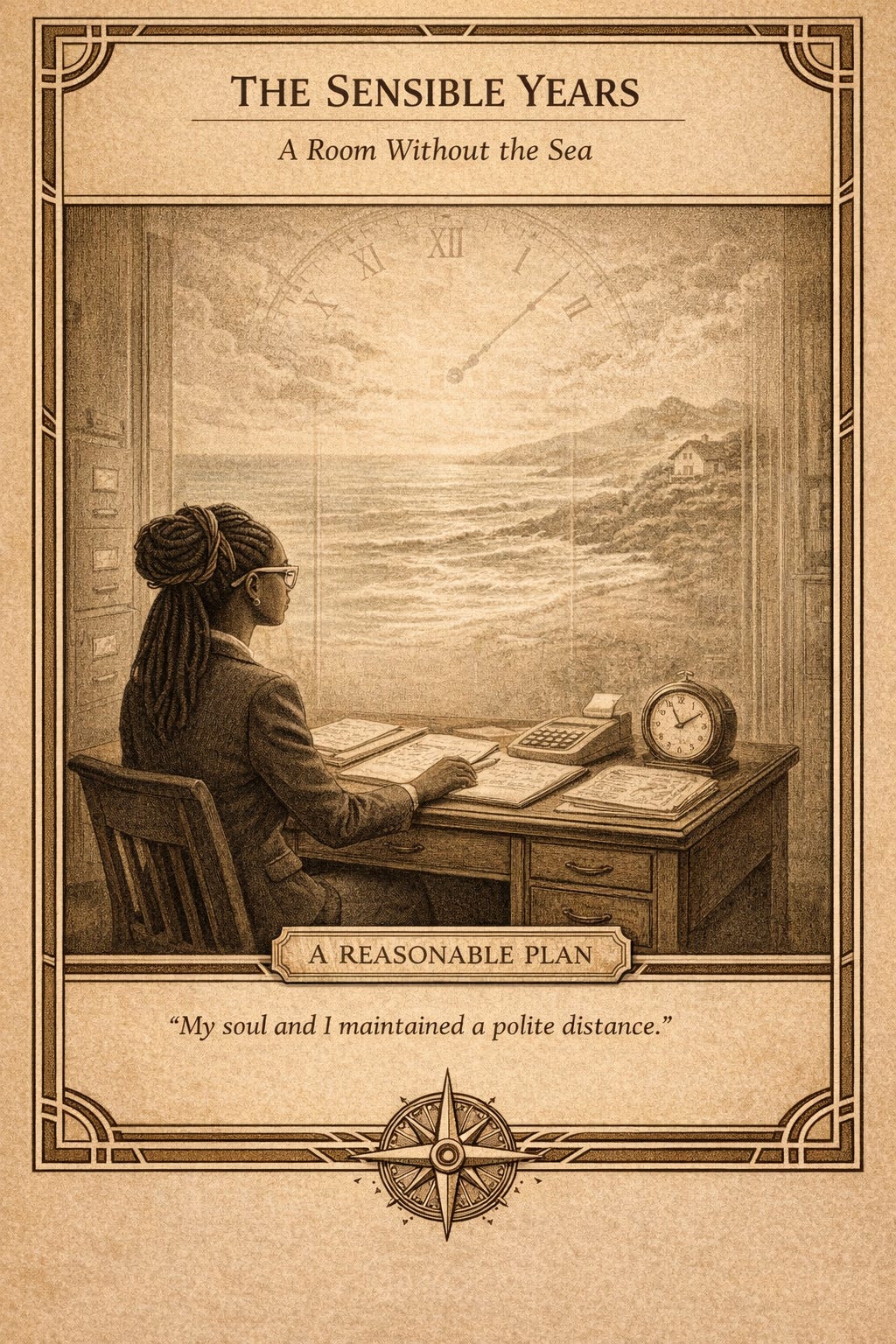
I intended, quite seriously, to end my days in a small cottage by the sea. Not for romance, exactly, but for orientation. The ocean has a way of keeping time honestly. It does not rush you, but it does not let you forget that time is moving.
A reasonable plan, I thought.
But somewhere along the way, I was informed, with great authority:
You can’t live like that.
So I did what many sensible people do. I became very sensible.
For twenty years, I worked in accounting and finance. My soul and I maintained a polite but distant relationship during that time.
Eventually, it became clear that this arrangement would not hold
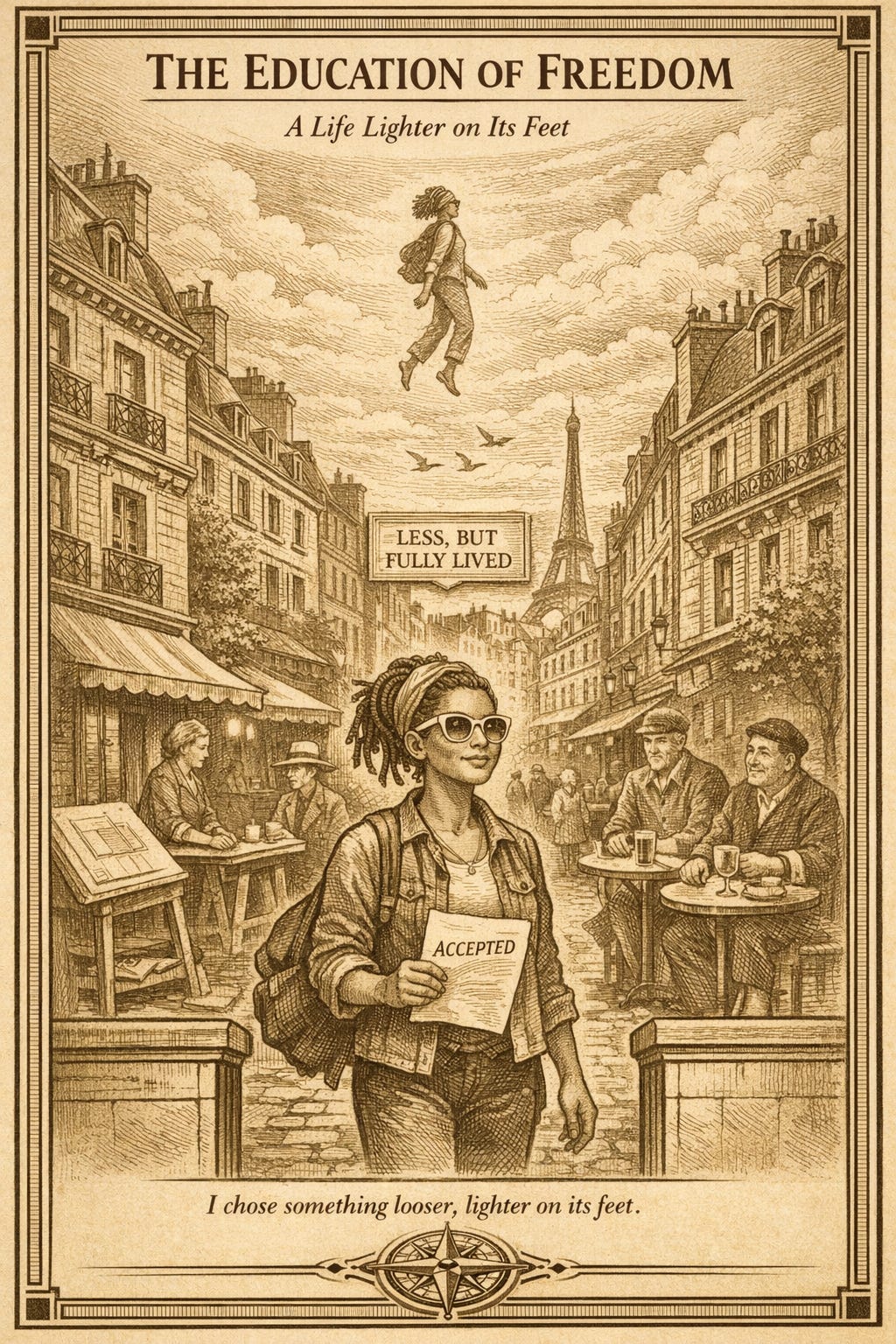
Around thirty, something shifted. It was the year that Saturn returned, if you like that sort of explanation.
By thirty-three, I had excused myself from that life and returned to the one I had been meaning to live all along.
I applied to one school only: the California College of Arts and Crafts. They said yes, which I took as a sign of good judgment on their part.
I studied in Paris, following the path of Julia Morgan, and walked through the same neighborhoods as Picasso, Hemingway, and Gertrude Stein, doing my best to behave as if I belonged there.
I read Down and Out in Paris and London and learned that life could be lived quite fully without acquiring every object in the catalog.
I brought that lesson home with me.
I stopped chasing what they call the American Dream.
I chose something looser, lighter on its feet.
A life that, at its best, felt a bit like flying.
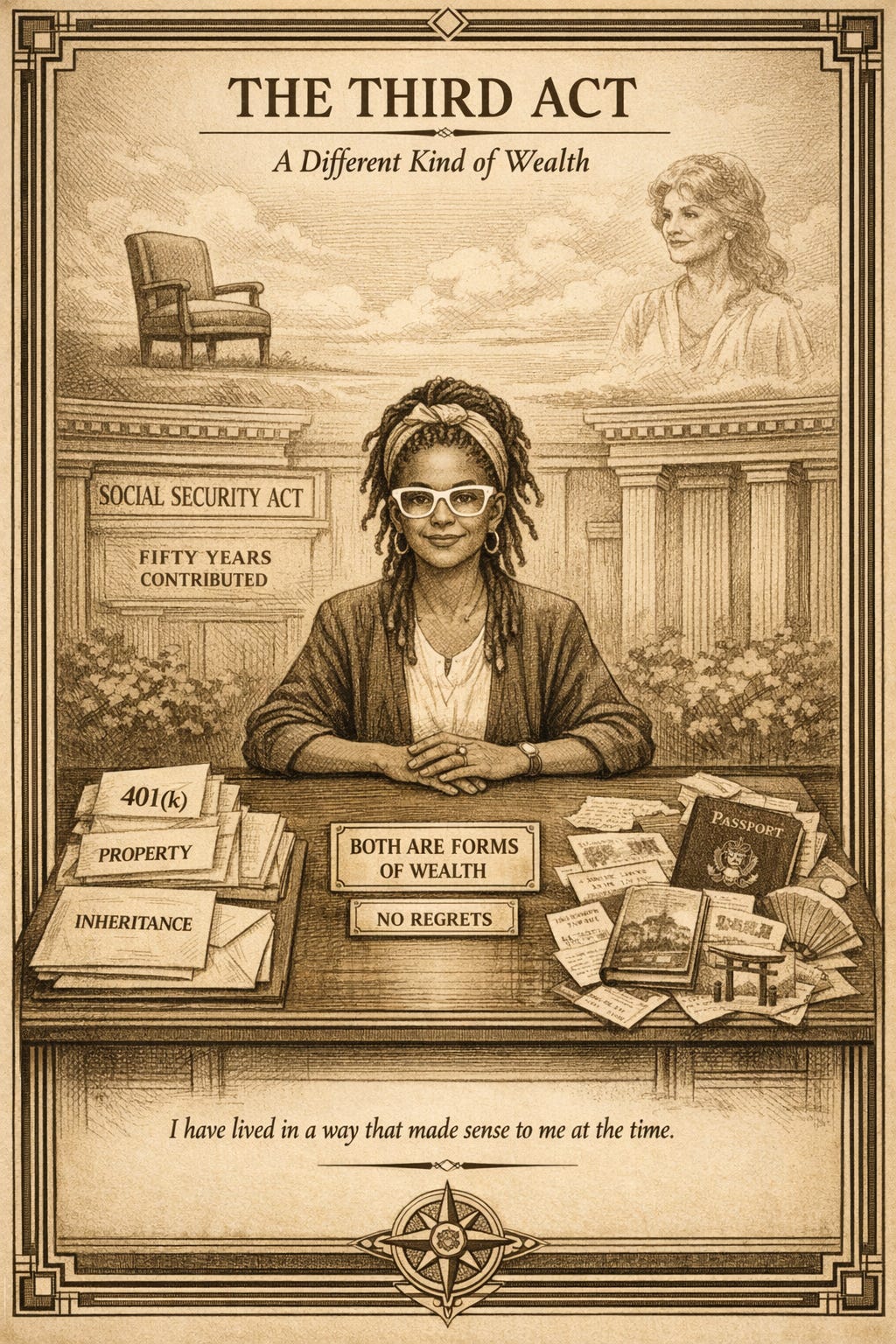
And now I find myself in the third act.
A fine act, I’m told by Jane Fonda. Full of reflection, perspective, and ideally, a comfortable chair.
My friends, who are younger and admirably prepared, have assembled the proper materials:
401(k)s
property
inheritance
I, on the other hand, have assembled experiences.
I have traveled. I have studied. I have lived in a way that made sense to me at the time, which is the only way any of us ever truly manages it.
Most recently, I went to Japan.
No regrets.
What I do have, in addition to a well-stamped passport, is this:
Fifty years of paying into Social Security.
One of the more practical inventions to come out of the New Deal.
A social program.
Yes, that word again. Still standing, despite its reputation.
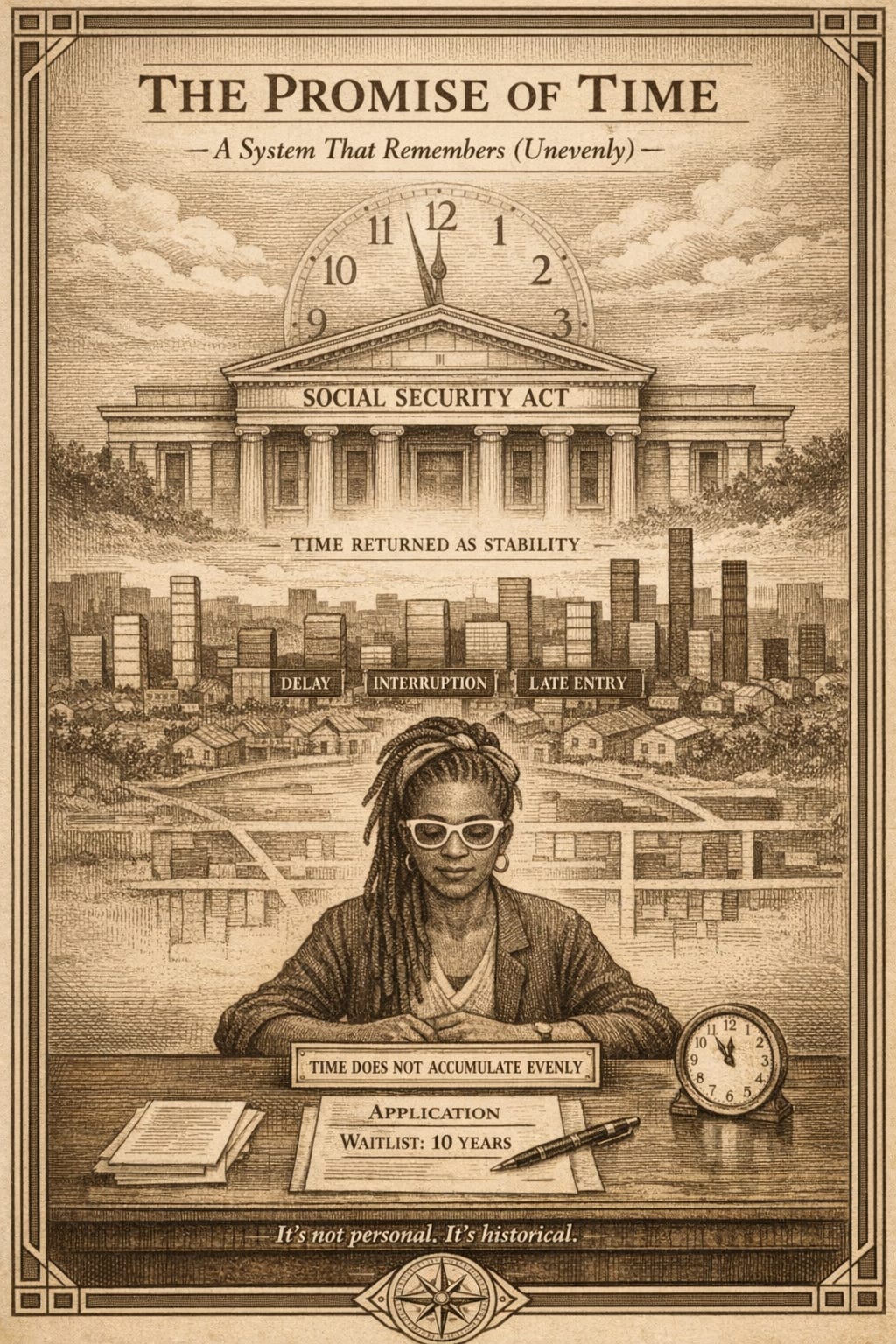
The Social Security Act made a simple and rather elegant promise:
That time spent working would return to you later as a measure of stability.
A kind of national agreement to remember each other.
Of course, like many elegant ideas, it was not distributed evenly at the start.
It arrived carrying the language of fairness, but moved through a landscape still organized by older, harder lines—segregation, discrimination, policies that decided in advance whose time would count and whose would be deferred.
And part of the “everyone” it missed looked very much like me.
In places like West Oakland, where I have studied and walked and paid attention, time did not accumulate in a straight line.
It took detours shaped by red lines and restricted deeds.
It was delayed by jobs excluded and neighborhoods contained.
Occasionally, it was interrupted altogether—reset, rerouted, or quietly erased before it could compound.
The system kept time.
It simply did not keep it the same way for everyone.
So when I sit down with a housing application and notice that the waiting list stretches a decade into the future, I don’t take it personally.
It’s not that the system has singled me out.
It’s simply that I have arrived at the end of a very long story, and the story is still sorting itself out.
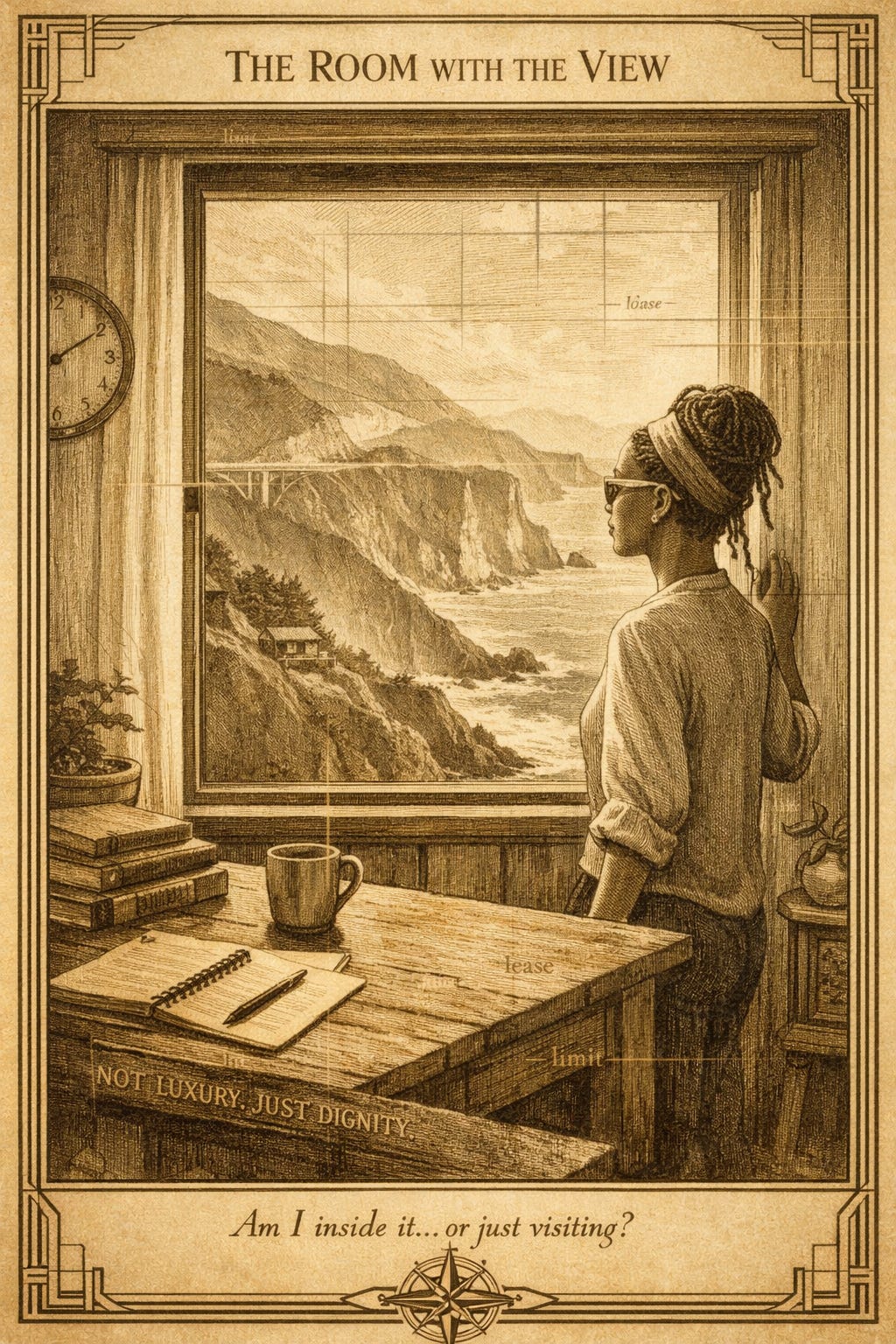
I thought I was looking for a place to live.
A small, quiet space near the water where I could write and grow older without unnecessary drama.
But the search has a way of clarifying things.
Some people arrive at this stage with a tidy accumulation of time and resources.
Others arrive with a rich collection of experiences and a slightly more creative set of logistics.
Both, I would argue, are forms of wealth.
I stand now at a fork in the road.
Not lost. Just… considering my options.
Saturn has returned—punctual as ever, every 29.7 years—apparently keeping better records than I do.
And I ask, in a spirit of practical curiosity:
How does one make a life here, at this stage, with what one has?
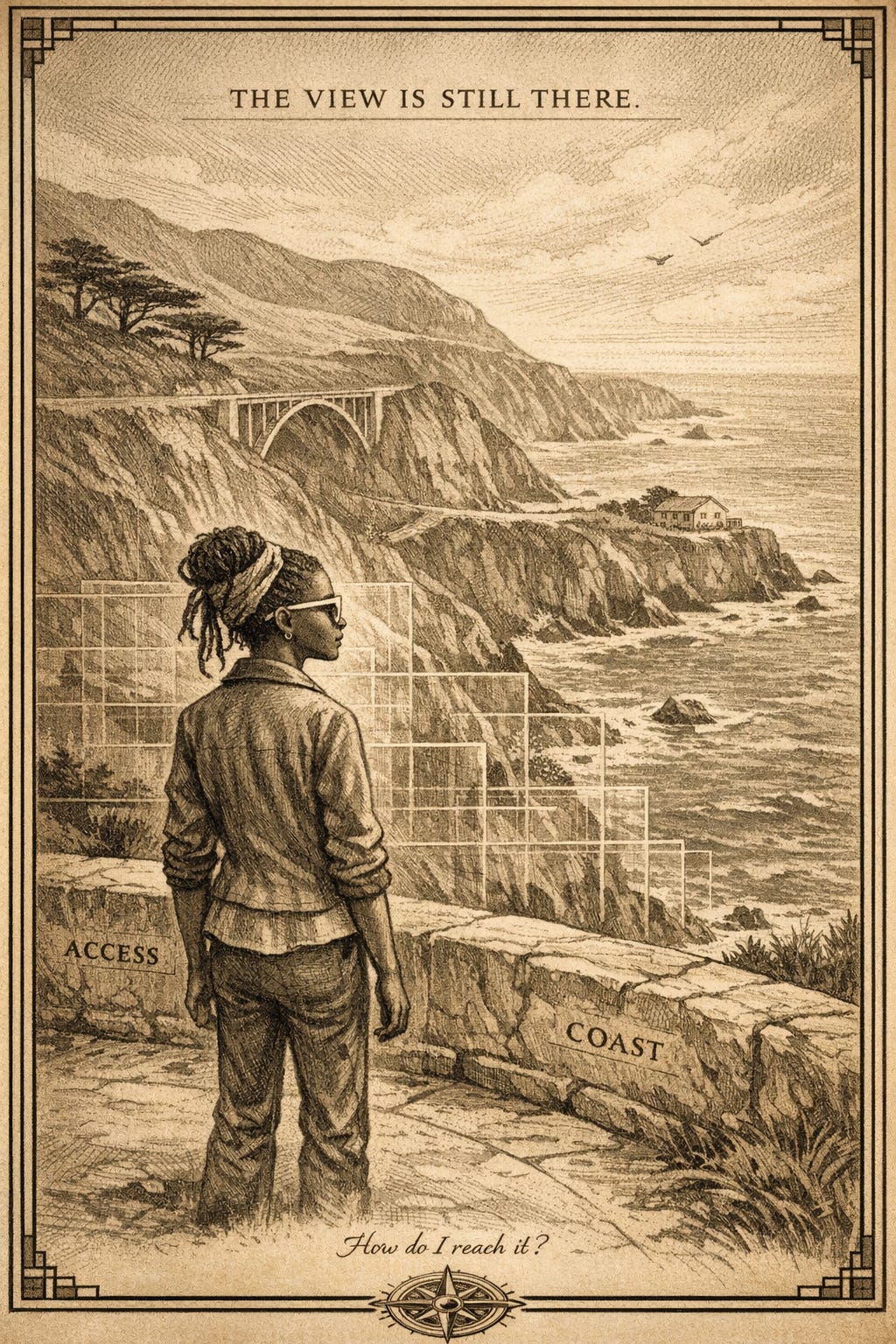
The view is still there.
The ocean hasn’t withdrawn its invitation.
Last I checked, the Pacific hasn’t been privatized.
I don’t believe I have run out of time.
I believe I am standing at the edge of a system that was never quite designed for a life like mine.
So now I have a different sort of problem:
How do I reach what has always been within sight?