

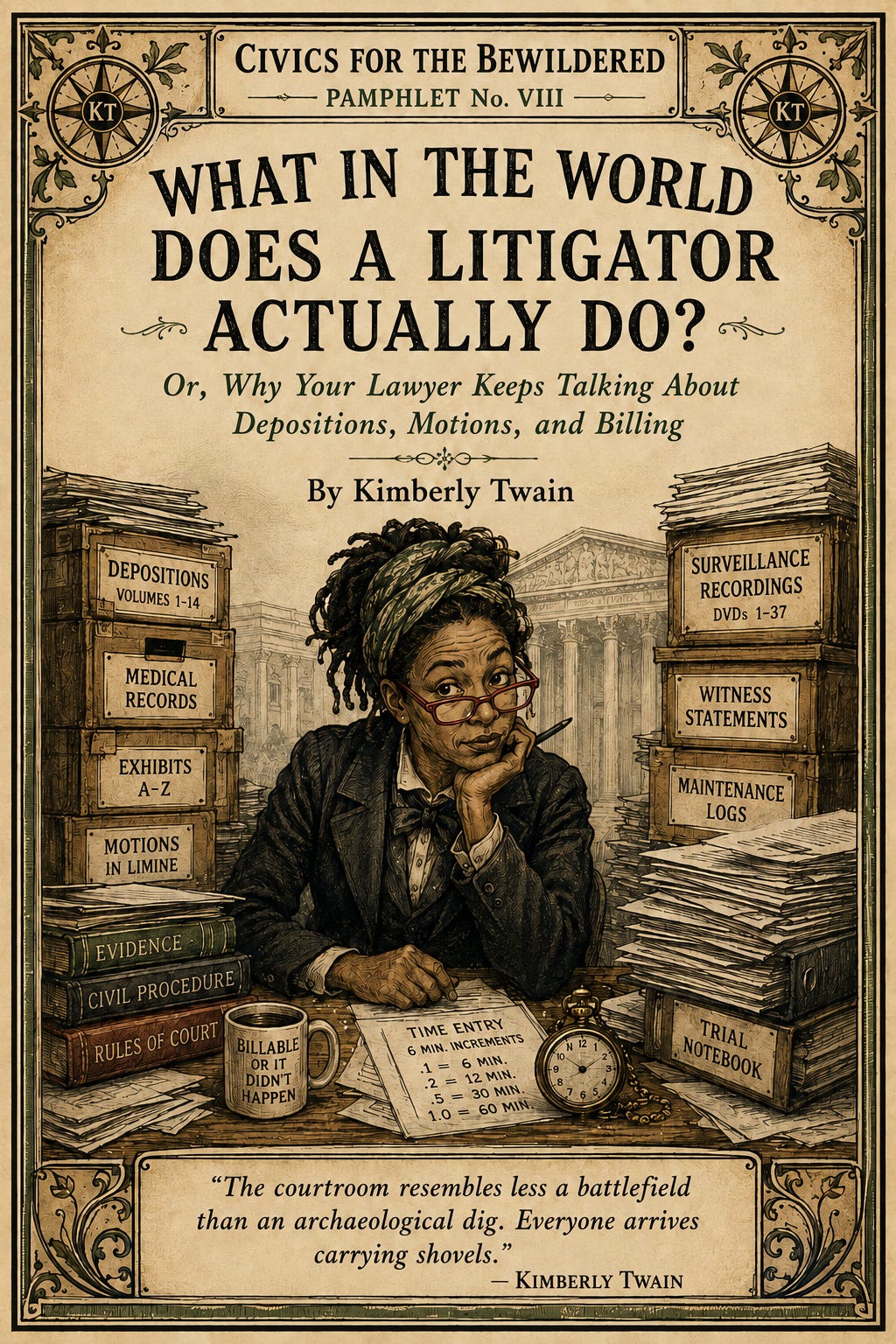
“All Rise!”
No, not yet.
Contrary to Hollywood’s wishes, most lawyers are not dramatically shouting “Objection!” every twelve minutes while someone faints in the witness box.
In fact, most litigators spend remarkably little time in court.
Instead, they spend their days reading documents thick enough to stop a door, interviewing witnesses who remember events with the confidence of someone recalling last Tuesday’s breakfast from 1997, writing motions, taking depositions, negotiating settlements, and trying to answer one deceptively simple question:
What actually happened?
Welcome to the curious profession known as litigation.
So... What’s a Litigator?
A litigator is a lawyer who handles lawsuits.
Some represent injured people.
Some represent businesses.
Some defend hospitals.
Some defend airports.
Some defend insurance companies.
Their job is not necessarily to prove someone innocent or guilty.
Their job is to determine whether the evidence supports a legal claim.
Notice the emphasis.
Not whether someone is angry.
Not whether someone is sympathetic.
Not whether someone is wealthy.
Whether the claim can actually be proved.
That is a very different question.
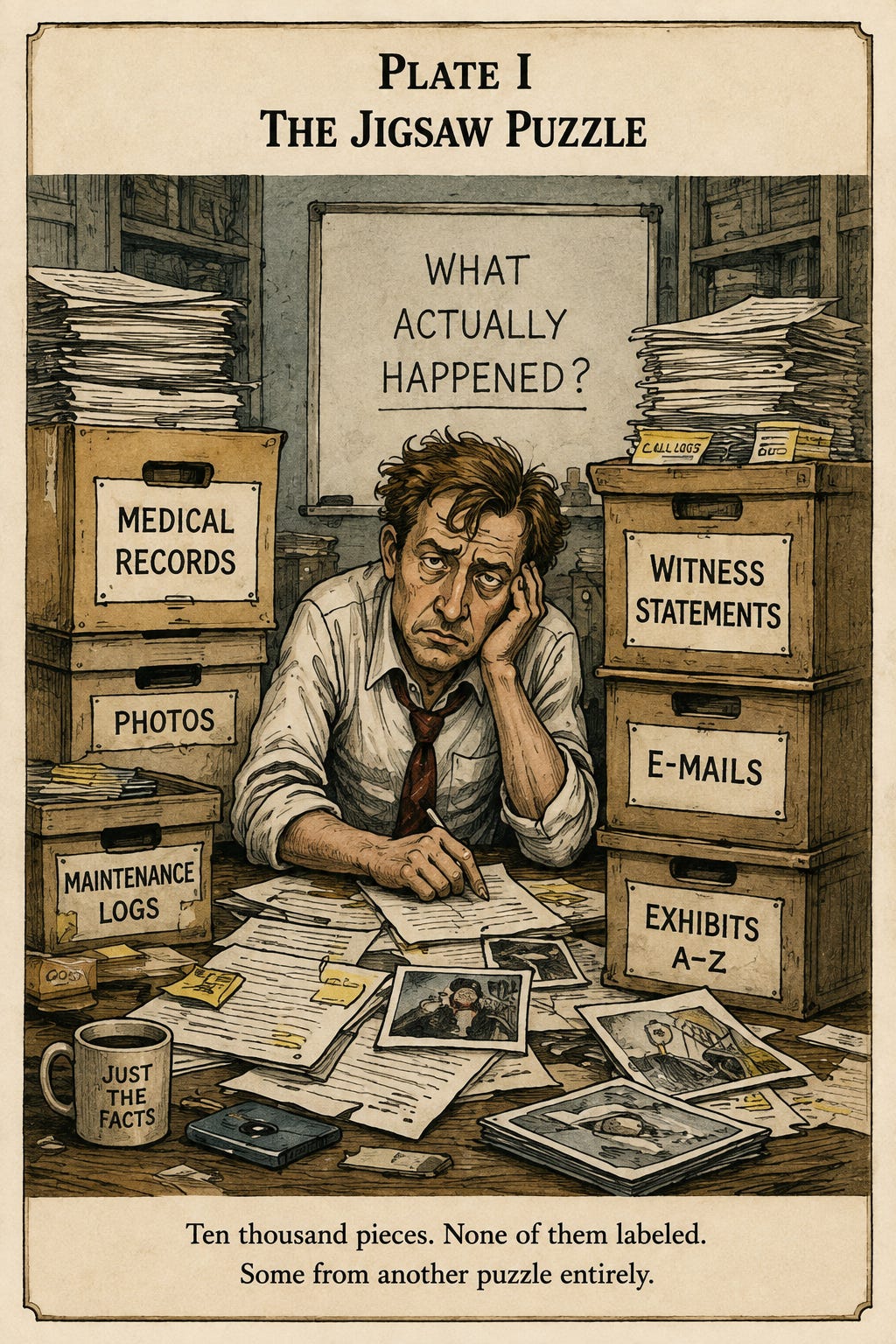
The World’s Largest Jigsaw Puzzle
Imagine someone dumps 10,000 pieces of a puzzle onto your dining room table.
Only this puzzle contains:
surveillance videos
medical records
witness statements
photographs
emails
text messages
maintenance logs
engineering reports
police reports
receipts
and somebody’s Aunt Betty who suddenly “remembers everything” two years later.
The litigator’s job is to assemble the picture.
Sometimes the pieces fit beautifully.
Sometimes half the pieces appear to belong to another puzzle entirely.
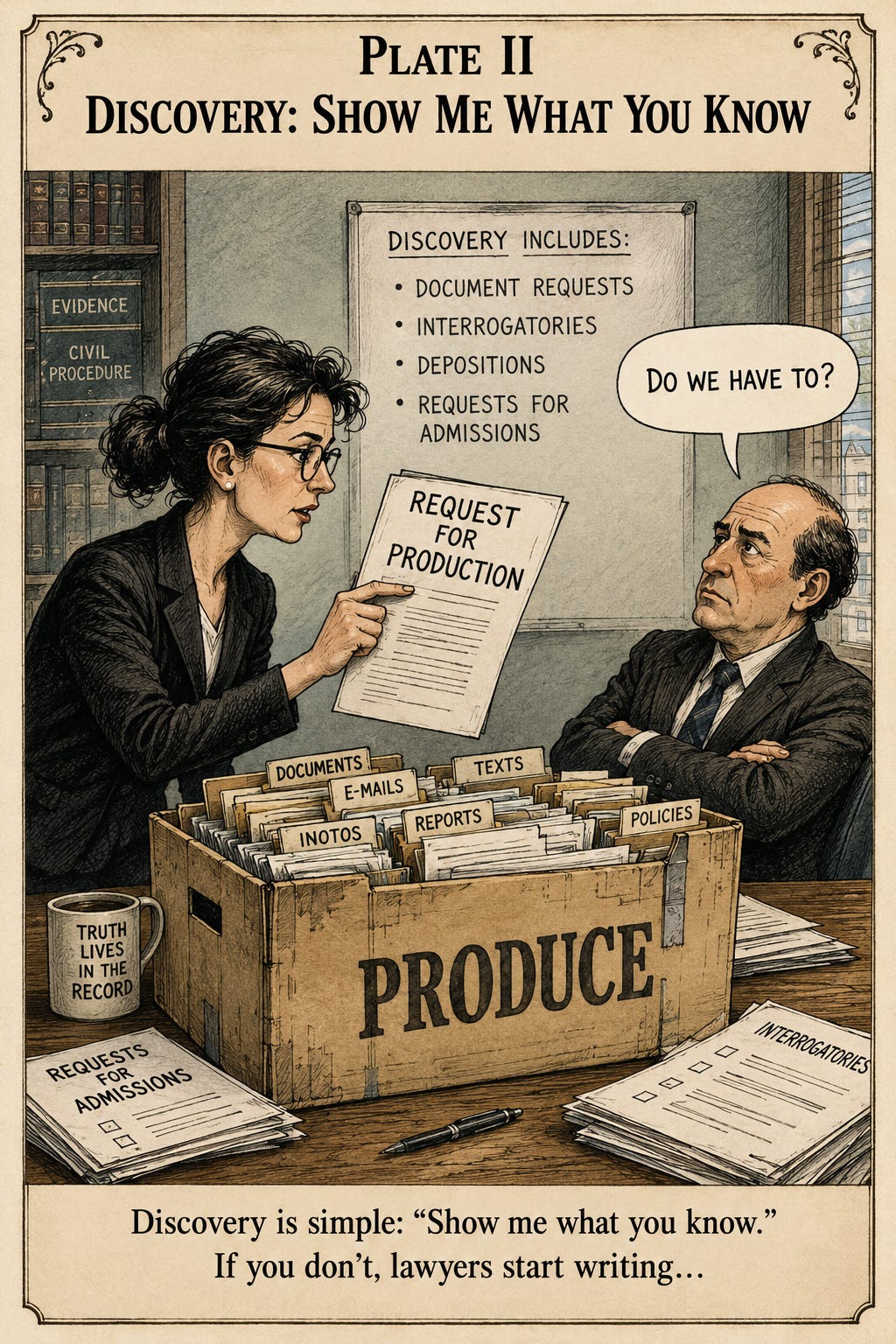
Discovery
The least exciting word in law.
The most important.
Discovery simply means:
“Show me what you know.”
Both sides exchange evidence.
Medical records.
Videos.
Maintenance records.
Inspection logs.
Photographs.
Witness names.
Expert reports.
If someone refuses to provide relevant evidence...
Lawyers begin writing...
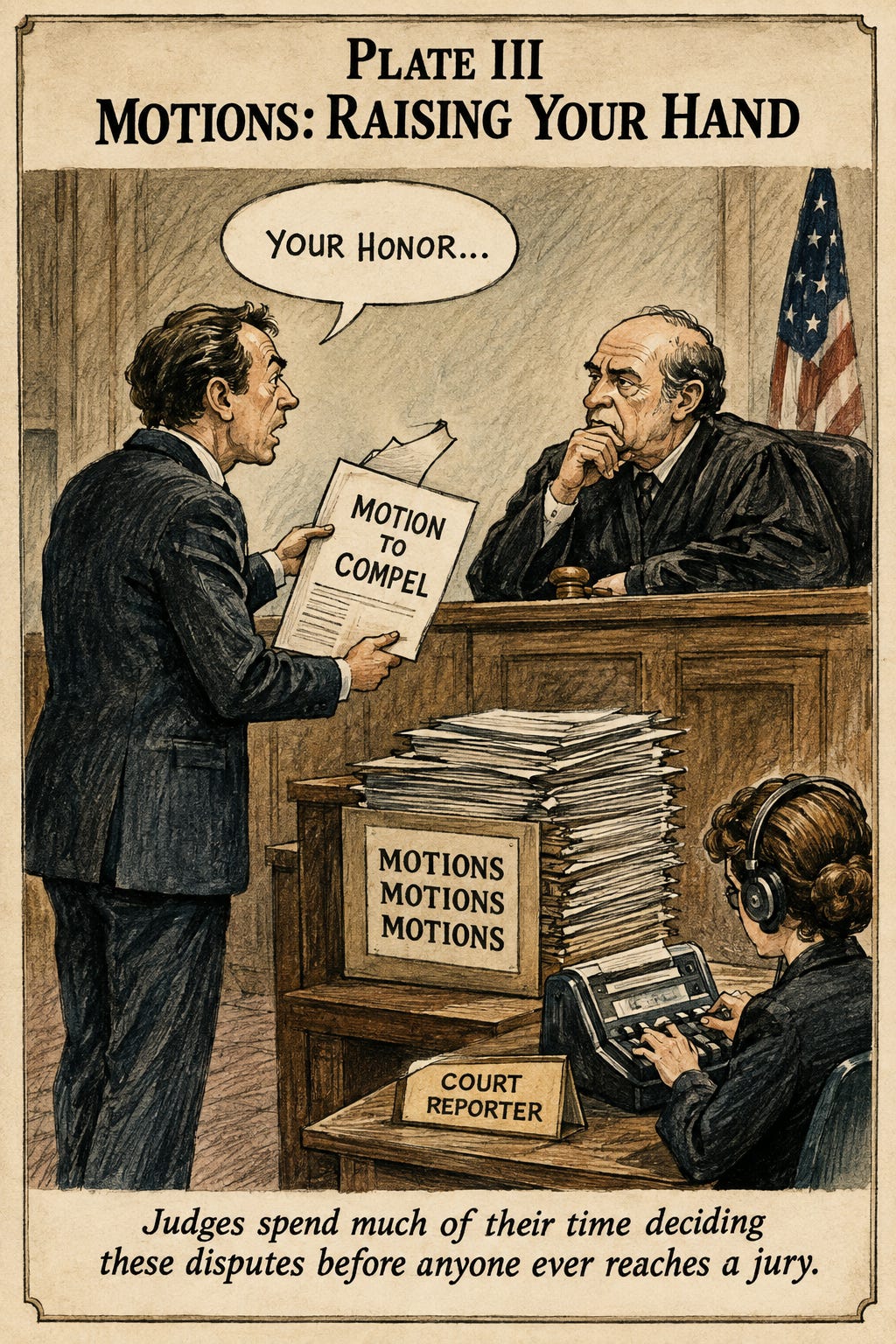
Motions
A motion is simply a formal request to the judge.
Think of it as raising your hand.
“Your Honor...”
“...they won’t give us the medical records.”
“...they destroyed the surveillance footage.”
“...their expert is relying on junk science.”
“...please order them to comply.”
Judges spend much of their time deciding these disputes before anyone ever reaches a jury.
Television rarely shows this.
Probably because “Motion to Compel Production of Documents” doesn’t fit neatly between the commercial breaks.
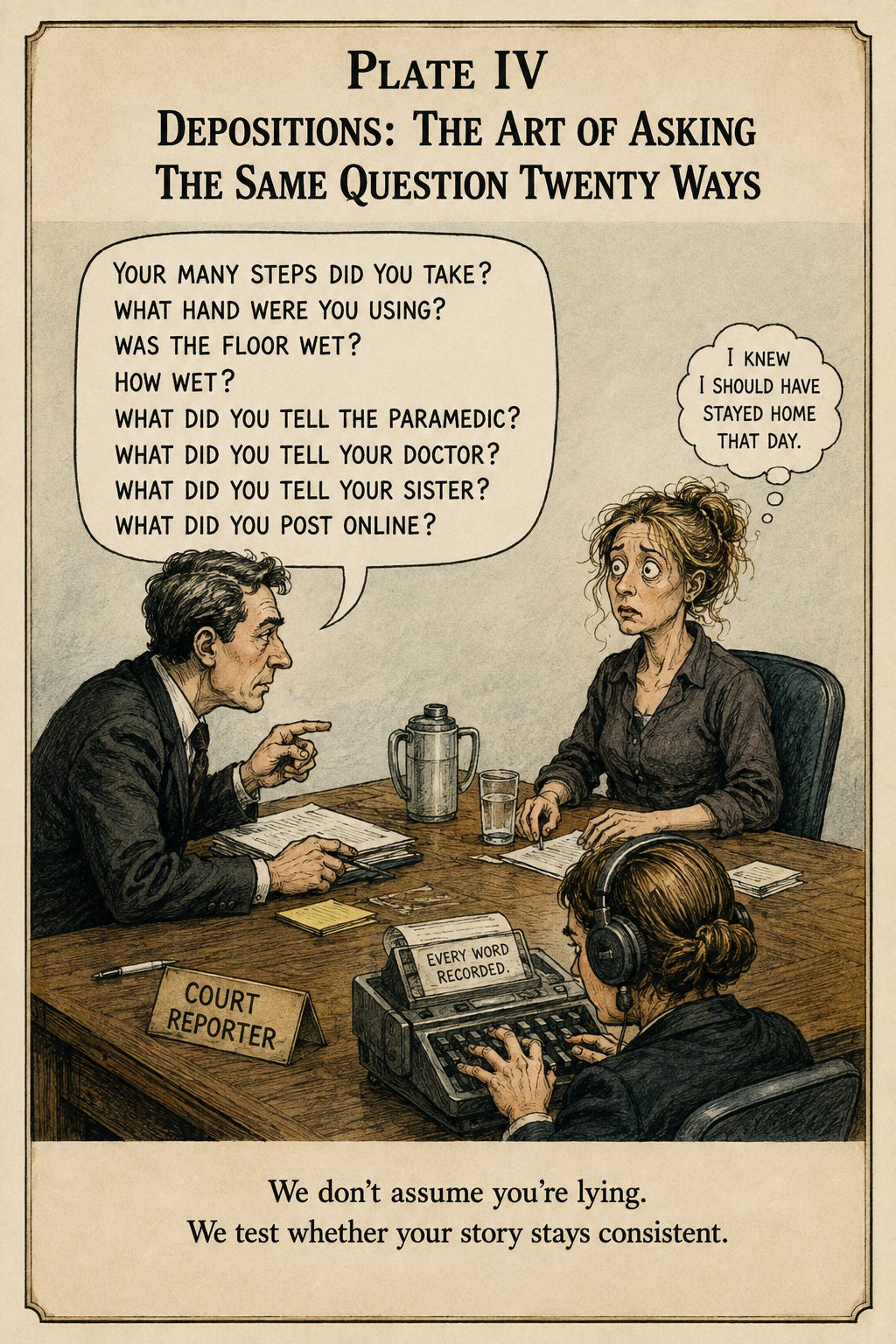
Depositions
This is where things become wonderfully awkward.
A deposition is testimony under oath.
No jury.
Usually no judge.
Just lawyers, a witness, a court reporter, and enough coffee to sustain civilization.
The lawyer asks questions.
Lots of questions.
“How many steps did you take?”
“What hand were you using?”
“Was the floor wet?”
“How wet?”
“What do you mean by ‘very wet’?”
“What color were your shoes?”
“What did you tell the paramedic?”
“What did you tell your doctor?”
“What did you tell your sister?”
“What did you post on social media?”
It sounds repetitive.
That’s the point.
People often remember details differently over time.
Lawyers test memories against documents, photographs, videos, and prior testimony.
They’re not supposed to assume someone is lying.
They’re trying to determine whether the story remains consistent.
Burden of Proof
Here’s one of the most important ideas in our legal system.
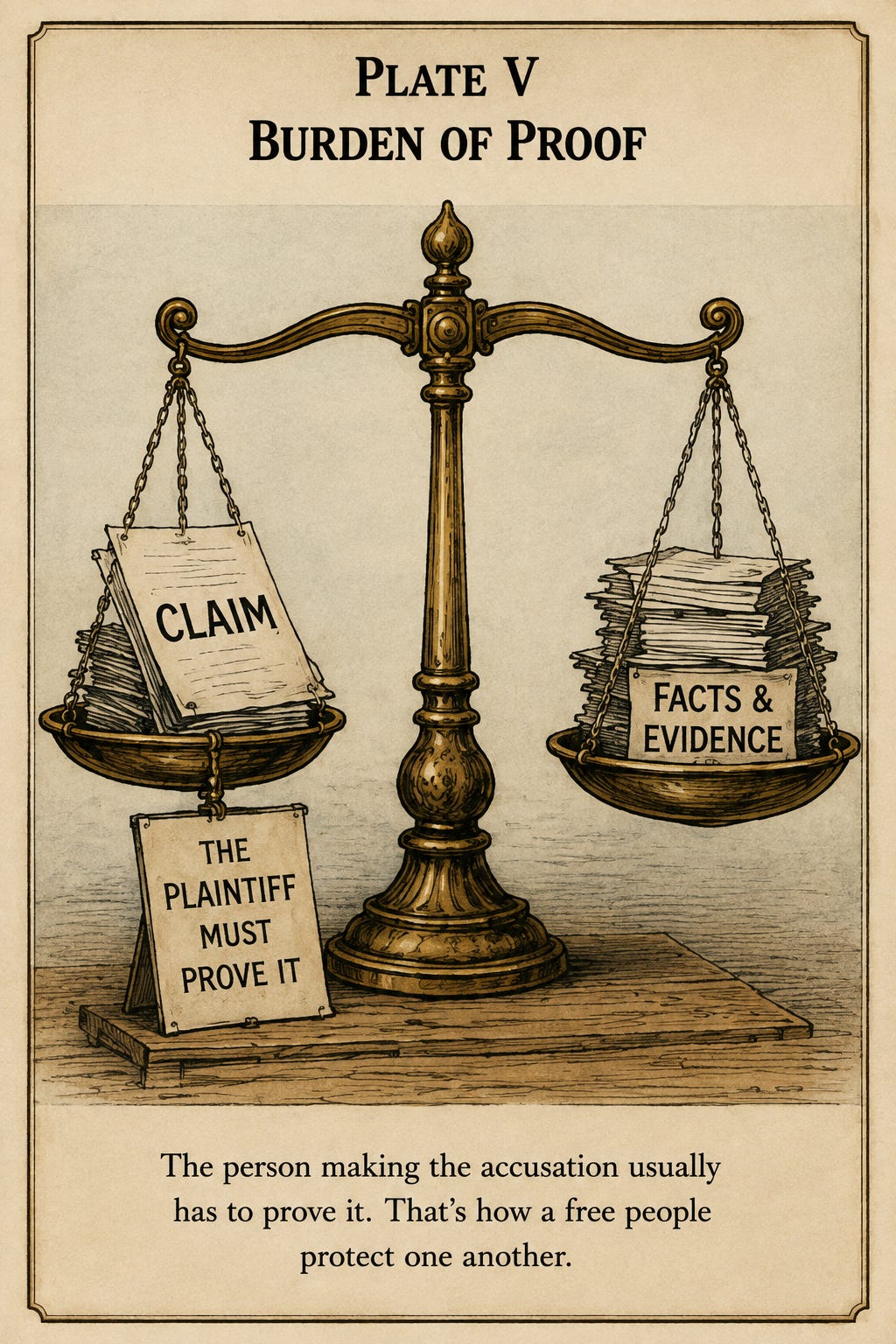
The person making the accusation usually has to prove it.
If someone says:
“Your negligence caused my injury.”
The law generally responds:
“Show us the evidence.”
That’s called the burden of proof.
It doesn’t require the defendant to prove nothing happened.
It requires the plaintiff to prove that something did.
That distinction quietly supports the entire civil justice system.
Why Lawyers Seem So Skeptical
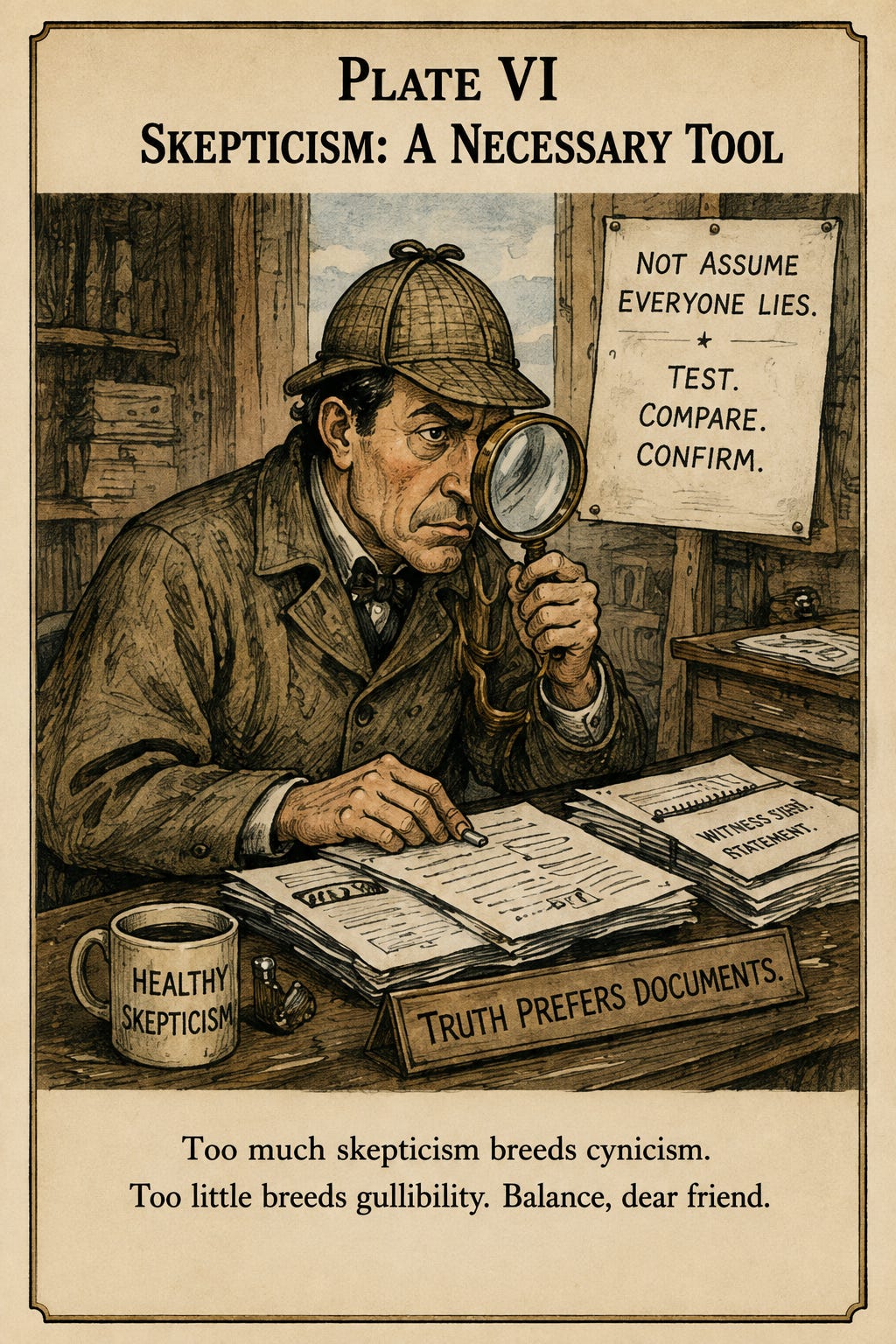
Spend twenty years examining contradictory stories and you’ll begin asking lots of questions.
That’s healthy.
Assuming everyone lies?
Not so healthy.
Good litigators try to remain skeptical without becoming cynical.
They don’t simply reject claims.
They test them.
That’s an important difference.
The Part Nobody Sees
Here’s something Hollywood almost never shows.
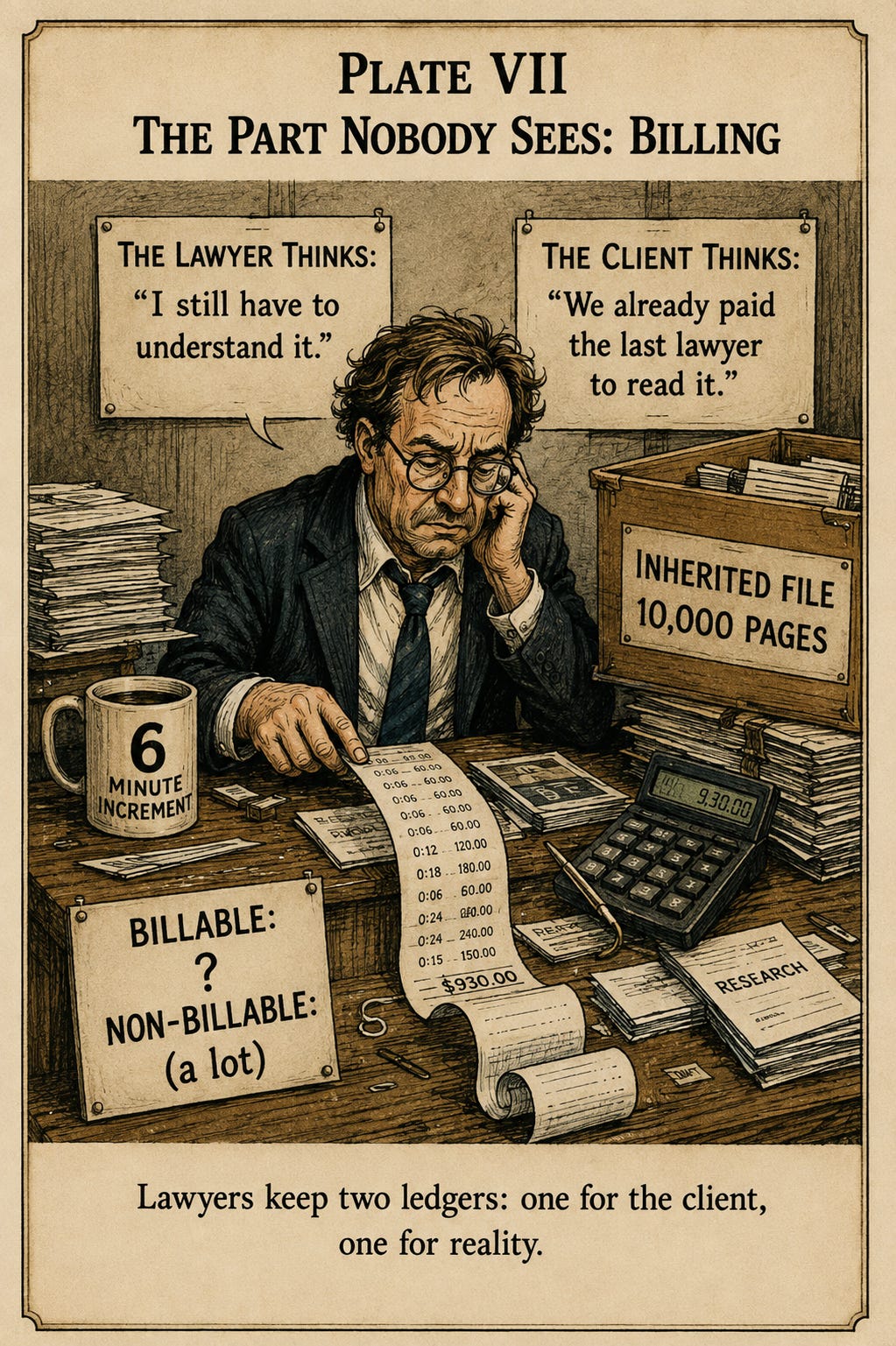
Billing.
Imagine inheriting a lawsuit containing 10,000 pages.
You must read it before you can responsibly represent your client.
The client says:
“We already paid the last lawyer to read it.”
The new lawyer thinks:
“I still have to understand it.”
Thus begins one of the great philosophical debates of modern civilization:
Who pays for reading?
Twainian Observation
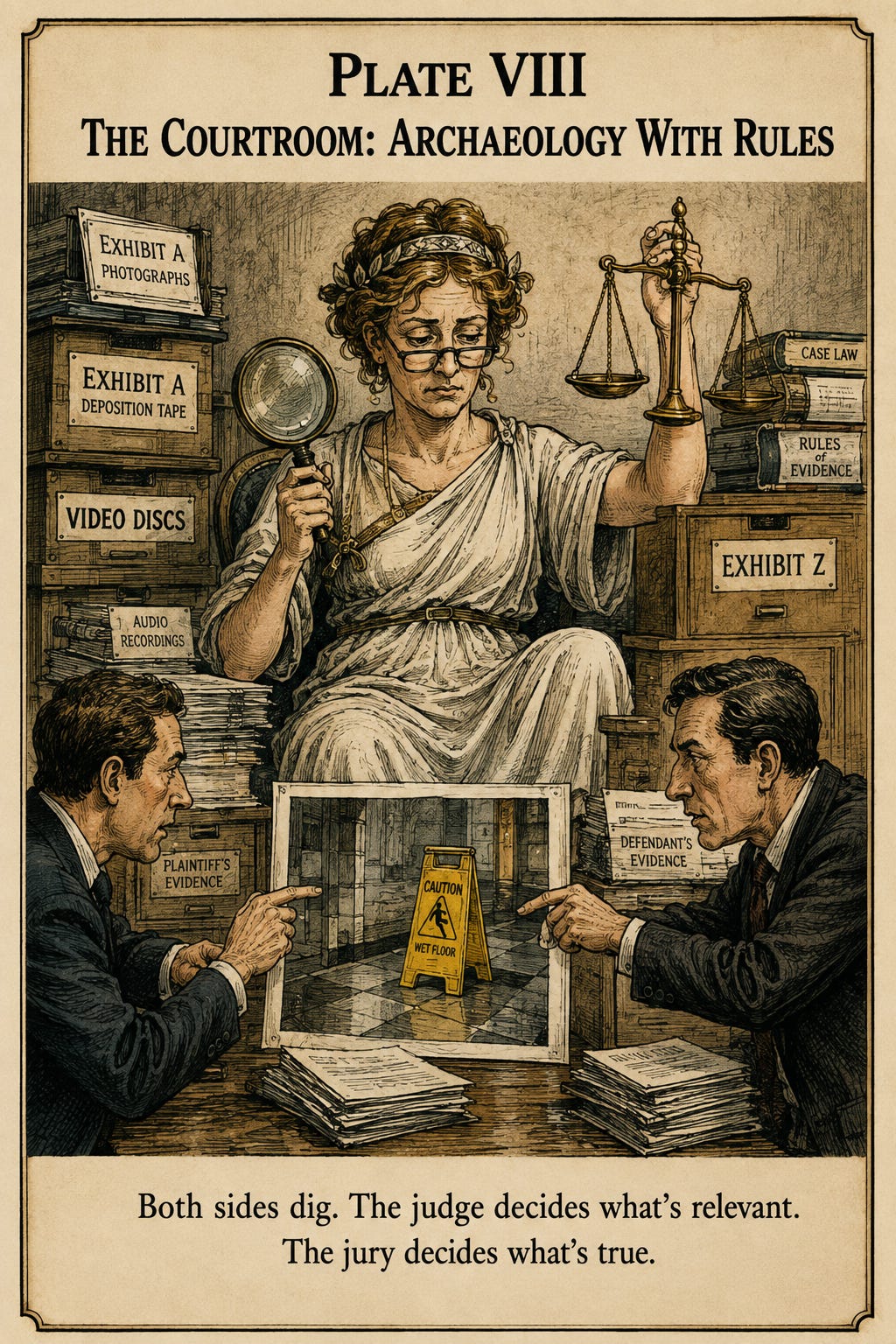
The courtroom resembles less a battlefield than an archaeological dig.
Everyone arrives carrying shovels.
One lawyer uncovers a photograph.
Another uncovers a forgotten email.
Someone finds a maintenance log.
Someone else discovers a surveillance video.
Occasionally everyone discovers they have been digging in the wrong place.
Justice, one hopes, emerges not from who shouts the loudest, but from who uncovers the most reliable evidence.
Final Thought
A healthy democracy depends upon more than elections.
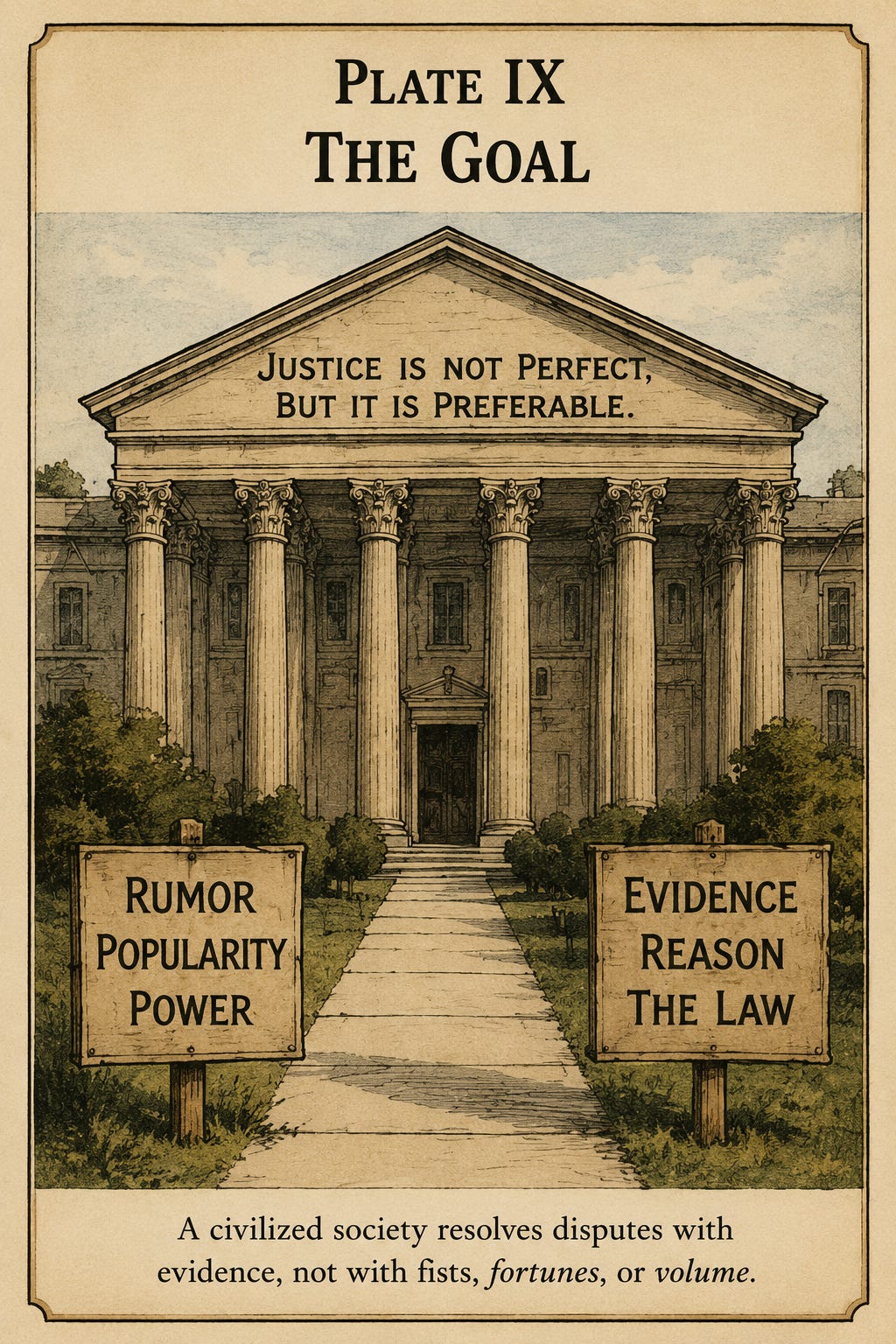
It also depends upon institutions capable of resolving disputes without fists, fortunes, or political influence deciding the outcome.
Litigation is one of those institutions.
It is imperfect.
It is expensive.
It is often frustrating.
But when it functions as intended, it asks one enduring civic question:
What can actually be proven?
That may not satisfy everyone.
But it is infinitely preferable to deciding disputes by rumor, popularity, or the volume of one’s voice.
Twain’s Gazette of the Absurd
“Civilizations are measured not merely by the laws they write, but by the evidence they require before believing one another.”
Until next time, remain civically curious.
KT