

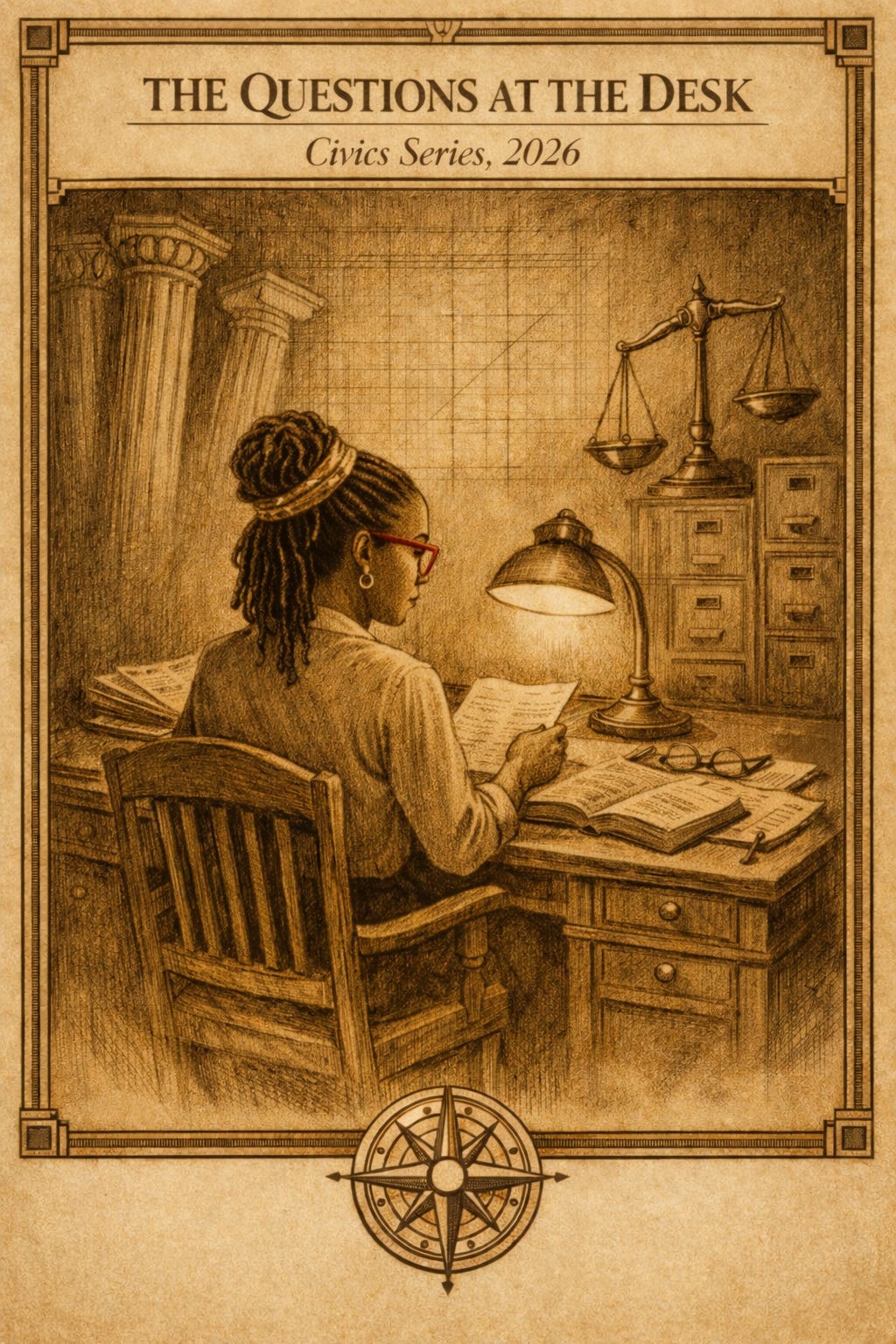
🏛️ THE QUESTIONS AT THE DESK
For some time now, I have been wondering how things got so politically out of hand.
Why does Congress seem unable to act?
Where are the checks and balances we were taught defined American government?
Why are regulatory bodies left partially staffed when laws clearly outline how they are supposed to function?
Why do we behave as though only two political parties exist when several are legally recognized?
These questions arrive quietly, usually while reading the news or sitting at a desk late in the evening, trying to reconcile the civics textbook with lived reality.
Something feels structurally off.
Not broken in spectacle, but misaligned in foundation.
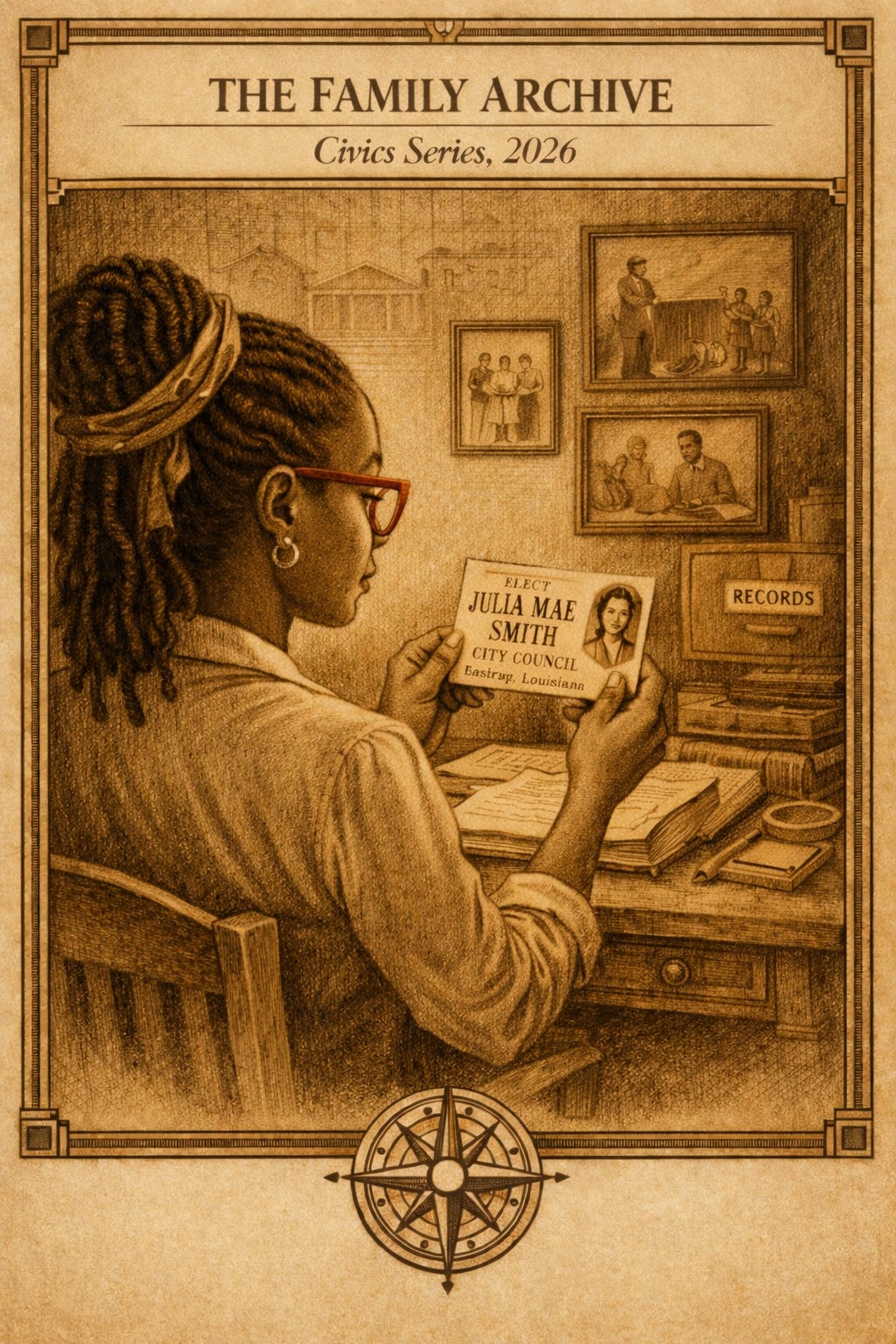
📜 THE FAMILY ARCHIVE
I come from a long line of civil rights activists.
My people started schools and educated communities at the peril of their lives. Education itself was once resistance. Civic participation was not theory in my family. It was protection. It was survival.
My Aunt Julia Mae became the first Black city council member in our small hometown of Bastrop, Louisiana.
She was an educator. She believed governance belonged to ordinary citizens willing to serve their communities.
I still have one of her campaign postcards.
It is small. Local. Printed for a race that never appeared on national television. Yet that postcard carries enormous weight. It represents neighbors deciding that representation mattered. That participation mattered. That someone from their own community should help guide public decisions.
Democracy, at its most real, often looks exactly like that.
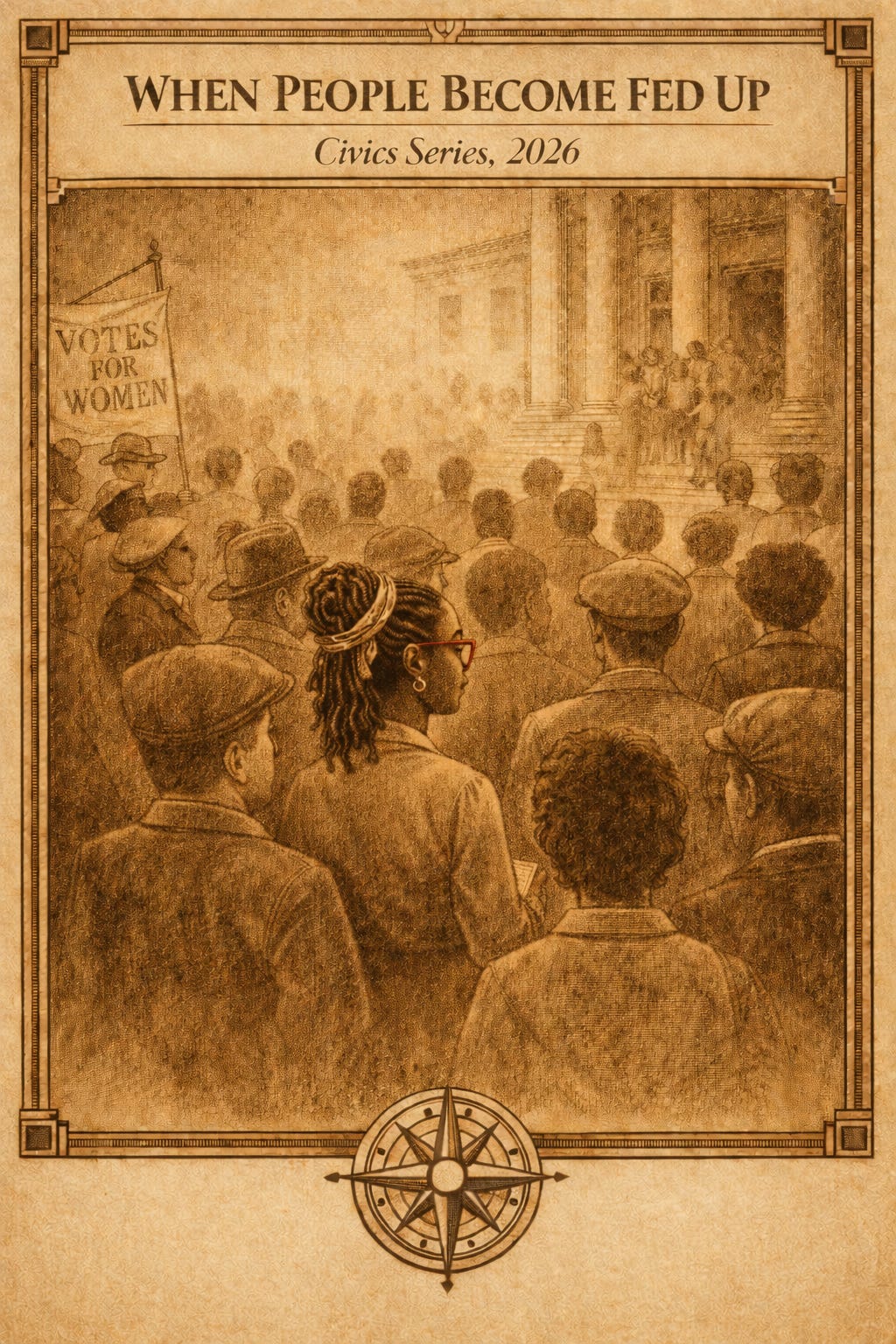
🔥 WHEN PEOPLE BECOME FED UP
History moves when ordinary people decide silence costs more than participation.
Civil rights protesters.
Suffragettes.
Vietnam War demonstrators.
Labor unions organizing against exploitation.
None waited for permission from national leaders. Momentum formed from the ground upward.
Today, many Americans again feel uneasy about state power, public accountability, and the widening distance between citizens and institutions meant to serve them. Images from the present echo moments many believed were confined to history books.
And yet something else is happening too.
People are gathering. Asking questions. Paying attention again.
I find myself asking alongside them:
What are we doing?
What can we do?
Who are we?
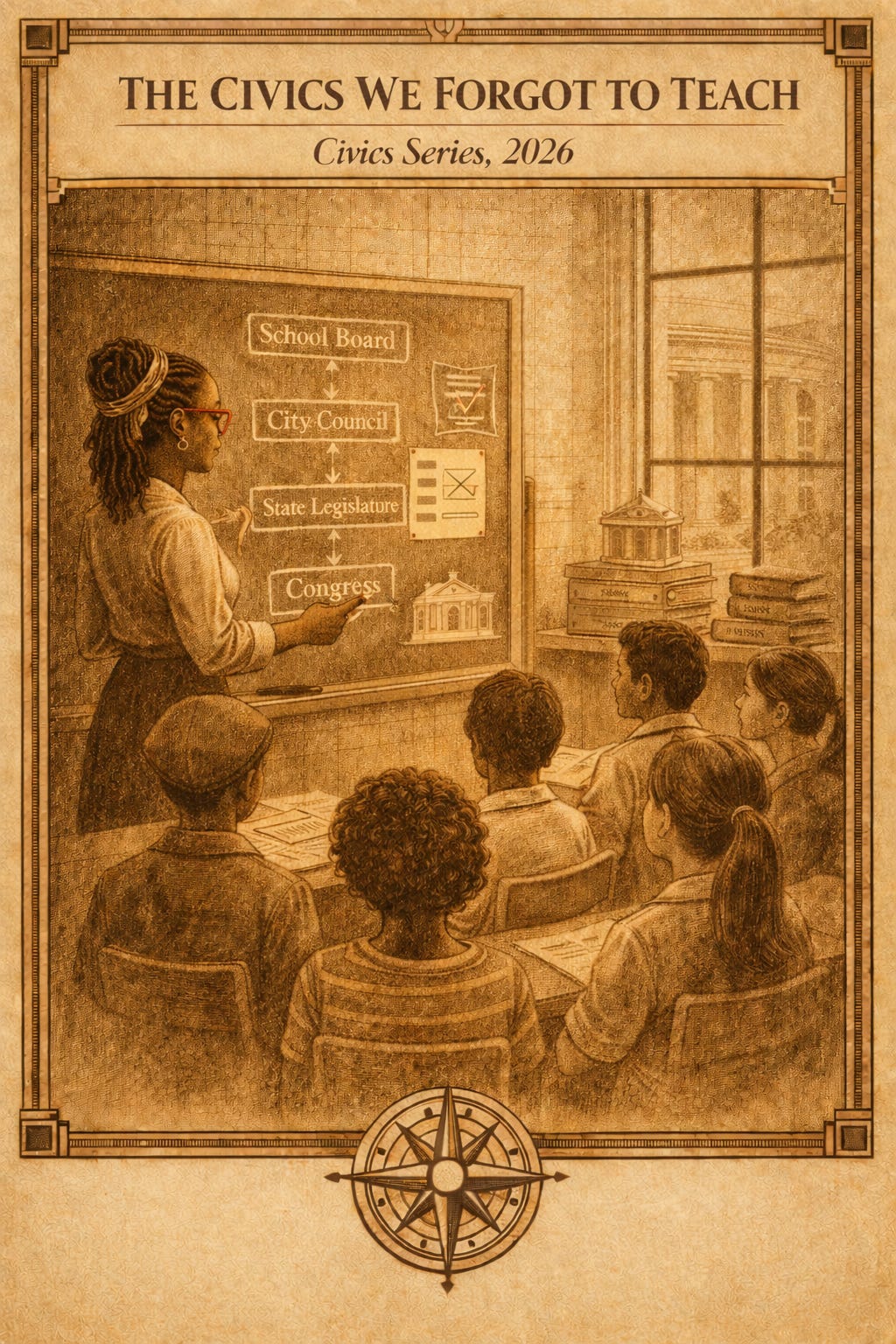
🗳️ THE CIVICS WE FORGOT TO TEACH
Every major democratic expansion in American history began locally.
School boards.
City councils.
County offices.
Community organizing meetings held long before national change followed.
Somewhere along the way, civics education faded from practical instruction into distant symbolism. Students learned names and dates but not how governance actually functions. Few are taught how budgets are approved, how candidates file for office, or how local turnout shapes national policy.
Without civic literacy, frustration becomes helplessness.
With civic literacy, frustration becomes participation.
Perhaps the next democratic renewal will not begin with a presidential election.
Perhaps it begins when classrooms once again teach young people that government is not something happening elsewhere. It is something they can enter, shape, and steward.
Because by the time national politics takes the stage, the script has already been drafted.
The authors are almost always the people who showed up first.
🧭 Twainian Civic Note:
Local memory is democratic memory.
Sometimes the future survives inside a campaign postcard kept in a drawer.