

“The Constitution was never intended to depend upon perfect leaders. It was designed to survive imperfect ones.”
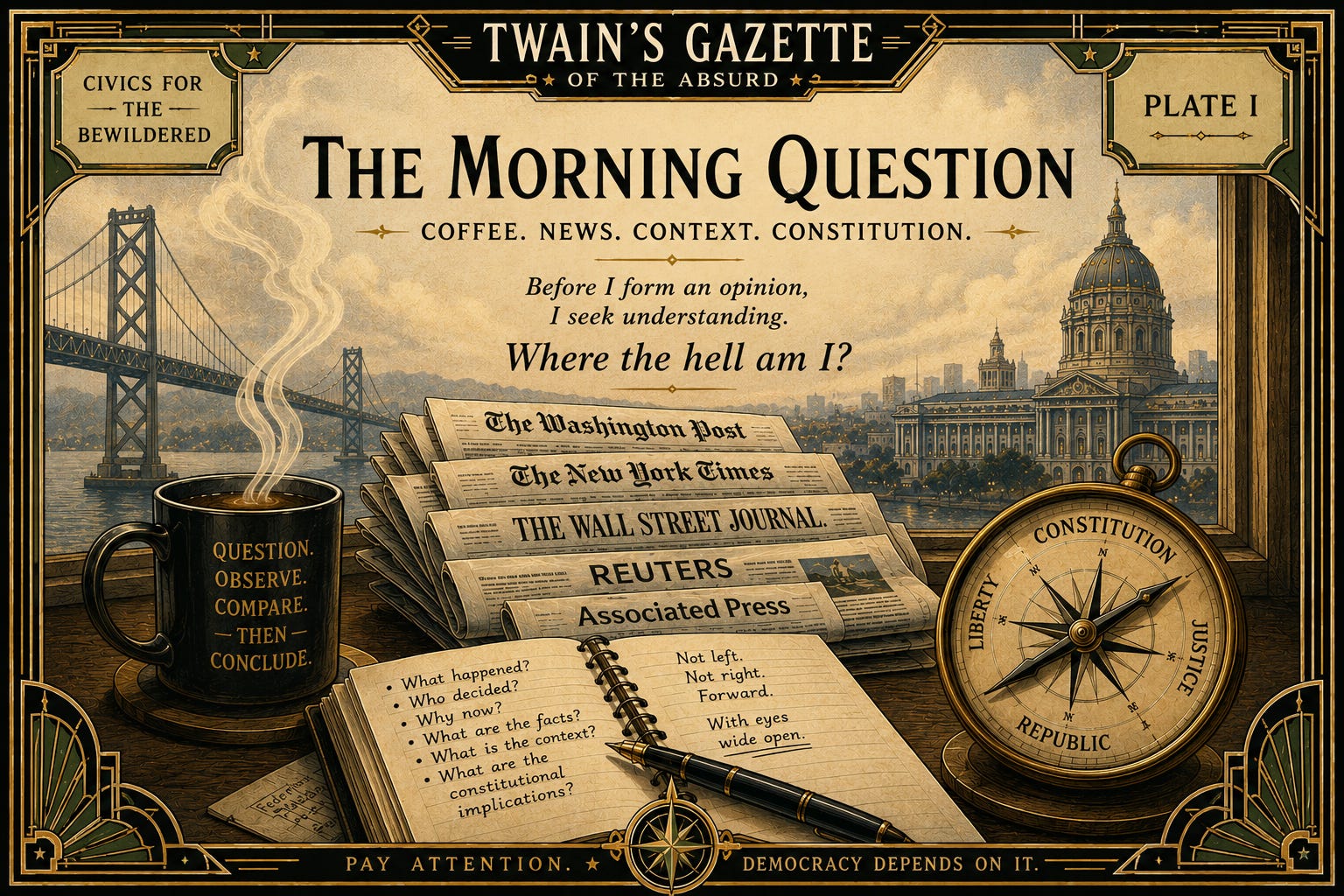
There are mornings now when I wake up, make coffee, and begin listening to the news.
Not just one source.
Several.
I move from one news organization to another, comparing what each reports, what each leaves out, and how each frames the same events.
Only then do I begin forming my own conclusions.
And more often than not, I find myself asking:
🤔🏛️ Where the hell am I?
Not geographically.
Constitutionally.
Civically.
Morally.
I spent most of my lifetime believing that America’s institutions were imperfect but remarkably durable.
Governments changed.
Presidents came and went.
Congress argued.
The courts weighed in.
The pendulum swung.
The Constitution held.
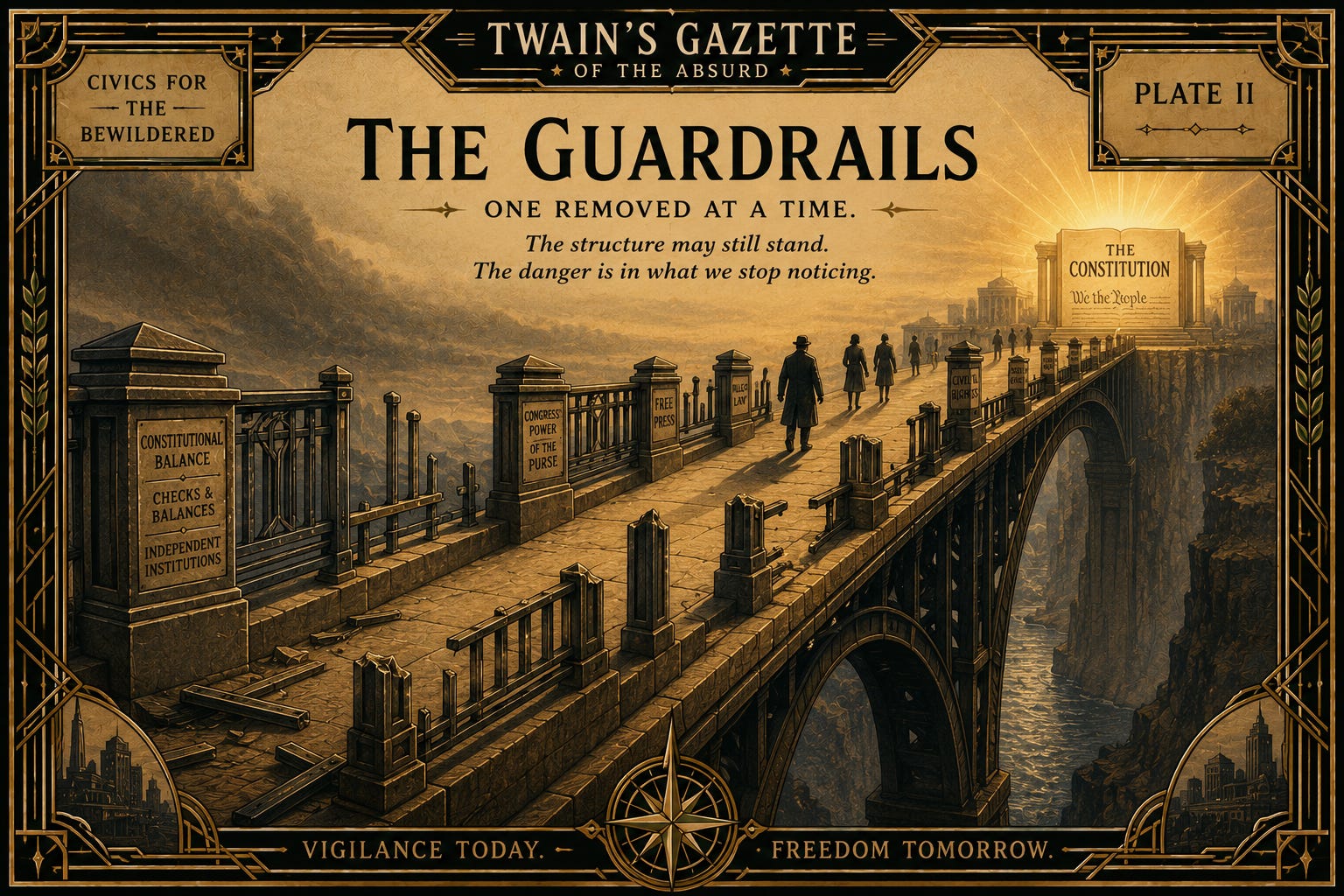
Now it feels as though someone has walked through the house pulling nails out of the walls one by one.
Not all at once.
Just enough that you begin to wonder whether the roof still knows where to rest.
🧩 The Pattern
I look around and see Congress rescind nearly $1.1 billion in funding for public broadcasting, placing many local PBS and NPR stations in jeopardy.
I see roughly $8 billion in previously approved foreign aid withdrawn from humanitarian and development programs around the world.
I see federal diversity, equity, and inclusion programs dismantled.
I see reductions in civil rights enforcement priorities and long-standing protections debated, narrowed, or challenged.
I see legal immigrants, refugees, asylum seekers, universities, employers, and families struggling to understand a rapidly changing immigration system.
I see proposals to dramatically reduce the role of the Department of Education.
I see environmental protections rolled back.
I see large reductions in the federal workforce.
I see independent inspectors general dismissed.
I see executive orders issued at a pace and scope that would have seemed extraordinary only a few years ago.
I see voting rules and election administration becoming the subject of increasingly intense political battles.
I see court after court being asked to decide whether presidential actions exceed constitutional authority.
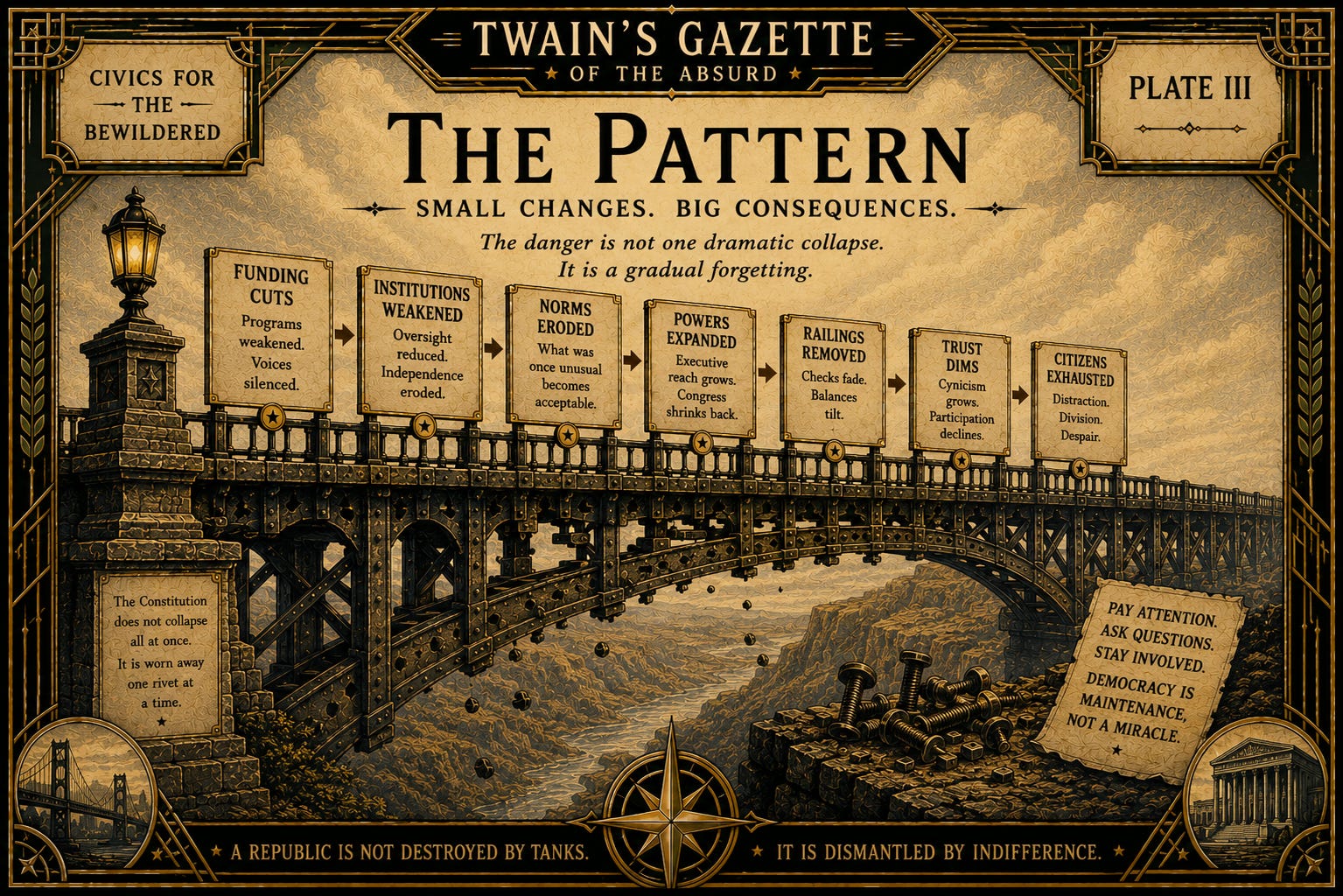
None of these developments exists in isolation.
Together, they form a pattern.
And again and again, I find myself asking:
Is this how our constitutional system was meant to function?
🏛️📐 Constitutional Architecture
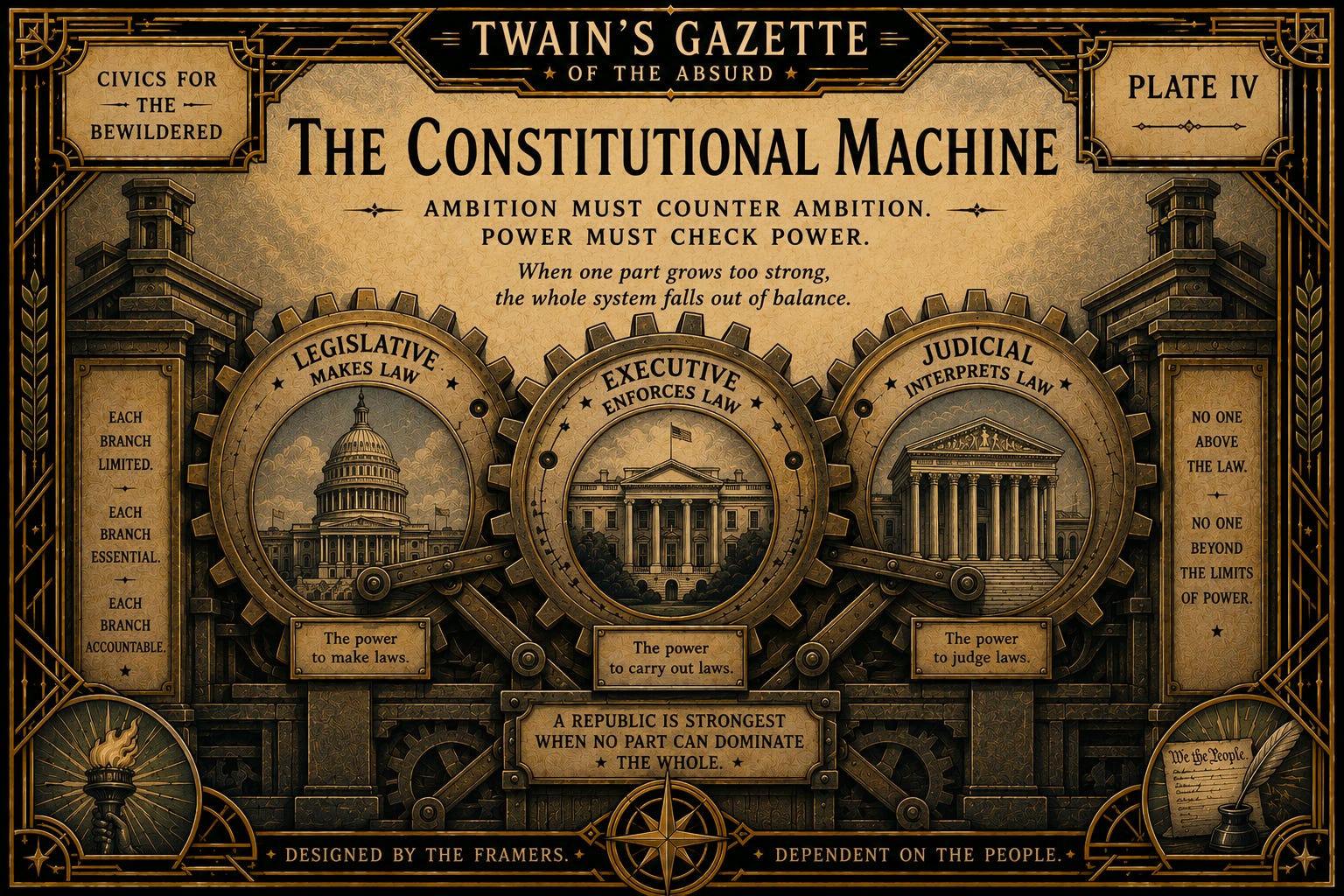
The Constitution does give presidents significant authority.
Congress has the power to appropriate money.
Congress also has the power to rescind money.
Courts have the authority to decide whether executive actions are lawful.
Many of today’s disputes are still moving through that constitutional process.
But constitutions are more than collections of legal powers.
They are systems of restraint.
The Framers assumed ambition would counter ambition.
They expected each branch to guard its own authority.
The system works best when no one branch becomes so powerful that the others begin to orbit around it.
That is what concerns me.
Not one executive order.
Not one court case.
Not one budget vote.
The accumulation.
The pattern.
The gradual normalization of governing by executive action, partisan loyalty, and institutional deference instead of constitutional balance.
⏳ History Arrives Quietly
Some people celebrate these changes.
Others fear them.
Many probably haven’t had time to think about them because they’re trying to pay rent, raise children, care for aging parents, or simply make it through another workweek.
I understand that.
But history has a quiet way of arriving.
Civilizations rarely announce that they are changing.
They simply keep making decisions until one day everyone looks around and realizes they are living in a different country than the one they thought they knew.
🇺🇸🏛️ ⚖️ This Isn’t About One President
This isn’t about whether you voted Republican, Democrat, Independent, or not at all.
It isn’t even about Donald Trump alone.
It is about the constitutional architecture that belongs to every American.
If one president can permanently expand executive power, another president can inherit it.
If one Congress becomes comfortable surrendering part of its institutional responsibility, future Congresses may do the same.
If independent institutions become weaker, rebuilding them is often far more difficult than dismantling them.
Our republic was never designed to depend upon the virtue of one individual.
It was designed to survive flawed individuals because power itself was divided.
That may be the most radical idea the Constitution ever introduced.
☕ The Morning Question
Which brings me back to my morning coffee.
I still believe in this country.
I still believe in the Constitution.
I still believe that ordinary citizens are capable of extraordinary stewardship.
But I also believe democracy requires something many of us have neglected:
Paying attention.
Because constitutions do not disappear in a single dramatic moment.
Sometimes they are worn away quietly, one institution, one precedent, one assumption at a time.
And if enough of those pieces disappear, someday millions of Americans may wake up, look around, and ask the same question that has been echoing in my own mind:
Where the hell am I?
🧭 Closing Thought
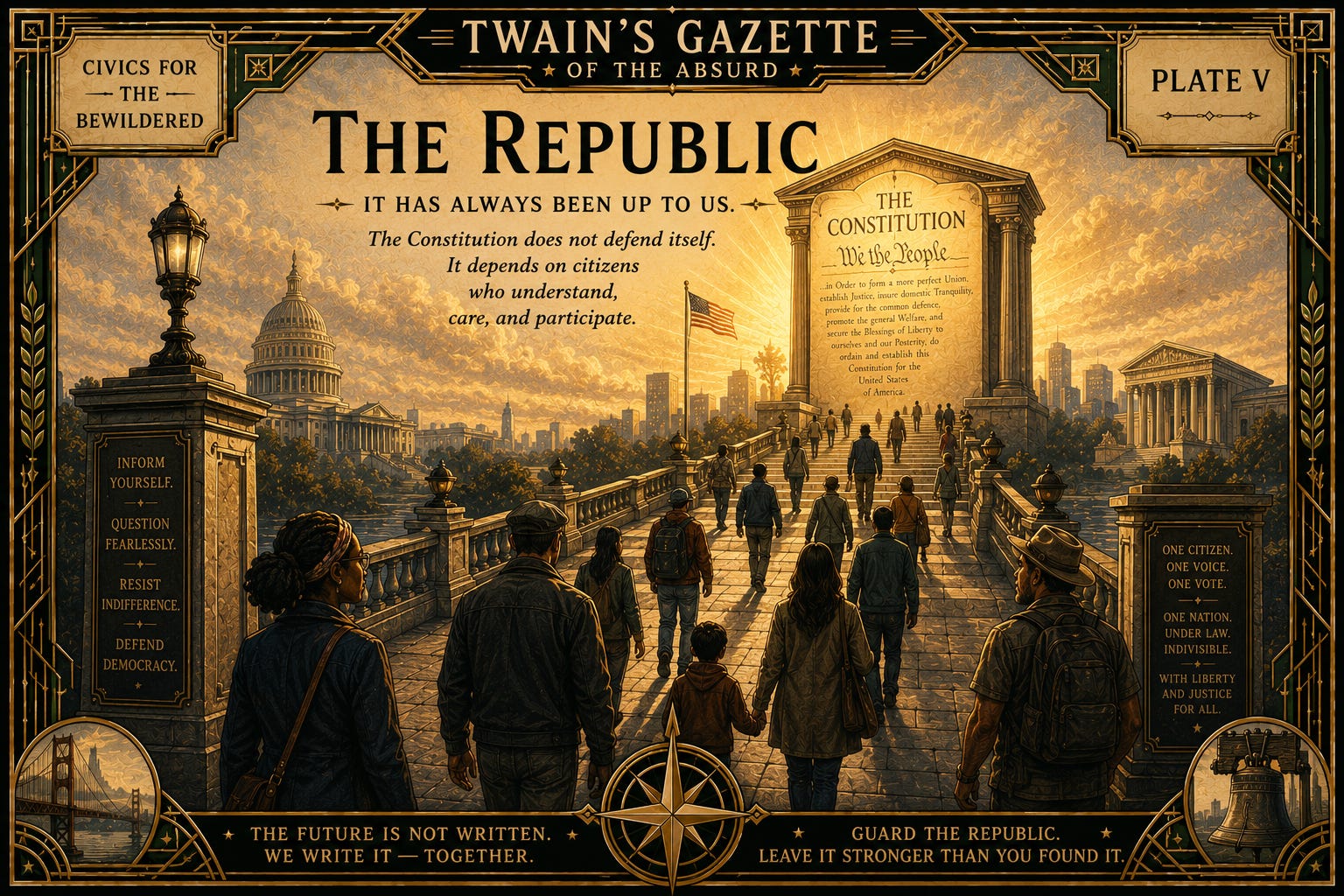
A republic is not merely protected by its Constitution.
It is protected by citizens who understand why that Constitution was written in the first place.
The strongest guardrail in American democracy has never been parchment.
It has always been an informed people.